
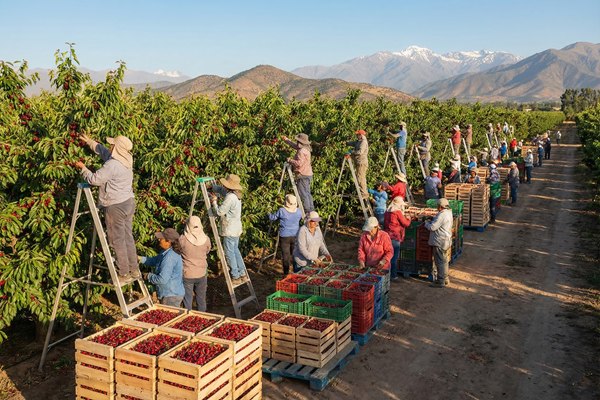
Chile’s 2025–26 cherry export season concluded with lower shipment volumes and ongoing logistical challenges, reflecting a shift in market dynamics compared with the previous year.
According to Claudia Soler of Frutas de Chile, the country exported around 114 million boxes of cherries this season, down about 10% from the 126 million boxes shipped during the 2024–25 campaign.
China remained by far the largest destination for Chilean cherries, though shipments to the market also declined. Exports to China reached approximately 98 million boxes, compared with 113 million boxes in the previous season.
Earlier Harvest Concentrated Supply
One of the defining features of the season was an earlier harvest window, which began seven to ten days ahead of the usual schedule. This shift resulted in larger volumes arriving in export markets during the early weeks of the campaign.
“The season moved forward by about seven to ten days, resulting in earlier shipments of larger volumes,” Soler explained.
As a result, during weeks three and four of the export season, more fruit had already reached China than in the previous year, even though total exports ultimately finished lower.
The concentrated supply also affected sales patterns. A significant share of the fruit was marketed as daily-consumption produce rather than premium seasonal purchases, especially as Chinese New Year fell in February, when consumer preferences became more selective.
China Dominates but Market Diversification Continues
Although China remains the dominant destination for Chilean cherries, its share of exports has gradually declined from 92% to about 87% of total shipments.
Chile’s cherry industry has continued efforts to diversify export markets, particularly through promotional campaigns in the United States and Brazil.
In the United States, Chile’s market share rose from 3% to 4%, while Brazil also showed growing demand.
European markets remain comparatively smaller. The United Kingdom and Spain are the primary destinations in the region, though shipment volumes remain limited compared with Asian markets.
Logistics Remain a Major Concern
Logistics continues to be one of the most significant challenges for the sector.
Soler stressed that reducing the time between harvest, shipping, and final consumption remains a critical priority for exporters.
Delays in certain shipping services and extended transit times to emerging markets such as India have complicated supply chains.
In addition, some exporters are still negotiating with shipping companies over logistical disruptions experienced during the previous season, an issue that has yet to be fully resolved.
Focus on Market Reputation
Beyond logistics, Chile’s cherry industry is also prioritising reputation management in China, its most important market.
Industry organisations have launched consumer education campaigns, media engagement initiatives, and documentary projects highlighting the export process and quality standards of Chilean cherries.
Despite the logistical and market challenges, Soler said the sector remains confident about its long-term prospects.
“There are always opportunities; we just need to continue working together,” she said.
Chile remains the leading cherry exporter in the Southern Hemisphere, and the industry expects continued development as global demand for premium fruit grows.