
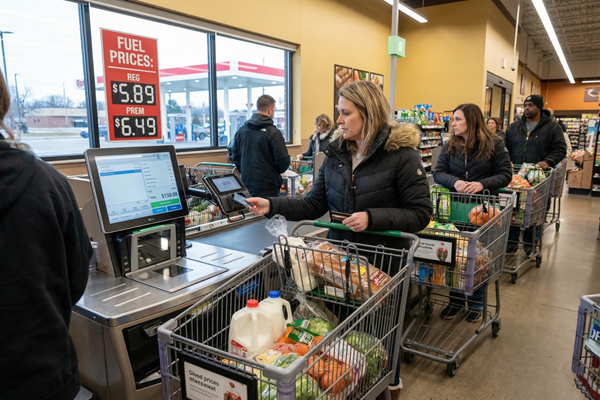


U.S. consumer prices likely increased in February, driven mainly by higher gasoline costs and the lingering effects of tariffs introduced by the Trump administration, according to economists ahead of the latest inflation report.
Data from the U.S. Labor Department is expected to show that the Consumer Price Index (CPI) rose by 0.3% in February, following a 0.2% increase in January, based on a Reuters survey of economists.
On an annual basis, CPI is forecast to rise 2.4% year-on-year, matching the rate recorded in January.
The increase comes as energy prices began climbing in anticipation of escalating tensions in the Middle East, particularly the conflict involving Iran, which pushed global oil prices sharply higher at the end of February.
Fuel Prices Drive Inflation Pressures
Economists estimate that gasoline prices increased about 0.8% in February, after declining for two consecutive months.
According to data from the motorist advocacy group AAA, retail gasoline prices in the United States have jumped more than 18% to about $3.54 per gallon since the U.S.–Israeli military action against Iran began.
Crude oil prices surged above $100 per barrel during the early stages of the conflict, although they have since retreated following comments from President Donald Trump suggesting that the war could end soon.
“The February CPI is likely to show that progress on lowering inflation is stalling out again,” said Sarah House, senior economist at Wells Fargo.
She noted that fuel prices had already begun rising before the conflict officially escalated, as markets anticipated geopolitical tensions in the Middle East.
Core Inflation Expected to Remain Moderate
While headline inflation is projected to increase, core inflation—excluding food and energy—may rise at a slower pace.
Economists forecast that core CPI increased by 0.2% in February, compared with 0.3% growth in January.
On a yearly basis, core inflation is expected to remain at about 2.5%, unchanged from the previous month.
Lower prices for used vehicles, along with more modest increases in rents and airline fares, are expected to help moderate the rise in core inflation.
However, other goods such as apparel and household furnishings are likely to see stronger price increases as businesses pass on costs related to tariffs.
Tariffs Continue to Influence Prices
Economists say part of the price pressure stems from tariffs introduced by the Trump administration, which were implemented under emergency powers but later struck down by the U.S. Supreme Court.
Despite the ruling, new tariffs have been introduced, including a 10% global tariff that Trump said could increase to 15%.
Although many companies initially absorbed the cost of tariffs, analysts say rising input costs are making it increasingly difficult for businesses to avoid passing those expenses on to consumers.
“The pass-through dynamic could persist for a while,” said Stephen Stanley, chief U.S. economist at Santander U.S. Capital Markets.
Food Prices Could Rise Later
Food prices are expected to rise moderately in the near term, but economists warn that prolonged increases in oil prices could push food inflation higher later in the year.
Higher energy costs raise the price of fertilizers, transportation, and agricultural inputs, which eventually feed into retail food prices.
“The recent move in oil prices alone suggests a 0.15 to 0.30 percentage point lift to headline inflation depending on how the conflict evolves,” said Andy Schneider, senior U.S. economist at BNP Paribas Securities.
Federal Reserve Likely to Hold Rates
Despite the anticipated increase in inflation, analysts believe the Federal Reserve is unlikely to change interest rates in the near term.
The central bank primarily tracks the Personal Consumption Expenditures (PCE) price index when setting its 2% inflation target, and policymakers are widely expected to keep rates unchanged at their upcoming meeting.
However, economists say that persistent energy price volatility and geopolitical tensions could complicate the Fed’s efforts to bring inflation sustainably back to target.
Related posts:
 German Fruit Trade Body Sees No Fresh Produce Shortage Despite Iran Conflict
 US–Iran War: Oil, Dollar, Gold and Rupee Face Volatile Outlook as Conflict Unsettles Markets
 Iran Suspends All Agricultural Exports Amid Escalating Middle East Conflict
 China Urges Iran to Keep Strait of Hormuz Open Amid Escalating Middle East Conflict
 MSC Halts Gulf Deliveries, Diverts Cargo to Safe Ports Amid Middle East Conflict
 China Urges Iran to Keep Strait of Hormuz Open Amid Escalating Middle East Conflict
 US-Iran Conflict: Around 150 Onion Containers Bound for Gulf Stranded at JNPT
 Iran Conflict Could Trigger Prolonged Commodity Rally — Here’s What Traders Must Know