
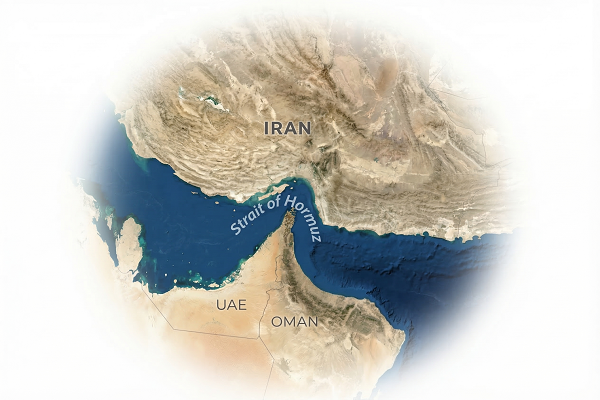


The closure of the Strait of Hormuz, one of the world’s most critical energy shipping routes, is sending shockwaves through global oil and gas markets after the escalation of the U.S.–Israeli war with Iran.
The narrow waterway between Iran and Oman handles about 20% of the world’s daily oil and liquefied natural gas (LNG) shipments, making it a vital artery for global energy trade. Since military strikes on Iran began on February 28, shipping through the strait has largely halted, forcing major oil producers to cut production and raising fears of a severe supply disruption.
Oil Producers Cut Output as Tankers Stop Sailing
With oil tankers unable to pass through the strait, Saudi Arabia, Iraq and Kuwait have begun reducing production at their oil fields.
These producers normally ship millions of barrels of oil daily through the waterway. Without access to tankers, they have been forced to store crude oil instead of exporting it, but storage facilities across the region are already close to capacity after more than 10 days of disrupted shipping.
Energy analysts say the shutdown represents one of the most serious disruptions to global oil supply in modern history.
Energy Prices Surge Worldwide
The disruption has triggered a sharp rise in global energy prices.
-
Brent crude oil briefly surged to about $119 per barrel, the highest level since 2022.
-
European natural gas prices climbed to around €45 per megawatt hour.
-
Asian LNG prices rose to about $16 per MMBtu.
Although prices have fluctuated as markets react to political developments, energy costs remain significantly elevated.
Higher energy prices are already pushing up fuel, transportation, fertilizer and electricity costs, adding inflationary pressure to economies worldwide.
Asia Faces the Greatest Risk
Asia is particularly vulnerable to the disruption because many countries rely heavily on oil and LNG imports from the Middle East.
Countries including China, India, Japan, South Korea, Taiwan and Singapore receive a large share of their energy supplies from Gulf exporters that depend on the Strait of Hormuz.
Governments across the region have begun implementing emergency measures to manage the crisis.
-
China has asked domestic refineries to halt fuel exports to ensure local supply.
-
South Korea introduced fuel price caps for the first time in 30 years.
-
Bangladesh temporarily closed universities to conserve electricity and fuel.
Other governments are also preparing contingency plans in case the disruption continues.
Share of Crude Oil imports to Asia by Middle Eastern countries in 2025
Share of LNG imports to Asia by Middle Eastern countries in 2025
Strategic Oil Reserves May Be Released
To reduce the shock to global markets, the International Energy Agency (IEA) is considering a coordinated release of 400 million barrels of oil from emergency reserves.
If implemented, it would represent the largest strategic oil release in IEA history.
However, analysts warn that even such a large release may only partially offset supply losses from the Gulf region, which accounts for a major share of global exports.
Limited Alternative Routes
There are few alternatives to shipping oil through the Strait of Hormuz, though some producers can partially bypass the route using pipelines.
Saudi Arabia is transporting crude through its East-West Pipeline to the Red Sea port of Yanbu, which can carry up to 5 million barrels per day.
The United Arab Emirates also operates the Habshan–Fujairah pipeline, which can transport 1.5 million barrels per day from Abu Dhabi’s oil fields to the port of Fujairah outside the strait.
However, these routes cannot fully replace the massive volume of oil normally transported through Hormuz.
Refineries and Energy Infrastructure Under Attack
The conflict has also damaged energy infrastructure across the region.
-
Bahrain’s 380,000-barrel-per-day Sitra refinery was hit by attacks and declared force majeure.
-
Saudi Arabia shut down its Ras Tanura refinery, the country’s largest marine export terminal, following a drone strike.
-
Several oil tankers have also been attacked near the strait since the conflict began.
These attacks have further reduced the ability of Gulf countries to export energy.
Supply Recovery Could Take Time
Even if shipping through the strait resumes soon, restoring normal supply flows could take weeks or months.
Some facilities will require repairs before they can restart operations. Qatar’s LNG export complex, for example, may take several weeks to resume full production after being shut down.
Oil fields that have reduced output may also take time to recover, and in some cases production losses could become permanent if reservoir pressure declines.
Hundreds of Ships Waiting
For now, hundreds of oil tankers and cargo ships remain anchored on both sides of the Strait of Hormuz, waiting for signs that shipping can safely resume.
Shipping companies remain cautious because of the risk of drone attacks and missile strikes on vessels passing through the narrow corridor.
Until the conflict de-escalates and maritime security improves, the closure of the Strait of Hormuz will continue to disrupt global energy markets and trade flows.
Volumes of crude oil that have flowed via the Strait from Gulf nations in the last 14 months
Crude Oil In Billion Barrels
| Origin | Export Volume (Billion Barrels) | Destination | Import Volume (Billion Barrels) |
| Saudi Arabia | 2.4 | China | 2.4 |
| Iraq | 1.4 | Rest Of Asia | 1.4 |
| UAE | 1.4 | India | 1.4 |
| Kuwait | 0.6 | Japan | 0.6 |
| Qatar | 0.3 | south korea | 0.3 |
| Iran | 0.3 | Rest of the world | 0.3 |
| Bahrain | 0.1 | Europe | 0.1 |
Volumes of LNG that have flowed via the Strait from Gulf nations in the last 14 months
Liquefied Natural Gas in Million
| Origin | Export Volume (million m³) | Destination | Import Volume (million m³) |
| Qatar | 195 | China | 51.3 |
| UAE | 12 | India | 36.8 |
| Europe | 22.7 | ||
| Taiwan | 21.6 | ||
| South Korea | 18 | ||
| Pakistan | 17 | ||
| Bangladesh | 13.1 | ||
| Japan | 10.7 | ||
| Singapore | 7.6 | ||
| Thailand | 6.6 | ||
| Rest of Asia | 1.8 |
Related posts:
 Six Ships Attacked in Gulf and Strait of Hormuz as Middle East War Threatens Global Shipping
 Insurance Costs for Ships in Strait of Hormuz Surge 12-Fold Amid Escalating Conflict
 India Turns to US LPG as Strait of Hormuz Blockade Disrupts Middle East Supplies
 China Urges Iran to Keep Strait of Hormuz Open Amid Escalating Middle East Conflict
 Trump’s Plan to Escort Tankers Through Strait of Hormuz Eases Oil Price Surge
 Iran Threatens to Target Ships in Strait of Hormuz, Escalating Global Energy Fears
 Strait of Hormuz Crisis: Oil Surges as Iran Escalation Threatens Global Energy Supply
 Strait of Hormuz Crisis Sends Oil Prices Surging 8% as Middle East Escalation Threatens Global Supply