
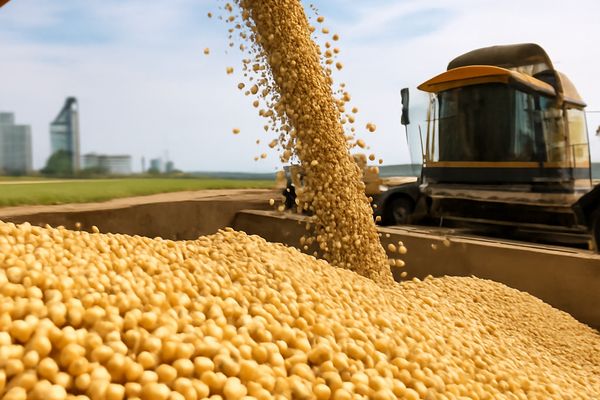


The international soybean market is facing significant upheaval as Cargill, a leading global agribusiness, has suspended soybean exports from Brazil to China. This stunning move comes after the Brazilian government introduced stricter sanitary inspection protocols, fundamentally altering the compliance landscape for exporters. As the world’s largest producer and exporter of soybeans, Brazil’s trade flows are central to the balance of global supply and demand—especially since China accounts for 80% of Brazilian soybean exports. The new inspection regime, adopted at China’s request, introduces extra testing for pests and weeds and differs from the well-established sampling and certification standards previously in place. This has resulted in delays and, in many cases, the failure to issue the sanitary certificates required for departure, effectively bringing shipments to a standstill and halting domestic purchases from farmers.
These developments are reverberating through the supply chain, just as Brazil enters its peak export season. Market participants, including exporters, traders, and producers, now face growing uncertainty, with global implications for pricing, inventory management, and strategic procurement. Ongoing negotiations between the industry and government offer hope for a resolution, but the lack of immediate progress is increasing market anxiety, especially among those reliant on Brazilian exports. If the impasse persists, disruptions may reshape global soybean flows and pricing throughout the peak trade window.
Exclusive Offers on CMBroker

Soybeans
yellow, organic
99.8%
FOB 0.78 €/kg
(from CN)

Soybeans
yellow
99.5%
FOB 0.68 €/kg
(from CN)

Soybeans
No. 2
FOB 0.57 €/kg
(from US)

📈 Prices
| Origin | Type | Purity | Organic | Location | Closing Price (EUR/kg) | Weekly Change | Market Sentiment |
|---|---|---|---|---|---|---|---|
| China | Yellow, organic | 99.8% | Yes | Beijing | 0.78 | +0.02 | Firm/Bullish |
| China | Yellow | 99.5% | No | Beijing | 0.68 | +0.02 | Firm |
| USA | No. 2 | – | No | Washington D.C. | 0.55 | +0.03 | Improving |
🌍 Supply & Demand Drivers
- Cargill’s Export Halt: Suspension of exports from Brazil to China—the top bilateral trade route—removes a key source of global supply.
- Stricter Sanitary Inspections: New Brazilian government protocols, initiated following Chinese requests, have disrupted routine export certification, delaying or blocking shipments.
- Farm Purchases Frozen: Cargill’s halt on soybean purchases from farmers signals deep supply chain constraints inside Brazil. Brokers report a standstill in trade offers.
- China’s Dominance: As the largest destination, any dip in Brazil’s ability to serve China can upend world flows, with ripple effects on inventories and prices in the US, Argentina, and other origins.
- Peak Export Season Disruption: The crisis aligns with the critical annual shipment period, heightening global supply risks and market volatility.
📊 Fundamentals & Industry Insights
- Brazil remains the world’s No.1 soybean producer and exporter—any logistical or regulatory brake quickly impacts world supply/demand balances.
- Certification delays risk significant stock buildup inside Brazil, temporarily tightening global available supply.
- Potential for cascading trade adjustments as China seeks alternative suppliers (US, Argentina) and global buyers hedge against ongoing uncertainty.
🌦️ Weather Outlook & Regional Impact
- Brazil’s peak export window typically coincides with the Southern Hemisphere’s post-harvest season—recent weather has generally supported high yields, making the trade blockade the primary concern, not output.
- In the US and Argentina, normal weather patterns are expected to persist, but dry conditions in key regions add risk for new crop yields if the export blockage persists and demand shifts sharply.
🌐 Global Production & Inventory Comparisons
| Country | 2026 Estimated Production (MT) | 2026 Stocks (MT) | Key Trade Direction |
|---|---|---|---|
| Brazil | ~155 | High (rising due to export delays) | Exporter (blocked) |
| USA | ~123 | Moderate (may tighten if China switches sourcing) | Exporter (opportunity to gain share) |
| Argentina | ~50 | Moderate | Exporter/Processor |
| China | ~18 | Moderate (high import dependency) | Top Importer |
💡 Trading Outlook & Recommendations
- Short-Term Caution: Monitor ongoing regulatory negotiations in Brazil; further export delays could accelerate global price spikes.
- Alternative Origins: Watch for quick pivots in Chinese buying towards the US and Argentina if Brazilian supply remains blocked.
- Farmer/Producer Hold: Limited selling opportunities in Brazil could increase on-farm stocks, supporting firm domestic basis but risking a backlog if resolved suddenly.
- Importers: Proactively diversify sourcing and increase inventories if reliant on Brazilian supply this quarter.
- Speculators/Traders: Volatility likely elevated while resolution is pending; options strategies may offer protection against price swings.
📅 3-Day Regional Price Forecast
| Origin | Forecast (EUR/kg) | Direction |
|---|---|---|
| China (FOB Beijing, Yellow, Organic) | 0.78 – 0.80 | Up/Stable |
| USA (FOB Washington D.C., No. 2) | 0.55 – 0.58 | Up |
| Brazil (Exportable) | N/A (suspended) | Frozen |
Related posts:
 Poland’s Surprise Soybean Meal Import: New US-Poland Link Redraws EU Protein Map
 Soybean Market Eyes China Demand & USDA Balances Amid Global Stock Shifts
 Tunisia Soybean Imports to Reach 595,000 MT as Tourism-Driven Feed Demand Expands
 South Korea’s Soybean Imports Decline as Government Promotes Domestic Production
 Soybean Markets Surge: Energy Price Rally Meets Supply Slowdown
 Soybean Oil Surges on Geopolitical Tensions: What’s Next for Global Prices?