
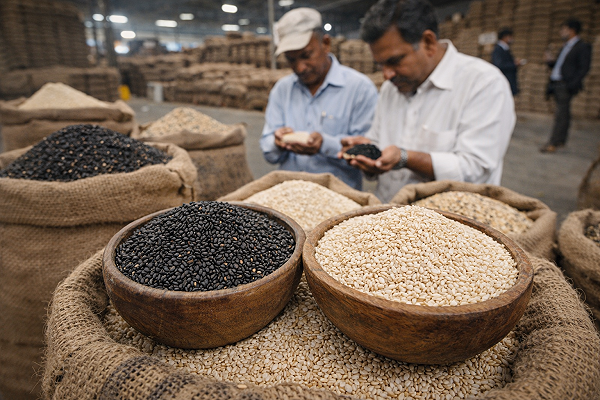


The global sesame market is showing mixed trends as strong inventory levels in China contrast with slightly lower summer sesame sowing in India. Meanwhile, African producers continue to supply export markets while traders remain cautious amid stable prices and moderate demand.
According to the latest weekly industry report, sesame trade activity remains largely need-based, with buyers avoiding aggressive purchases due to adequate supply levels in major consuming markets.
China Maintains High Sesame Stock Levels
China continues to hold significant sesame inventories, which is helping maintain comfortable supply conditions in the global market.
As of the 9th week of 2026, total sesame stock at Qingdao Port reached approximately 290,730 metric tons, including 239,483 metric tons in standard warehouses and 51,087 metric tons in non-standard storage facilities.
These stocks originate from several major sesame-exporting countries including Niger, Brazil, Tanzania, Mozambique, Pakistan, Ethiopia, Sudan and Chad.
The strong inventory position indicates that Chinese buyers currently have sufficient supply, reducing the urgency for aggressive import purchases in the short term.
India Summer Sesame Sowing Slightly Lower
In India, summer sesame sowing remains underway across several producing states, though overall acreage is slightly lower compared with the previous year.
As of March 6, 2026, approximately 49,000 hectares of land had been planted with summer sesame, compared with 50,000 hectares during the same period last year, representing a 2% decline.
Despite the slight drop in total sowing area, some states are witnessing strong farmer participation.
Gujarat has recorded a significant increase in sesame acreage, with sowing reaching around 30,928 hectares by early March, compared with 16,159 hectares during the same period last year.
Crop establishment is currently progressing in key sesame-producing regions including:
-
Gujarat
-
Andhra Pradesh
-
Rajasthan
-
Madhya Pradesh
The final crop size will largely depend on soil moisture availability and weather conditions during the critical growth stages in the coming weeks.
Market Activity Remains Moderate
Physical sesame markets in India are currently witnessing moderate trading activity, with most purchases being made to meet immediate processing requirements.
Oil mills and traders are primarily buying sesame seeds on a need-based basis, resulting in limited speculative trading in the market.
This cautious buying behaviour has helped keep sesame prices relatively stable across major domestic markets.
Ethiopia Continues Strong Sesame Exports
Ethiopia remains one of the largest sesame exporters globally and continues to maintain strong export momentum.
The country’s 2025 sesame production is estimated between 280,000 and 300,000 metric tons, with more than 130,000–150,000 metric tons already exported during the marketing season.
The weekly price index issued by Ethiopia’s Ministry of Trade indicates export prices around $1,300–$1,320 per metric ton FOB.
However, local supply of Humera sesame seeds has started declining as the marketing season approaches its end.
Tanzania Crop Conditions Mixed
Sesame crop conditions in Tanzania vary across producing regions.
In the southern coastal areas such as Lindi and Mtwara, recent rainfall has supported healthy crop growth and early flowering stages.
However, central regions including Dodoma are experiencing drier conditions, which could affect crop performance depending on soil moisture levels.
Farmers are closely monitoring rainfall patterns as adequate moisture during the flowering stage is critical for determining final yields.
Paraguay Expands Sesame Exports
Paraguay has significantly increased its sesame exports over the past year.
Total sesame exports from the country reached 42,929 metric tons in 2025, compared with 28,677 metric tons in 2024, representing a 50% increase in export volume.
Major export destinations include:
-
Mexico
-
Japan
-
China
-
Türkiye
-
Chinese Taipei
However, despite the rise in export volumes, average export prices declined by around 25% year-on-year, reflecting softer global sesame prices.
Turkey Increases Sesame Imports
Turkey continues to be one of the largest sesame importing countries.
Between January and November 2025, Turkey imported approximately 194,102 metric tons of sesame seeds, slightly higher than 186,010 metric tons during the same period in 2024.
Major suppliers to Turkey include:
-
Chad
-
Brazil
-
Niger
-
Ethiopia
-
Sudan
Despite the increase in import volume, average import prices declined by about 15% year-on-year, indicating softer global price trends.
Sesame Prices in India Remain Stable
Domestic sesame seed prices in India remained stable during the week across major trading markets.
Key price levels include:
-
Rajkot White Sesame (99.5 grade): $1.38 per kg
-
Rajkot White Sesame (99/1 grade): $1.26 per kg
-
Rajkot White Sesame (98/2 grade): $1.20 per kg
-
Rajkot White Sesame (95/5 grade): $1.10 per kg
-
Rajkot Black Sesame (99/1 grade): $2.76 per kg
-
Rajkot Z Black Sesame: $3.36 per kg
Meanwhile, Red sesame in Narasaraopet was reported between $1.08 and $1.20 per kg, with prices remaining unchanged week-on-week.
Currency Movements Influence Trade
Currency movements also played a role in global sesame trade dynamics during the week.
The Indian rupee weakened from 91.585 to 92.155 against the US dollar, while currencies of several sesame-producing countries also experienced fluctuations.
Currency depreciation in exporting countries can make their products more competitive in international markets.
Market Outlook
Overall, the global sesame market remains well supplied, with comfortable inventories in China and stable production in major exporting regions.
However, market participants are closely monitoring:
-
Weather conditions in key producing countries
-
China’s import demand
-
Currency fluctuations
-
Export activity from Africa and South America
These factors will play a crucial role in determining the direction of sesame prices in the coming months.
Related posts:
 Palm Oil Under Pressure: MPOB Stocks Plunge & Futures Track Oil Market Shock
 Global Sesame Market: Expansion Ahead Amid Robust Demand, Price Resilience
 India’s Sesame Trade Expands as Imports and Exports Increase in 2025
 China Expands Vegetable Oil Exports as Domestic Consumption Weakens
 Global Sesame Market Faces Pressure as China Stocks Reach 288,570 MT and Indian Demand Slows
 Rapeseed Market Balances on Low Stocks & New Season Prospects: Analysis Inside