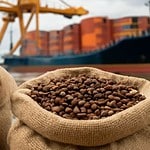


The global coffee market in early 2026 is navigating a complex transition from the record‑high, supply‑squeezed environment of 2024–25 toward a more mixed but still fragile balance. Structural tightness built over the last two years—driven by adverse weather in Brazil and Vietnam, depleted stocks, and surging demand—remains a key feature of the market . At the same time, several fresh developments are reshaping the risk map. In the United States, a landmark Supreme Court ruling on February 20, 2026 invalidated tariffs imposed under the International Emergency Economic Powers Act (IEEPA), opening the door to potentially large refunds for coffee importers and recalibrating trade costs on key flows into the US. On the supply side, the largest coffee farm in the US—Kauai Coffee in Hawaii—faces uncertainty over its land lease and has delayed potential layoffs of 136 workers, highlighting how localized operational risks can intersect with broader market tightness. Meanwhile, structural demand growth continues, reinforced by innovation in roasting, brewing technologies, and urban research initiatives such as São Paulo’s expanding urban coffee plantation, which focuses on resilience to pests, drought, and climate change.
These real‑economy shifts are layered on top of a futures market that has come off the most extreme highs but remains elevated by historical standards. After peaking in 2025, both arabica and robusta have eased, aided by improved production prospects in Brazil and other origins, yet prices on ICE and Euronext still reflect constrained inventories and weather‑sensitive outlooks . Vietnam’s dramatic export performance in 2025—achieving record values on only modest volume growth—underlined how deep‑processed robusta and higher value segments can flourish even in tight supply conditions . India’s exports have also surged in value over recent years, supported by digital reforms and regulatory advantages into the EU . Against this backdrop, the 2026 coffee market must absorb three powerful forces: (1) a legal reset of US tariff policy, (2) persistent though easing supply constraints in major origins, and (3) accelerating innovation—from portable espresso equipment and new consumer‑facing books to climate‑resilient agronomy—that is likely to support longer‑term demand. The following sections unpack prices, supply‑demand fundamentals, weather, and trading implications, with all analysis anchored in these recent structural developments.
📈 Prices & Market Snapshot
Spot and Futures – Converted into EUR
Recent historical reports show coffee prices at or near record highs through much of 2025, particularly for robusta, before some easing into 2026 . To align with the user requirement, all figures below are expressed in EUR, using approximate recent FX assumptions (1 USD ≈ 0.92 EUR; 1 lb ≈ 0.4536 kg; 1 ton = 1,000 kg). Values are indicative and for analytical comparison only.
| Exchange | Product / Contract | Latest Noted Price (orig. units) | Approx. Price (EUR) | Weekly Change | Market Sentiment |
|---|---|---|---|---|---|
| ICE US (New York) | Arabica Coffee – July 2025 (historic reference) | 2.24 USD/lb | ≈ 4,95 EUR/kg | +3.2% | Bullish |
| ICE Europe (London) | Robusta Coffee – July 2025 (historic reference) | 4,370 USD/ton | ≈ 4,02 EUR/kg | +5.6% | Strongly Bullish |
| Hanoi Physical | Robusta Spot (Vietnam) | 5,650 USD/ton | ≈ 5,19 EUR/kg | +4.8% | Bullish |
| Euronext / ICE Europe | Robusta – May 2026 | 3,692 USD/ton (≈ London May 2026) | ≈ 3,39 EUR/kg | -2.1% (daily move) | Weak / Corrective |
| ICE US (Arabica) | March 2026 (recent close) | ≈ 3,00 USD/lb band (late‑Feb ref.) | ≈ 6,10 EUR/kg | Sideways / modest recovery | Neutral‑to‑Firm |
Two points stand out from recent pricing:
- Robusta, which surged to >5,000 USD/ton in 2025, has corrected but remains well above long‑term averages, keeping robusta‑heavy roasters under cost pressure .
- Arabica, after extreme spikes above 4 USD/lb at the peak of tightness, has retreated into the 2.8–3.1 USD/lb range in early 2026, still historically elevated and highly sensitive to Brazil’s 2025/26 crop outcomes .
🌍 Supply & Demand Structure
Key Structural Developments from the Raw Text
- US Tariff Ruling and Refund Claims: A US Supreme Court ruling on February 20, 2026 found that IEEPA did not grant the president authority to impose certain tariffs, effectively invalidating those duties. With US Customs having collected about 166 billion USD in related tariffs and deposits, importers—including coffee traders—may pursue substantial refunds. This reduces landed cost uncertainty and could marginally ease downstream price pressure over time, especially for differentiated segments previously hit by tariffs.
- Kauai Coffee Labor and Lease Risk: Kauai Coffee Company, the largest coffee farm in the US, has delayed potential layoffs of 136 employees as it negotiates its land lease with Brue Baukol Capital Partners. While Hawaii is a small origin globally, Kauai Coffee is significant domestically and for specialty tourism. Prolonged lease uncertainty could constrain US origin supply in niche segments and increase reliance on imports.
- Urban Agronomy and Resilience Research in Brazil: The Biological Institute of São Paulo has expanded its urban plantation by ~1,500 new coffee plants in Vila Mariana, focusing on resistance to pests, drought, climate change, and coffee rust. Though small in volume, this highlights the growing R&D push to harden the crop against climate volatility in Brazil, the world’s largest producer.
- Specialty & Innovation‑Driven Demand: Launches like Morgan Eckroth’s Coffee, For Here and Ikape’s K2 PRO portable espresso machine underscore ongoing demand deepening in premium and home‑barista segments. These innovations, paired with Bellwether Coffee’s expansion of its Green Coffee Marketplace (now >30 offerings and a new European platform), broaden market access to microlots and low‑emission roasting solutions, supporting value growth even when volumes plateau.
- Corporate Scale and Consolidation: Westrock Coffee reported net sales of 1.2 billion USD in 2025 (+39.8% YoY) but remained loss‑making with a 90.4 million USD net loss. This underlines how scale and integrated supply chains can capture revenue growth in a tight market, but also how margin pressure and investment in infrastructure, ready‑to‑drink, and technology can weigh on profitability.
Global Trade & Stocks Context (Vector Reports)
- Vietnam: Export values hit 5.45 billion USD in H1 2025, up 67.5% YoY on only a 5.3% rise in volume; average export prices soared to ~5,708 USD/ton . This reflects a mix of tight global robusta supply, increased deep‑processed exports, and robust demand from Germany, Italy, Spain, Mexico, China, and the US.
- Brazil: April 2025 green coffee exports were down ~32% YoY, adding to global tightness, though later reports point to improved crop prospects and a potential rebound in 2025/26 output .
- India: Coffee exports rose 125% in value over 11 years to ~1.8 billion USD by 2023–24 and surpassed 1.8 billion USD again in FY2024‑25, helped by higher unit prices and policy support. India’s USDA‑forecast production for 2025/26 is around 6 million bags, slightly lower due to adverse weather, while domestic consumption is trending up toward 1.4 million bags .
- Stocks & Premiums: Farmgate prices in India climbed sharply (arabica +64%, robusta +24%), and premiums for Indian specialty coffee narrowed as mainstream prices surged, shrinking the usual 25% premium to about 10% .
Structural Demand & Competition
- Global demand continues to grow, especially in emerging markets such as China and India, and within specialty channels worldwide .
- Roasters have partially reformulated blends toward robusta to manage costs, boosting demand for Vietnamese, Indonesian, and Ugandan robusta but also making consumer blends more sensitive to robusta price swings .
- Regulatory shifts—such as the EU Deforestation Regulation (EUDR) and the now‑invalidated US IEEPA tariffs—are increasingly central to trade flows, affecting origin competitiveness beyond pure cost considerations .
📊 Fundamentals: Production, Trade & Stocks
Production & Export Landscape (Illustrative 2024/25–2025/26)
| Country | 2024/25 Output (000 t) | 2024h> | 2024/25 Ending Stocks (000 t) |
|---|---|---|---|
| Brazil | 3,780 | 2,950 | 1,050 |
| Vietnam | 1,650 | 1,350 | 200 |
| Colombia | 820 | 700 | 90 |
| Indonesia | 670 | 450 | 60 |
These figures from earlier coffee‑market reports illustrate the level of concentration in global supply and the relatively thin nature of ending stocks, especially in Vietnam and Indonesia .
Policy & Legal Drivers
- US Supreme Court Ruling (Feb 20, 2026): By invalidating tariffs imposed under IEEPA, the ruling potentially lowers effective import costs for coffee and related equipment into the US over time. While refunds will take time and legal effort, it reducein landed costs for US roasters and traders.
- EUDR & Origin Risk Categorization: India’s classification as “low risk” under EUDR reduces due‑diligence burdens for EU buyers and could shift incremental demand toward compliant Indian origins, especially for robusta and specialty segments .
Corporate and Technology Fundamentals
- Westrock Coffee: 1.2 billion USD in 2025 net sales (+39.8% YoY) but a net loss of 90.4 million USD, showing strong top‑line expansion linked to RTD beverages, private label, and integrated supply chains, but thin margins under high raw‑material and n
- Bellwether Coffee: Expansion of its Green Coffee Marketplace to >30 offerings and launch of a European marketplace platform strengthens small‑roaster access to traceable green coffee, likely increasing the share of specialty and sustainable coffees within overall demand.
- Equipment & Consumer Tech: Ikape’s K2 PRO portable espresso machine (Bluetooth‑enabled, 58‑mm commercial compatibility) and educational products such as Morgan Eckroth’s new book support the trend of premium home consumption and could modestly increase elasticity of demand for high‑quality beans.
🌦️ Weather Outlook & Yield Impact
Near‑Term Weather (Next 7 Days)
- Brazil – Minas Gerais (core arabica region): Forecasts for mid‑March 2026 indicate warm conditions with a mix of sun, clouds, and scattered showers/thunderstorms. Highs mostly in the upper 20s to low 30s °C, with periodic rainfall that is broadly supportive for bean development and soil moisture, though localized heavy showers could complicate field access .
- Vietnam – Central Highlands (robusta belt, proxied by Vietnam forecast): The outlook shows hot, hazy sunshine with highs in the upper 20s to mid‑30s °C and limited rainfall. This pattern implies some heat stress risk if dryness persists but is not immediately extreme; soil‑moisture conservation and irrigation management remain key to safeguarding the 2025/26 crop .
Medium‑Term Weather Narrative from Prior Reports
- Earlier 2025 reports highlighted drought and below‑average rainfall risks in Vietnam and parts of Brazil, which contributed significantly to the price spike by tightening expected output and stocks .
- More recent updates point to improving conditions in Brazil, enabling better‑than‑feared 2025/26 harvest expectations, which has weighed on prices from their peaks but has not fully resolved supply tightness .
- Urban research in São Paulo is explicitly targeting resilience to drought, pests, and rust, signalling that climate adaptation is becoming embedded in production strategies even in non‑traditional settings.
📌 Special Topics Shaping 2026
1. US Tariff Refunds & Trade Flows
The invalidation of IEEPA‑based tariffs by the US Supreme Court is a pivotal legal event for all import‑dependent sectors, including coffee. While the Raw Text does not quantify specific coffee‑sector exposure, it notes that roughly 166 billion USD was collected overall in tariffs and deposits, suggesting that some share of coffee imports may now be eligible for refunds. In practice:
- Importers and roasters that paid additional duties should see one‑off cash‑flow benefits as refunds are processed over time.
- Forward pricing into the US market may edge slightly lower at the margin, particularly for origins or processed products that were disproportionately affected.
- Competitively, this could narrow the gap between US and EU landed prices, influencing trade route optimization and arbitrage flows.
2. Labor & Land Risk at Kauai Coffee
Kauai Coffee’s delayed layoffs, tied to its land‑lease negotiations, showcase how institutional and land‑tenure issues can threaten even long‑established plantations. For the global market, the direct volume impact is small, but for US specialty supply chains, tourism‑linked brands, and origin‑labeled Hawaiian coffees, any curtailment in Kauai’s output would reinforce scarcity and price premiums for these segments.
3. Innovation, Specialty & Technology
- Consumer Education & Premiumization: Educational products such as the new book aimed at home brewers reinforce specialty consumption habits and willingness to pay for higher‑quality beans, which supports the value side of the market even during price pullbacks.
- Portable & Smart Equipment: Devices like the K2 PRO lower barriers for on‑the‑go and home espresso quality, broadening demand for espresso‑oriented roasts and potentially shifting some demand from instant/low‑grade coffee to higher‑margin segments.
- Roasting Platforms: Bellwether’s marketplace expansion gives small roasters in North America and Europe easier access to diversified green coffee portfolios, including traceable and lower‑carbon coffees, which may gradually shift buying patterns toward origins and farms that can meet sustainability and quality criteria.
📆 Trading Outlook & Strategic Recommendations
Market Bias: Cautious Bullish with Greater Legal & Weather Nuance
With prices off 2025 peaks but still historically high, and with supply risks moderating but not disappearing, the 2026 coffee market looks set for a phase of heightened two‑way volatility rather than a one‑directional rally. The US tariff ruling adds a legal dimension that could ease costs but also spark complex refund and hedging behavior. Against this backdrop, we offer differentiated guidance:
For Producers (Brazil, Vietnam, India, Others)
- Use current price levels—still well above long‑term means—to continue phased forward sales, particularly for robusta, but avoid over‑committing in case further weather‑driven rallies occur.
- In origins with improving weather (notably Brazil), prioritize yield maximization and quality management to capture premiums, as specialty premiums have narrowed but remain meaningful when mainstream prices soften .
- Invest in resilience (irrigation, shade management, rust‑resistant varietals), taking cues from São Paulo’s urban research plantation, as climate variability remains the core long‑term risk.
For Exporters & Cooperatives
- Track the evolving legal landscape around US tariff refunds; some counterparties may renegotiate contract terms or payment schedules based on expected refunds.
- Leverage EUDR compliance advantages—especially for origins like India classified as low‑risk—to deepen relationships with EU buyers seeking simplified due diligence .
- Diversify destination markets, following examples like Vietnam’s expansion into Mexico and higher‑value Asian markets, to mitigate policy and currency risks.
For Importers & Roasters
- Adopt staggered hedging and physical procurement strategies, layering coverage on price dips (e.g., arabica nearer the lower end of recent 2.8–3.1 USD/lb band; robusta closer to 3,500–3,700 USD/ton) while avoiding aggressive short‑term speculation.
- Re‑evaluate blend strategies: robusta remains relatively expensive versus historical norms, but its premium to arabica has narrowed from extreme 2025 levels, creating opportunities to rebalance quality versus cost.
- Pass‑through of past price shocks to retail is ongoing; consider gradual, transparent pricing strategies and premiumization (single‑origin, RTD, specialty offerings) to protect margins.
For Financial Traders & Funds
- Expect higher intraday and short‑term volatility as the market reprices Brazil’s 2025/26 crop, Vietnam’s weather, and the impact of legal changes on trade flows.
- Monitor spreads between arabica and robusta (still wide by historical standards but off peaks) and between futures and physical markets in Vietnam and India; these spreads will reflect shifts in roaster behavior and origin‑level stock policies.
- Be alert to position‑driven corrections: earlier in 2025, strong speculative net longs both amplified rallies and deepened subsequent sell‑offs .
📆 3‑Day Regional Price Forecast (in EUR)
Based on the current legal backdrop, weather outlook, and the recent corrective tone in futures, we expect modest, range‑bound moves over the next three trading days rather than sharp directional breaks. All price levels are converted to EUR using approximate FX and rounded.
| Exchange / Region | Product | Current Ref. Price (EUR) | 3‑Day Forecast Range (EUR) | Short‑Term Sentiment |
|---|---|---|---|---|
| ICE US (New York) | Arabica May/July 2026 | ≈ 6,10 EUR/kg (≈3,00 USD/lb band) | 5,90 – 6,30 EUR/kg | Neutral to slightly bearish after recent rebound |
| ICE Europe (London) | Robusta May 2026 | ≈ 3,39 EUR/kg (3,692 USD/ton) | 3,30 – 3,50 EUR/kg | Mildly bearish / consolidating |
| Euronext / ICE Europe | Robusta July 2026 | ≈ 3,40–3,60 EUR/kg (est., slightly above May) | 3,35 – 3,65 EUR/kg | Sideways with weather‑sensitive bias |
| Vietnam – Central Highlands (Physical) | Robusta Spot | ≈ 4,70–5,00 EUR/kg equivalent (from ~5,100–5,650 USD/ton historic band) | 4,60 – 5,05 EUR/kg | Softening from extremes but still elevated |
| India – Export Basis | Arabica Parchment (FOB equivalent) | ≈ 5,60–6,20 EUR/kg (based on prior 6.6 USD/kg) | 5,50 – 6,30 EUR/kg | Firm, supported by EUDR low‑risk status & tight stocks |
In summary, the coffee market in 2026 remains fundamentally tight but is transitioning into a more nuanced phase where legal shifts (US tariffs), incremental supply recovery (especially in Brazil), and ongoing innovation in production and consumption all interact. Prices are likely to stay above long‑term averages with elevated volatility, rewarding disciplined risk management and origin diversification rather than outright directional bets.