
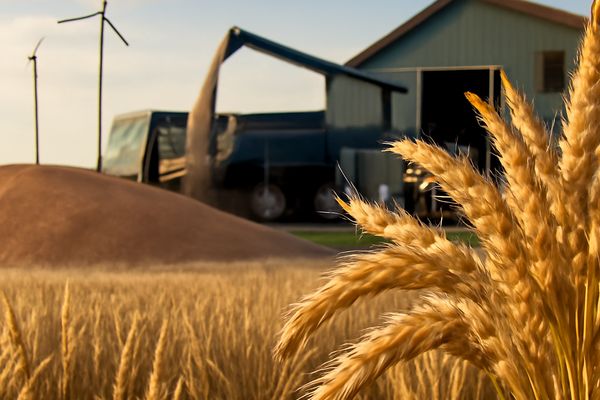


Poland’s wheat market in March 2026 is defined by a paradox of strength and pressure. On the one hand, domestic production and storage capacity remain robust, with the Ministry of Agriculture emphasizing that Polish farmers are delivering high-quality wheat and that the country has over 10 million tons of commercial storage capacity. At the same time, last year’s large harvest has left visible surpluses in silos, forcing policymakers to treat export not as a marginal outlet but as an economic and political necessity. The Raw Text clearly shows this policy pivot: the Ministry of Agriculture and Rural Development (MRiRW), represented by Deputy Minister Małgorzata Gromadzka, is actively working to boost grain exports, especially wheat, toward new destinations in Africa and Asia, including Nigeria, Rwanda, Ghana, and—critically—China. Key state-linked actors such as Elewarr and the Krajowa Grupa Spożywcza (KGS) are being mobilized, while an increase in strategic food reserves is under consideration to stabilize the internal market and reinforce food security.
The current situation emerged after the 2025 harvest left Poland with substantial wheat surpluses, even though the broader 2024/25 grain crop was only slightly lower than the prior year. Exports already reach nearly 80 countries, but MRiRW sees clear bottlenecks: logistics, phytosanitary procedures, and fragmented export coordination. Hence the plan to create a ‘green corridor’ with Egypt as a gateway to African markets, allowing Egyptian inspectors to test Polish wheat on-site to speed up loading and build trust in quality. Parallel talks have opened an official export procedure with China, initiated by Elewarr, while Jordan’s role as a customer is constrained by the security situation in the Middle East. This broad policy agenda is taking shape against a relatively calm but low price environment on international markets, with FOB wheat offers from Ukraine, France and the U.S. in the EUR 180–290/t range in mid-March 2026 and Euronext/MATIF benchmark prices having traded recently around the mid‑EUR 180s–190s per ton range. Together, these factors frame a market where Poland must compete aggressively on price and reliability, yet also guard its farmers’ margins as it moves surpluses out of overflowing silos and into global supply chains.
Exclusive Offers on CMBroker

Wheat
protein min. 12,50%
98%
FOB 0.19 €/kg
(from UA)

Wheat
protein min. 11,00%
98%
FOB 0.29 €/kg
(from FR)

Wheat
protein min. 11,50%, CBOT
98%
FOB 0.21 €/kg
(from US)
📈 Prices & Market Structure
International reference levels (converted to EUR)
To place the Raw Text’s export push in context, we benchmark current physical wheat offers (all in EUR) and approximate futures-equivalent levels. Conversion is based on indicative FX (USD/EUR ≈ 0.92) and metric ton equivalents; exact tradable prices may differ.
| Market / Origin | Specification | Delivery Term | Latest Price (EUR/t) |
Weekly Change (EUR/t) |
Sentiment |
|---|---|---|---|---|---|
| Ukraine, Odesa | Wheat 12.5% prot | FOB | ≈ 190 | 0 (from 0.19 to 0.19 EUR/kg) | Sideways, competitive Black Sea offers |
| Ukraine, Odesa | Wheat 11.0% prot | FOB | ≈ 180 | 0 | Soft, ample supply |
| France, Paris | Wheat 11.0% prot | FOB | ≈ 290 | 0 | Firm vs Black Sea; EU quality premium |
| USA, CBOT-linked | Wheat 11.5% prot | FOB | ≈ 210 | 0 | Neutral; tracking SRW futures |
| Ukraine, Kyiv | Wheat 11.5% prot | FCA | ≈ 240 | 0 | Stable inland basis |
The CM Broker micro-level data show largely flat prices between 20 February and 13 March 2026 for all key Ukrainian and French wheat specifications, with only a minor decline in high-protein Ukrainian FOB (12.5% protein) from 0.20 to 0.19 EUR/kg (≈10 EUR/t) over the period. This confirms a market that is well supplied but not in free fall—a ‘low but stable’ environment, which aligns with the policy urgency described in the Raw Text: with prices depressed and storage nearing capacity, the government focuses on export facilitation rather than expecting a spontaneous price rebound.
Polish context vs. benchmarks
- Polish export wheat must price close to Ukrainian Black Sea offers to stay competitive in Africa and the Middle East, especially if Egypt becomes the main logistical hub.
- France retains a quality and logistics premium on FOB Paris, but this makes Polish and Ukrainian wheat attractive for price-sensitive buyers such as Nigeria and other West African importers.
- CBOT SRW futures have shown active trading and modest volatility in early March, but when converted to EUR/t, they still sit in the same broad band as Black Sea values, offering limited upside for Polish exporters without policy support and coordinated logistics.
🌍 Supply, Demand & Policy Drivers
Domestic supply and surpluses
- Poland remains structurally self-sufficient in grains and typically exports around 20% of its cereal output, including wheat, according to recent academic studies of 2005–2023 export patterns.
- The Raw Text stresses that last year’s harvest left noticeable surpluses, contributing to wheat stocks that now strain storage capacity despite more than 10 million tons of available silo space.
- Exports already reach nearly 80 countries, with 64% of volumes in January–November 2025 going to EU partners (4.6 million tons), of which Germany alone took 2.6 million tons (37% of total grain exports). Non‑EU buyers, notably in Africa, are dominated by wheat purchases, underlining the importance of non‑European demand for clearing Polish surpluses.
Export strategy and institutional roles
The Raw Text and related policy reports show a clear reorientation of MRiRW’s grain strategy:
- New market development: Africa (e.g., Nigeria, Rwanda, Ghana) and China are priority growth markets, with China now having an officially opened export protocol for Polish grain following rigorous phytosanitary negotiations spearheaded by Elewarr.
- Egypt green corridor: Poland is negotiating a ‘green corridor’ with Egypt that would allow Egyptian inspectors to visit Polish ports and test cargoes on site. This is intended to speed up export procedures and use Egypt as a hub for further African sales.
- Middle East risk: Jordan had been considered as a potential growth market, but the current security situation in the Middle East has constrained concrete steps there.
- State actors: Krajowa Grupa Spożywcza (KGS) may be tasked with expanded intervention buying from farmers if market prices weaken further, while Elewarr leads key export negotiations. A request to increase strategic food reserves has been submitted to the Ministry of the Interior and Administration, explicitly linking wheat stock-building to national food security.
- Coordinated export platform: Earlier January 2026 discussions between MRiRW, KOWR, PIORiN and large grain companies emphasized that in current conditions “export is not an addition, but a necessity” and called for tighter coordination between administration and exporters.
External demand
- The EU exported almost 22 million tons of grain between July 2025 and late January 2026, with soft wheat flows heavily geared toward Morocco, Saudi Arabia, Egypt, Nigeria and Algeria, illustrating the same African and MENA focus that Poland is now pursuing.
- Egypt’s wheat import structure is evolving, with a growing role of private-sector buyers and local trading companies, which may favor flexible origin sourcing, including Poland, if logistics and quality assurance are competitive.
- Poland’s own wheat export value fell in 2024, but remains significant (around USD 1.1 billion), suggesting that price rather than volume has been the main drag—again reinforcing the need for better market access rather than simply more production.
📊 Fundamentals: Production, Stocks & Logistics
Production and stocks
- Recent assessments place Poland as the EU’s third-largest grain producer after France and Germany, with total grain output around 35–36 million tons in 2024/25.
- Despite a slightly smaller total grain crop compared with the previous year, wheat stocks are swollen due to weaker export flows in 2024 and early 2025, compounded by earlier disruptions in Black Sea transit and the domestic ban on some Ukrainian imports.
- The Raw Text indicates that the government is worried about grain “lying in storage” instead of circulating through the market, and wants to help farmers “not to cry over higher yields, but to benefit from them,” underlining the political sensitivity of chronically low farmgate prices.
Logistics and infrastructure
- Seaborne exports via Gdańsk and other Baltic ports are central to Poland’s wheat strategy. In the first half of 2025, Gdańsk handled about 1.1 million tons of grain, down from 1.5 million tons a year earlier, suggesting spare capacity that could be used to accelerate the current export push.
- However, recent reports of winter weather issues and broader transport disruptions across Poland—including delays affecting the Port of Gdańsk—highlight that logistics risk remains a key variable in turning policy ambition into actual export flows.
- The planned green corridor with Egypt would partly mitigate documentation and inspection bottlenecks but will not fully compensate for physical infrastructure constraints or weather-related disruptions.
Global balance sheet
Recent USDA-based estimates for the 2025/26 season still show relatively comfortable global wheat ending stocks around 277–278 million tons, reinforcing the current low-price environment.
- Major exporters (EU, Russia, Ukraine, U.S., Canada, Australia): remain well supplied, with no clear production shock on the horizon.
- Importers (MENA, Sub-Saharan Africa, Asia): continue to face structural wheat deficits, but economic and currency constraints in several African economies mean that price remains the primary driver of origin choice.
- In this setting, Poland’s export strategy must focus on cost efficiency, competitive freight, and consistent quality, rather than expecting scarcity-driven price spikes.
🌦 Weather Outlook for Key Polish Wheat Regions
Short-term (next 7 days from 17 March 2026)
Weather models for the main Polish wheat regions (Lubelskie, Mazowieckie, Wielkopolskie, Dolnośląskie) for the week beginning 17 March 2026 indicate a late-winter pattern: frequent cloud cover, scattered precipitation, and temperatures oscillating around freezing at night and 4–9°C during the day, with a gradual warming trend toward the end of the week and slightly above-normal temperatures into late March.
- Soil moisture: Adequate to slightly high, due to recent precipitation and melting snow; this supports winter wheat stands but raises concerns about field trafficability for early spring nitrogen applications in heavier soils.
- Frost risk: Night frosts remain possible but are not expected to be severe enough to threaten well-established winter wheat, except in the coldest micro-locations.
- Field work: Intermittent rain and soft soils will slow the start of spring field operations, potentially delaying top-dressing and early herbicide applications in some regions.
Impact on yields and market
- Current conditions are broadly neutral to slightly positive for yield potential, provided that fertilizer applications can proceed once fields dry.
- No major drought or winterkill stress is visible at this stage, so the market will continue to price in a normal-to-good 2026 harvest, reinforcing the perception of ample supply.
- From a market perspective, the absence of weather-related yield threats reduces the likelihood of a short-term price rally driven by Polish crop concerns, increasing pressure to move old-crop stocks via export mechanisms.
📉 Price Drivers & Speculative Positioning
Key bearish factors
- Large carryover stocks in Poland and across the EU, with comfortable global ending stocks around 277–278 million tons in 2025/26.
- Intense competition from Black Sea origins (Ukraine, Russia) offering aggressive FOB values around EUR 180–200/t equivalent.
- Stable to slightly weaker freight demand in the Baltic, but weather and geopolitical disruptions at ports and land borders periodically raise export costs from Poland.
Potential bullish sparks
- Acceleration of MRiRW’s export facilitation package (green corridor with Egypt, streamlined phytosanitary controls, coordinated export campaigns to China and Africa) could tighten local basis and improve on-farm prices in surplus regions.
- Any regional weather scare (e.g., dryness during stem elongation in spring or heat during grain fill) would quickly be priced in, given current low absolute price levels.
- Stronger import demand from MENA or Sub-Saharan Africa if macro conditions improve or if other origins face logistical or political disruptions.
📆 Outlook & Scenario Analysis
Policy scenarios (March–June 2026)
- Base case – Gradual export acceleration (most likely):
MRiRW finalizes decisions by the end of March, expanding KGS’s buying mandate, increasing strategic reserves modestly, and operationalizing the Egypt green corridor during Q2. Exports via Baltic ports rise, domestic basis stabilizes, and farmgate prices edge up slightly from current depressed levels. - Bearish case – Policy delays and logistical bottlenecks:
Implementation lags or is smaller than expected, while logistics remain constrained by weather or infrastructure. Surpluses persist into the new harvest, compressing prices further and increasing on‑farm storage pressure. - Bullish case – Strong external pull:
Faster-than-expected demand from Egypt, Nigeria and other African buyers, combined with issues in competing origins, drive a noticeable rise in Polish export flows and local prices, particularly for higher-protein milling wheat.
Strategic implications for Poland
- The Raw Text leaves no doubt: export is a structural pillar of Poland’s wheat market management, not a temporary relief valve.
- Investments in logistics (ports, rail, storage) and in phytosanitary capacity are as important as farm productivity; without them, high yields translate into low prices and political tension.
- Opening and consolidating Asian and African markets, especially via Egypt and China, is crucial for diversifying away from EU demand and Germany-centric trade.
💼 Trading Outlook & Recommendations
For Polish farmers
- Expect sideways-to-soft old-crop prices until MRiRW’s end‑March decisions are clarified and export flows visibly accelerate.
- Where storage allows and cash-flow needs are manageable, consider staggered sales into potential policy-supported buying by KGS and into any export-driven basis improvement, rather than selling all remaining 2025 crop immediately.
- Maintain focus on protein and quality; export opportunities to Egypt, China and premium African markets will favor high-protein, well-cleaned milling wheat.
For traders and exporters
- Position for increased seaborne flows via Gdańsk and other Baltic ports from late Q2 as policy measures take effect; secure freight and port slots early, particularly for Panamax and Handy-size vessels to MENA and West Africa.
- Monitor green corridor negotiations with Egypt closely; once operational, this should reduce transaction time and increase Poland’s competitiveness into Egyptian and transshipment markets.
- Leverage Chinese protocol approval by partnering with Elewarr and other state-linked entities to build consistent supply programmes rather than spot shipments.
For importers (Africa, Middle East, Asia)
- View Poland as a reliable, diversified origin within the EU, able to supply both feed and milling wheat at competitive prices, particularly while surpluses persist.
- For buyers in Nigeria, Ghana, and other West African markets, consider multi-origin tenders that include Poland alongside Black Sea suppliers to capture quality and logistics optionality.
- Monitor Polish weather into April–May; a strong 2026 crop will prolong the window of attractive pricing for importers.
📆 3‑Day Regional Price Forecast (EUR)
Indicative short-term outlook for wheat values relevant to Polish exports and benchmarks (17–19 March 2026). All values are approximate and assume stable FX.
| Market / Region | 16 Mar 2026 (Ref, EUR/t) |
17 Mar | 18 Mar | 19 Mar | Trend |
|---|---|---|---|---|---|
| Poland export parity (Baltic, 11.5% prot, FOB equiv.) | ≈ 200 | 198–202 | 198–203 | 198–203 | Sideways, very slight firming if export demand improves |
| EU (Euronext/MATIF) front-month wheat | ≈ 188 | 186–190 | 186–191 | 185–191 | Sideways in low range; tracking global wheat |
| Ukraine, Odesa FOB 11.5–12.5% prot | ≈ 180–190 | Unch (±2) | Unch (±3) | Unch (±3) | Stable; strong competition for Polish wheat |
| France, FOB Rouen/Paris milling wheat | ≈ 290 | 288–292 | 287–293 | 287–293 | Stable; maintains quality premium over Poland |
These projections assume no sudden policy announcement or major weather shock. The central message from the Raw Text and current data remains: policy-driven export acceleration, not a spontaneous price surge, will be the decisive factor for Poland’s wheat market in the coming weeks.
Related posts:
 Wheat glut in 2025/26: how record stocks reshape prices in 2026
 Wheat market steadies on MATIF while CBOT softens: what’s next?
 Wheat under pressure: Indian mill slowdown meets global ample stocks
 Wheat Holds Flat, but Weather and Black Sea Risk Keep Traders Alert
 Egypt Ups Wheat Ambitions: New Production Targets Shape Market Outlook
 Wheat Market Surges Despite Export Headwinds: Will the Rally Hold?
 Southeast Asia May Drive New Wheat Demand Surge: Key Market Signals & Price Outlook
 Wheat Market Rises, Black Sea Dynamics, and MENA Demand Shape Outlook