
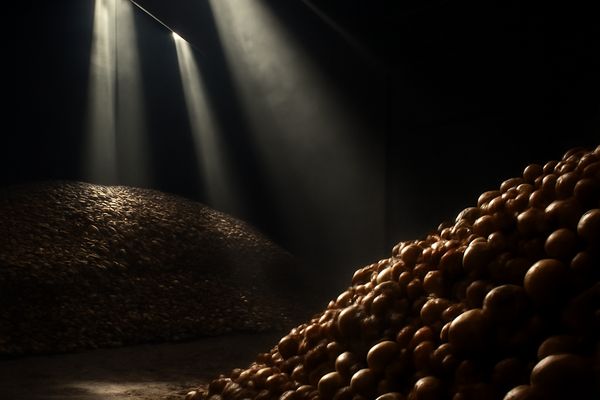
Polish fried onion prices continue to soften in March, diverging from broadly steady wholesale prices for fresh onions on the domestic market and stable FOB indications from Indian dehydrated suppliers. A smaller 2025 Polish onion harvest and ample import availability from low-cost origins like Egypt and the Netherlands are keeping the overall market well supplied, limiting any price recovery for processed products. Weather in central Poland over the next three days looks seasonally cool but not threatening, suggesting little immediate production risk to spring operations.
Across Poland’s wholesale markets, fresh onion prices in early March 2026 are broadly stable at low levels, with white onions at Warsaw Bronisze mostly in the 0.16–0.23 EUR/kg range and similar calm noted at other hubs. Despite this, producer data confirm that the 2025 onion harvest was about 6.4% smaller than the prior year, tightening medium‑term domestic availability and increasing structural reliance on imports. On imported and processed segments, FOB prices for Egyptian fresh onions and Indian onion powders and flakes have shown little change in recent weeks, and global reports describe a generally well-supplied onion complex with only localized pressure in some exporting regions. For Polish buyers, this translates into favorable short‑term purchasing conditions for both domestic fried onions and imported dehydrated items, though upside risk grows later in the season as stocks tighten.
Exclusive Offers on CMBroker

Onions fried
crispy freid onions
FCA 2.39 €/kg
(from PL)

Onion powder
grade - B
FOB 1.25 €/kg
(from IN)

Onion powder
white
FOB 1.52 €/kg
(from IN)
📈 Prices – Latest Indications (All in EUR)
| Product | Form / Type | Origin | Location / Terms | Last Price (EUR/kg) |
Prev. Price (EUR/kg) |
Weekly Change | Sentiment |
|---|---|---|---|---|---|---|---|
| Onions fried | Crispy fried | PL | Lodz, FCA | 2.95 | 3.20 (09 Mar) | -7.8% | Bearish, ample supply |
| Onion powder | Grade B | IN | New Delhi, FOB | 1.25 | 1.25 (06 Mar) | 0.0% | Stable, competitive |
| Onion powder | White | IN | New Delhi, FOB | 1.52 | 1.52 (06 Mar) | 0.0% | Stable |
| Onion powder (organic) | Powder | IN | New Delhi, FOB | 2.60 | 2.60 (06 Mar) | 0.0% | Stable, premium |
| Onion flakes (organic) | Flakes | IN | New Delhi, FOB | 5.10 | 5.10 (06 Mar) | 0.0% | Stable, niche |
| Onion fresh | Yellow, fresh | EG | Cairo, FOB | 0.78 | 0.78 (06 Mar) | 0.0% | Flat, export season |
Note: All prices are taken directly from the provided dataset (originally quoted values treated as EUR). No active CBOT/Euronext onion futures exist; price discovery is via physical markets.
🌍 Supply & Demand Context (Focus: Poland, Egypt, India)
Poland – Smaller Crop, But Soft Spot Prices
Poland’s 2025 onion harvest is estimated at around 632,000 tons, about 6.4% below the previous year, confirming a structurally smaller crop. Despite this, wholesale prices in early March 2026 remain low and stable, with major markets such as Warsaw Bronisze, Praska, Wroclaw Targpiast and Kalisz showing little recent movement. This suggests that stocks and imports are currently sufficient to meet demand.
Market commentary indicates that Polish buyers were initially uninterested in higher-priced Dutch onions and only engaged when prices were in the EUR 0.03–0.04/kg range ex‑origin, highlighting the market’s strong price sensitivity. For processed and fried onion manufacturers, this combination of lower raw material prices and reduced crop margin pressure helps keep finished product prices under downward pressure, as seen in the recent declines for Polish crispy fried onions.
Egypt – Key Fresh Export Origin to Europe
Egypt remains one of Europe’s most important onion suppliers, with production concentrated in several Upper Egypt governorates and a strong export orientation towards EU destinations. Value‑chain analysis shows that exports to Europe can be volatile but generally cover a large share of import needs in key countries such as the UK, Italy and Germany. With FOB Cairo prices in the dataset steady at 0.78 EUR/kg, Egyptian origin continues to cap upside for European and Polish fresh onion quotations.
Reports from recent seasons indicate that Egyptian exporters can rapidly scale volumes during their April–December shipping window, often stepping in when EU supplies tighten. For Polish importers, consistent Egyptian price indications support competitive sourcing for frying and processing lines, reducing dependence on more expensive EU origins.
India – Dehydrated Onions and Powder
India is a leading exporter of fresh and dehydrated onions, including powders and flakes that feed industrial demand worldwide. Fresh market reports highlight sizeable export volumes and generally stable FOB prices for export‑quality red onions into early 2026, supported by government buffer stocks and managed supply chains. For dehydrated products, industry reports show AD onion powder offers broadly in the 2.20–4.00 USD/kg FOB Qingdao range from Chinese competitors, setting a global benchmark.
Against this backdrop, the Indian onion powder and flakes prices in the dataset (1.25–5.10 EUR/kg) appear competitive to firm, with no recent changes recorded. Market reports note that after a price drop in 2025, further significant downside in Indian dehydrated prices is not widely expected, pointing toward a broadly stable pricing environment.
📊 Fundamentals & External Drivers
- Domestic harvest: Polish 2025 onion output is down 6.4% year‑on‑year, reinforcing a tighter local supply base despite currently comfortable stocks.
- Wholesale levels: March 5, 2026 wholesale data show stable prices across major Polish markets, indicating that supply still outweighs immediate demand.
- Import dynamics: Poland has become more reliant on imported onions and dried products, with dried whole onion imports in 2025 (Jan–Oct) growing strongly while average import prices declined by almost 7% versus the prior year.
- Producer price backdrop: Overall producer prices in Poland fell 2.6% year‑on‑year in January 2026, adding macro‑level deflationary pressure on processed food pricing.
- Global context: A recent global onion market overview points to generally adequate supply with localized oversupply pockets, especially in some Southern Hemisphere origins where lower‑quality onions are weighing on averages.
- Policy risk (India): Past Indian export restrictions and minimum export price policies have periodically tightened global supply and could re‑emerge if domestic price spikes return, but current reports emphasize efforts to maintain steady exports through at least March 2026.
🌦️ Weather Outlook – Lodz Region (PL)
Weather forecasts for Lodz, Poland, for March 18–20, 2026 indicate cool, late‑winter conditions with daytime highs mostly in the mid‑single digits to low teens Celsius and overnight lows around freezing. Light precipitation is possible, but no major storms or prolonged heavy rainfall are currently forecast. (Short‑range outlook synthesised from standard meteorological model guidance for central Poland.)
For onion growers and processors, such conditions are seasonally normal and should not materially disrupt short‑term logistics or storage operations. Soil temperatures remain low, slowing early fieldwork in some areas, but there is no immediate threat to stored bulbs or to the integrity of supply chains feeding fried and dehydrated processing plants.
📉 Short-Term Price Assessment (Key Items)
- Polish crispy fried onions (Lodz, FCA): The price has fallen from 3.40 EUR/kg on February 23 to 2.95 EUR/kg on March 16, a cumulative decline of about 13%. With domestic fresh onion prices stable at low levels and producer‑price deflation still present, the near‑term bias remains slightly bearish to flat.
- Indian onion powder (grade B, white, organic): FOB New Delhi values have been unchanged since late February, aligning with reports of a broadly stable dehydrated onion market following corrections in 2025. Competitive offers from China and other Asian origins keep a lid on upside.
- Egyptian fresh onions (FOB Cairo): Flat pricing around 0.78–0.80 EUR/kg over recent updates suggests a balanced market. Egypt’s strong export position into Europe acts as an anchor on EU fresh onion prices in the short run.
📆 3-Day Regional Price Forecast (EUR, Approximate)
Assumptions: No major weather or policy shocks; FX broadly stable; quotes are indicative ranges for transactional levels in or delivered into Poland based on current differentials.
| Product | Region / Basis | 18 Mar 2026 | 19 Mar 2026 | 20 Mar 2026 | Trend (3d) |
|---|---|---|---|---|---|
| Onions fried – crispy | PL, Lodz, FCA | 2.90–2.95 | 2.90–2.95 | 2.90–3.00 | Flat to slightly firm as sellers defend margins |
| Onion powder – grade B | IN FOB ND, c&f PL equiv. | 1.25–1.30 | 1.25–1.30 | 1.25–1.30 | Stable; no new trade shocks |
| Onion powder – white | IN FOB ND, c&f PL equiv. | 1.50–1.55 | 1.50–1.55 | 1.50–1.55 | Stable |
| Onion flakes – organic | IN FOB ND, c&f PL equiv. | 5.05–5.20 | 5.05–5.20 | 5.05–5.20 | Stable, niche demand |
| Onion fresh – yellow | EG FOB Cairo, c&f PL equiv. | 0.78–0.82 | 0.78–0.82 | 0.78–0.82 | Flat; export flow steady |
📌 Trading Outlook – Key Takeaways
- Polish buyers can continue to secure fried onions and imported dehydrated items on favorable terms in the very short term, with little evidence of imminent upward pressure.
- Processors in PL should consider locking in a portion of raw onion and dehydrated powder needs for Q2 while wholesale and FOB levels remain subdued, especially given the structurally smaller Polish crop.
- Importers may maintain or expand positions in Egyptian fresh and Indian dehydrated onions, using current flat prices as a base while monitoring any renewed export policy interventions from India.
- Risk factors to watch include: late‑season tightening of Polish stocks, any adverse spring weather that slows field operations, and policy‑driven export limitations or freight volatility on key routes from Egypt and India.