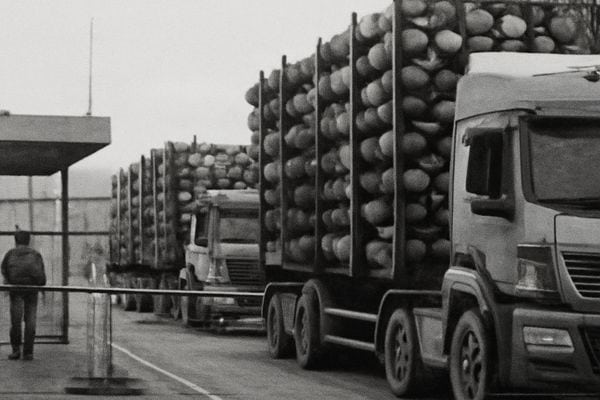


Poland’s wheat market in mid-March 2026 is shaped less by classic supply-demand balances and more by policy frictions around Ukrainian trade. The prolonged Polish embargo on Ukrainian grain and oilseeds, combined with Ukraine’s 10% export duty on oilseeds, is distorting flows, squeezing domestic processors and indirectly influencing price formation for wheat and other cereals. For now, wheat prices in Poland remain capped by large regional supplies and cheap Black Sea origins, while processors and farmers hold conflicting views on the future of the embargo.
At the same time, the EU market is absorbing a surge of very cheap Ukrainian vegetable oil, which undermines the value of rapeseed and sunflower seed and keeps a lid on cereal-based feed demand. Copa-Cogeca and national organizations like Spain’s ASAJA and Poland’s PSPO are warning that Ukraine’s policy violates revised association agreements and asking Brussels either to force Kyiv to remove the duty or to impose retaliatory tariffs on imported Ukrainian oil. In this tense environment, any change to the embargo or to oilseed tariff rules could very quickly reprice Polish and EU wheat, especially in border regions and export channels.
For Polish farmers, the continued embargo on Ukrainian wheat, corn, rapeseed and sunflower – including many processed products – is widely seen as a protective shield that keeps additional supply out of the local market. Processors, however, signal a chronic shortage of oilseed raw material and are already preparing to substitute toward soy, which would increase competition for arable area and could, over time, change crop rotations and wheat sowing intentions. Against this backdrop, international wheat benchmarks on CBOT and Euronext have been relatively steady, but with a bearish tilt driven by comfortable global supplies. Weather in Poland over the next week looks seasonally mild with some precipitation, supporting winter wheat stands and keeping yield expectations generally stable. The market thus faces a paradox: fundamentally comfortable supplies and stable crops, but rising regulatory and trade-policy risks that could quickly alter price trajectories.
Exclusive Offers on CMBroker

Wheat
protein min. 12,50%
98%
FOB 0.19 €/kg
(from UA)

Wheat
protein min. 11,00%
98%
FOB 0.29 €/kg
(from FR)

Wheat
protein min. 11,50%, CBOT
98%
FOB 0.21 €/kg
(from US)
📈 Prices & Market Structure
Spot and FOB/FCA indications (converted to EUR/kg)
The current wheat offers from key export and reference origins show a relatively narrow price band, with Ukrainian wheat at the lower end and French wheat on the upper edge, reflecting quality and logistics. All prices are converted to EUR per kilogram for comparability and rounded.
| Origin | Location / Term | Specification | Latest Price (EUR/kg) | Weekly Change (EUR/kg) | Sentiment |
|---|---|---|---|---|---|
| Ukraine | Odesa, FOB | Wheat, 12.5% protein | 0.19 | 0.00 vs 2026-03-05 | Neutral / oversupplied Black Sea |
| Ukraine | Odesa, FOB | Wheat, 11.0% protein | 0.18 | 0.00 vs 2026-03-05 | Bearish, very competitive |
| Ukraine | Odesa, FOB | Wheat, 10.5% protein | 0.19 | 0.00 vs 2026-03-05 | Neutral |
| France | Paris, FOB | Wheat, 11.0% protein (Euronext-linked) | 0.29 | 0.00 vs 2026-03-05 | Steady, premium for quality/logistics |
| USA | CBOT-linked, FOB | Wheat, 11.5% protein | 0.21 | 0.00 vs 2026-03-05 | Slightly firm after recent rally |
| Ukraine | Odesa, FCA | Wheat, 11.5% protein | 0.25 | 0.00 vs 2026-03-05 | Stable |
| Ukraine | Kyiv, FCA | Wheat, 11.5% protein | 0.24 | 0.00 vs 2026-03-05 | Stable |
The stability of these offers between late February and mid-March 2026 indicates that, despite global volatility, the physical wheat market around the Black Sea is currently well-supplied and competitive. For Poland, even though the embargo blocks direct imports of Ukrainian wheat, these prices still act as a ceiling on export parity and on the valuation of domestic grain through competition on nearby EU markets and in destination countries.
Link to Polish and EU benchmarks
Domestic Polish wheat prices, according to recent statistical and marketplace data, typically trade at a discount to Euronext (MATIF) but a premium to the cheapest Ukrainian FOB offers once logistics and risk premia are included. Recent Polish farmgate indications suggest a wide range roughly equivalent to 0.18–0.36 EUR/kg, depending on quality, region, and lot size, consistent with wholesale estimates for 2026.
Euronext wheat futures in March 2026 remain under pressure from abundant European and Black Sea supplies, although short-covering rallies have appeared on CBOT in recent days, reflecting speculative positioning rather than a sudden change in fundamentals. Reports point to a generally bearish tone, with managed money still holding sizeable short exposure in Chicago wheat, even as short-term premiums were added into weekends on weather and geopolitical risk headlines.
🌍 Supply & Demand Environment
Impact of the embargo and Ukrainian trade policy
The core structural driver highlighted in the Raw Text is the interaction between Poland’s unilateral embargo and Ukraine’s export tariffs on oilseeds. Since May 2023, Poland, together with several frontline EU states, initially introduced an embargo on Ukrainian wheat, corn, sunflower and rapeseed, later extending national measures beyond the EU’s common framework. The embargo covers both grains and key processed products such as meals and flour, while allowing transit. This has been repeatedly prolonged and remains in force despite being described as “transitional” by Polish authorities.
In parallel, Ukraine introduced a 10% ad valorem export duty on soybeans, rapeseed and sunflower seeds in October 2025. According to Copa-Cogeca, this measure has already driven a more than 50% increase in Ukrainian vegetable oil exports to the EU, from about 2 mln t to over 3 mln t in 2024–2025, now representing around 41% of total EU vegetable oil imports. This artificially cheap oil flow erodes margins in the EU crushing industry and indirectly affects cereal demand through substitution in feed and biofuel segments.
For Poland, PSPO stresses that the Ukrainian export duty protects Ukrainian crushers at the expense of EU processors and that the Polish embargo on Ukrainian rapeseed aggravates a domestic raw-material shortage. The association estimates a rapeseed deficit of about 0.5 mln t, which cannot be filled through Ukrainian imports due to the embargo. In consequence, processors are forced to consider shifting capacity to imported soy, which could, over several seasons, reduce rapeseed area and change the relative economics of wheat in Polish crop rotations.
Poland’s grain balance and export position
Poland entered the 2024/25 season with high on-farm and warehouse stocks following two years of good harvests and slower seaborne exports. Official and analytical sources describe a surplus of cereals in the range of roughly 12–14 mln t, weighing not only on corn but also on wheat prices.
At the same time, grain exports via Polish ports declined by about 24% in 2024 versus 2023, reaching roughly 6.4 mln t. The reduced export pace, combined with anti-Ukrainian import measures, has partially insulated the domestic market but also reduced Poland’s ability to arbitrage into higher-priced destinations when global benchmarks rise. This contributes to price stagnation and, in some regions, poor profitability for wheat producers, as seen already in 2023.
📊 Fundamentals: Production, Stocks & Policy
Global context
Globally, wheat fundamentals in early 2026 remain broadly comfortable. Major exporters in the Black Sea region continue to ship large volumes at competitive prices, while EU production in 2024 was only slightly below the prior year. Stocks-to-use ratios for wheat remain adequate, and there is no immediate sign of a global shortage.
On futures markets, Chicago SRW and Kansas City HRW prices have recently shown modest rallies, mainly driven by speculative short-covering and episodic weather concerns rather than by a genuine tightening of physical supply. Reports point to increased volatility but not a structural bull market. As a result, the global backdrop for Polish wheat is one of steady but unexciting demand and strong competition.
EU and Polish policy tensions
The Raw Text underlines a key contradiction: EU farming organizations argue that Ukraine’s 10% export duty on oilseeds clearly violates both the original and revised association agreements with the EU, while Poland itself maintains an embargo on Ukrainian agricultural products that is likely inconsistent with EU law. Copa-Cogeca calls on the European Commission to require Ukraine to remove the duty or, failing that, to impose retaliatory EU import tariffs on Ukrainian vegetable oils.
PSPO warns that Poland’s legal stance weakens its ability to push Brussels toward firm action on Ukrainian duties. When Poland demands that Ukraine respect trade rules while itself ignoring internal EU law, it risks losing political leverage. This matters for wheat not only because of the shared logistics and competitive landscape but also because any escalation to a broader EU–Ukraine trade dispute could spill over into grain flows, tariffs, or quotas, affecting price levels and volatility for cereals.
Farmers vs processors: diverging interests
Farmers in Poland generally support the continued embargo, seeing it as a necessary shield after the 2022–2023 price collapse caused by a flood of Ukrainian grain into border markets. Politically, maintaining the embargo is popular among producers who fear that reopening the border would reintroduce heavy downward pressure on local wheat and corn prices.
Oilseed processors, however, highlight that the embargo on rapeseed and sunflower seeds, combined with Ukrainian export tariffs, leaves them trapped between expensive EU raw material and cheap imported Ukrainian oil. They report a chronic deficit of rapeseed, underutilized crushing capacity, and an increasing need to import soy as an alternative. While this shift may not directly change wheat area in the 2026 crop, it adds medium-term uncertainty around rotation economics and could either constrain or expand wheat area depending on policy decisions in the coming year.
🌦 Weather Outlook for Poland (Wheat Regions)
Short-term weather conditions across Poland in mid-March 2026 are seasonally mild. Forecasts for the next 7 days indicate temperatures mostly in the range of 4–12°C with several periods of light rain, especially in western and central voivodeships. These conditions are broadly favorable for winter wheat, supporting tillering and maintaining soil moisture without significant frost risk.
No major cold outbreaks or excessive precipitation events are currently projected that would materially damage crops or disrupt fieldwork. However, after a relatively wet winter in some regions, farmers will watch for short dry windows to apply spring fertilizers and herbicides. So far, there is no weather-driven argument for a significant bullish wheat price premium in Poland; yield expectations at this stage are close to average to slightly above-average.
📆 Price Drivers & Speculative Positioning
Key current drivers
- Policy risk: The most important upside/downside risk for Polish wheat prices is any change to the national embargo or to EU–Ukraine trade measures on oilseeds and vegetable oils.
- Black Sea competitiveness: Very cheap Ukrainian and Russian offers continue to cap EU export values and, by extension, Polish wheat prices, even if direct imports to Poland are blocked.
- Domestic surplus: High cereal stocks in Poland, combined with slower exports, maintain a local supply overhang that limits rallies.
- Speculative flows: Managed money in CBOT wheat remains net short, creating scope for short-covering rallies but also signaling broader bearish sentiment.
Potential catalysts ahead
- Formal EU response to Copa-Cogeca’s complaint about Ukrainian oilseed duties, including any decision on retaliatory tariffs.
- Domestic political discussion in Poland about aligning national embargo measures with EU law, possibly after consultations with WTO and the European Commission.
- First reliable 2026 harvest estimates for the EU and Black Sea, including any weather shocks in key exporting regions.
- Movement in seaborne freight rates and availability of export slots in Polish and Baltic ports, which could improve or worsen export arbitrage for wheat.
📉 Global Production & Stock Comparison
While the Raw Text focuses on oilseeds and policy, wheat fundamentals can be sketched at a high level. Major exporters (EU, Russia, Ukraine, USA, Canada, Australia, Argentina) together hold comfortable stock levels following several decent harvests. The Black Sea region remains the lowest-cost supplier for many importers, sustaining strong export competition for EU-origin wheat.
For Poland, this means that even if domestic policy strictly limits Ukrainian inflows, export competition on EU and Mediterranean destinations remains intense. Without a significant production shortfall in one of the big export regions, it is difficult to see a sustained bull market in wheat purely from global fundamentals.
📌 Trading Outlook & Strategy Recommendations
- Polish farmers (wheat): Consider incremental sales on rallies linked to CBOT/Euronext short-covering, as structural fundamentals remain heavy. Maintain some unpriced volume as a hedge against potential policy shocks (e.g., sudden easing of Ukrainian duties paired with EU retaliation).
- Processors & millers: Use current stable prices and abundant regional supply to lock in forward coverage for Q2–Q3 2026, especially for higher-protein milling wheat. Monitor policy talks closely; a relaxation of the embargo could temporarily widen local basis.
- Exporters: Watch spreads between Polish port prices and Ukrainian/Russian FOB offers. Focus on niche quality parcels or nearby markets where Polish origin has logistical advantages; avoid aggressive long positions unless clear weather or policy-driven catalysts emerge.
- Speculative traders: The risk/reward currently favors short-to-neutral structures with tight risk management, given comfortable stocks and strong Black Sea competition. Opportunistic long positions may be justified on deep breaks or ahead of key policy announcements, but should be treated as tactical trades.
🔭 3-Day Regional Price Forecast (EUR/kg, indicative)
Assuming stable global benchmarks and no sudden policy announcements, and using current physical offers as anchors, we expect only marginal changes in EUR-denominated wheat prices over the next three trading days.
| Origin / Benchmark | Spec / Term | Current (2026-03-17) | Day +1 | Day +2 | Day +3 | Bias |
|---|---|---|---|---|---|---|
| France FOB (Paris) | 11.0% protein | 0.29 | 0.29 | 0.29 | 0.28–0.29 | Slightly bearish |
| Ukraine FOB (Odesa) | 12.5% protein | 0.19 | 0.19 | 0.18–0.19 | 0.18–0.19 | Stable / soft |
| Ukraine FOB (Odesa) | 11.0% protein | 0.18 | 0.18 | 0.18 | 0.18 | Stable |
| USA FOB (CBOT-linked) | 11.5% protein | 0.21 | 0.21 | 0.21 | 0.20–0.21 | Volatile, but range-bound |
| Indicative Poland farmgate | Standard milling wheat | ~0.20–0.30 | ~0.20–0.30 | ~0.20–0.29 | ~0.20–0.29 | Sideways, slight downside risk |
Given current fundamentals and the policy stalemate, the near-term wheat price outlook for Poland and the surrounding region is sideways to slightly bearish. The main risk remains a policy shock—either a modification of the Polish embargo or an EU-level response to Ukrainian oilseed duties—that could quickly alter trade flows and price relationships.