
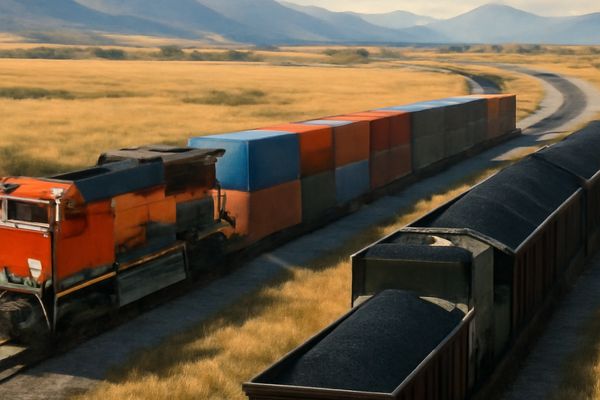
Polish wheat is entering the 2026 season at a strategic crossroads: exports of agri‑food products are at record value, yet structural barriers, high production costs and increasingly aggressive competition from Russia on key destinations like Egypt threaten to erode Poland’s position. The core challenge is no longer volume alone, but organisation, integration along the value chain, and the ability to unlock difficult but high‑potential markets while protecting margins for farmers.
The debate at the 11th European Congress of Agribusiness Managers captured this tension clearly. Experts stressed that Poland’s export success has so far rested mainly on processed food products, while raw grain – including wheat – struggles with access to third‑country markets, formal barriers, and logistics constraints. Egypt, the world’s largest wheat importer, imports around 12 million tonnes annually, yet remains effectively closed to Polish wheat due to unresolved sanitary certificates and the dominance of Russian suppliers. At the same time, cost pressures are squeezing Polish producers, who see that only well‑integrated sectors manage to defend their competitiveness. Whether wheat can follow the path of beef or tobacco – where integration drives export strength – will largely determine Poland’s role in future global grain trade.
Exclusive Offers on CMBroker

Wheat
protein min. 12,50%
98%
FOB 0.19 €/kg
(from UA)

Wheat
protein min. 11,00%
98%
FOB 0.29 €/kg
(from FR)

Wheat
protein min. 11,50%, CBOT
98%
FOB 0.21 €/kg
(from US)
📈 Prices & Market Structure
Global and regional wheat price snapshot (EUR)
The current physical wheat offers in Europe’s wider neighbourhood highlight a relatively narrow but telling price spread. Ukrainian 12.5% protein wheat FOB Odesa is offered around EUR 0.19/kg (≈ EUR 190/t), with similar levels for 10.5–11.0% protein, while 11.0% protein French wheat FOB Paris trades higher, near EUR 0.29/kg (≈ EUR 290/t). CBOT‑linked 11.5% protein US wheat on FOB terms is near EUR 0.21/kg (≈ EUR 210/t), underscoring the competitiveness of Black Sea origins against Western Europe.
These offer levels align with independent assessments: Polish 12.5% protein FOB indications for March loading have recently been reported near USD 239/t, while Ukrainian 11.5% FOB values stand closer to USD 225/t, implying a EUR range broadly consistent with the broker quotes when converted at current FX rates. In the Polish domestic market, wholesale wheat is estimated around USD 0.49–0.99/kg (EUR 0.45–0.90/kg at current FX), though this broad band reflects product differentiation and retail margins. Official statistics show that in early 2025 procurement prices were roughly PLN 90–95/dt (EUR ~210–225/t), confirming that farm‑gate values remain compressed relative to international benchmarks.
| Market / Contract | Specification | Location & Terms | Latest price (EUR/kg) | Weekly change | Sentiment |
|---|---|---|---|---|---|
| Ukraine wheat | 12.5% protein | FOB Odesa | 0.19 | 0% vs 13 Mar | Bearish to neutral – ample supply, export competition |
| Ukraine wheat | 11.0% protein | FOB Odesa | 0.18 | 0% vs 13 Mar | Bearish – price floor set mainly by logistics costs |
| France wheat | 11.0% protein | FOB Paris | 0.29 | 0% vs 13 Mar | Neutral – tracking Euronext, quality premium intact |
| US wheat (CBOT‑linked) | 11.5% protein | FOB US Gulf basis | 0.21 | 0% vs 13 Mar | Neutral – futures stable, cash basis volatile |
| Ukraine wheat | 11.5% protein | FCA Odesa | 0.25 | 0% vs 12 Mar | Neutral – inland margins steady |
| Ukraine wheat | 9.5% protein | FCA Odesa | 0.24 | 0% vs 12 Mar | Slightly bearish – feed segment pressured |
On futures, Euronext milling wheat contracts for the 2025/26 delivery slots have been trading in a band that corresponds broadly to the French FOB physical levels, with occasional premiums for nearby slots driven by logistics and quality concerns. Chicago SRW futures have recently rallied into mid‑March on short covering and weather worries in key exporting regions, though the weekly gains remain modest. For Polish farmers, the key message is that while global benchmarks have stabilised from the extreme highs of 2022, local prices still lag export parity due to internal bottlenecks and policy uncertainty.
🌍 Supply, Demand & Export Routes
Processed food dominates, grain remains constrained
According to the congress debate, over 70% of Poland’s agri‑food export value comes from processed products, not raw commodities. This structure is positive for value‑added and resilience, but it also masks weaknesses in bulk grain competitiveness and export logistics. Experts pointed out that sectors with strong integration – beef, tobacco, certain specialised crops – are better able to manage costs, maintain quality and access demanding markets.
For wheat, the problem is twofold. First, the cost side: production costs in Poland are structurally above those of Ukraine and, according to some comparative studies, still below Germany but trending upwards, eroding the traditional cost advantage. Second, access to large third‑country buyers remains limited by unresolved regulatory issues and by the fact that potential customers have already locked in relationships with cheaper and often politically more assertive suppliers, primarily Russia on the Egyptian market.
Egypt and China – potential vs. hard reality
The Raw Text underlines that Egypt, importing on average about 12 million tonnes of wheat annually, is the single largest global buyer and a natural target for Polish exporters. Yet despite years of diplomatic effort, Poland still cannot export wheat there due to the absence of agreed sanitary certificates and the very centralised procurement structure dominated by Egyptian state entities and Russia’s state‑linked trading arms. In practice, the market is “ruled” by Russian interests and tightly managed by Egypt’s military‑linked agencies.
Participants highlighted that this is not a new issue but a three‑year‑old problem that has still not been solved. Even as some “thawing” is visible – with new inquiries reaching the Polish Grain and Feed Chamber – the road to real, sustainable export flows is long. A similar story applies to China: politically attractive, but in practice extremely demanding in terms of phytosanitary requirements, long‑term relationship building and scale. The Raw Text clearly warns that political declarations alone will not unlock such markets; consistent, technically grounded work by both administration and business is needed.
📊 Fundamentals & Competitiveness
Record agri‑food exports, but narrowing margin
In 2025, Poland’s agri‑food exports reached a record EUR 58.4 billion, up from EUR 53.8 billion in 2024, while imports rose to EUR 38.6 billion from EUR 35.9 billion. The trade surplus in food products hit about EUR 19.8 billion, roughly 2.2% of Polish GDP. This headline success hides the early signs of deteriorating competitiveness that were stressed during the congress debate.
High production costs – energy, fertilisers, labour and compliance with environmental regulations – are eroding margins, particularly for input‑intensive arable crops like wheat. Regional data show that in early 2025, procurement prices, while slightly up year‑on‑year, still failed to fully compensate for cost inflation, leaving many cereal farms close to or below breakeven, especially in regions with weaker yields or quality issues. Without productivity gains and better organisation along the value chain, Poland risks gradually losing share not only on distant markets but even within the EU.
Role of integration in defending value
Speakers at the congress drew a clear line between more and less integrated sectors. Where farmer groups, processors and traders coordinate – as in beef or tobacco – Poland has been able to maintain or expand market share despite higher unit costs. Fragmented sectors, by contrast, face weaker bargaining power in both input and output markets, lower capacity to meet standardised quality and traceability requirements, and greater vulnerability to price swings.
For wheat, this means that cooperatives, producer organisations and contractual integration with milling and feed industries are not optional but strategic. Without such structures, individual farms will struggle to meet the scale and consistency required by large buyers in North Africa or Asia, and Poland will remain largely tied to intra‑EU trade, where competition is intense and margin opportunities limited.
🌦️ Weather Outlook for Poland (Wheat Regions)
Short‑term conditions: mostly favourable but cool
Weather forecasts for Poland for the coming week (mid‑March 2026) suggest relatively mild and somewhat unsettled conditions, with daytime temperatures mostly in the 6–12°C range and occasional rainfall episodes, particularly in western and central regions. These conditions are broadly favourable for winter wheat, supporting gradual vegetation restart without exposing crops to severe frost risk.
Precipitation totals are expected to be near to slightly above seasonal norms in parts of western Poland, helping to replenish soil moisture after drier spells. In eastern and north‑eastern voivodeships, precipitation could remain closer to normal or slightly below, but no major drought signals are seen in the very short term based on current pan‑European outlooks. Overall, the weather pattern supports stable yield prospects, though farmers should monitor any late‑March cold incursions that could still pose a risk to early‑developing stands.
Implications for yields and quality
With no widespread winterkill and reasonable soil moisture, initial yield expectations for Poland’s 2026 wheat harvest remain close to average, assuming typical spring rainfall. The main agronomic risk now shifts toward disease pressure in dense stands and potential nitrogen management challenges if rainfall becomes excessive in April–May.
From a market perspective, a broadly normal Polish crop, combined with large exportable surpluses from Russia and persistent Ukrainian flows via alternative corridors, implies a well‑supplied European wheat balance sheet. This reinforces the message from prices: upside for Polish farm‑gate wheat is likely to be capped unless weather shocks hit several major producers simultaneously or policy changes materially tighten available export supplies.
🌐 Trade Flows, Logistics & Policy
Transit, Ukrainian competition and EU politics
The Raw Text emphasises that Poland’s export future depends not only on its own production but also on how it positions itself as a transit and processing hub for Ukrainian grain. Since 2023, policy has sought to separate Ukrainian transit from domestic market supply to limit direct price pressure on Polish farmers, but Ukrainian wheat still competes with Polish and EU origin on final markets such as Germany and the Mediterranean.
On the positive side, this situation can create opportunities in logistics, blending and re‑export, provided that infrastructure and regulatory frameworks are clear and predictable. On the negative side, it keeps a persistent cap on price recovery for Polish wheat, especially in border regions and around key rail corridors. Any further EU‑Ukraine trade liberalisation or changes in sanctions and export policies for Russia will directly shape this competitive landscape in 2026–27.
Formal barriers and the role of the state
The debate made clear that market access issues like Egypt’s sanitary certificates cannot be solved by companies alone. The call from industry leaders and politicians such as Monika Piątkowska is for a more strategic, long‑term state engagement targeting key buyers, with a focus on technical dossiers, risk assessments and mutual recognition agreements rather than short‑lived political announcements.
This means that for wheat, success on markets like Egypt or China will depend on continuous collaboration between the Ministry of Agriculture, foreign service (embassies, trade counsellors), supervisory bodies and sector organisations like the Grain and Feed Chamber. Without this, Poland risks watching others consolidate positions on these markets, making future entry more costly or only possible via price‑cutting.
📊 Global Production & Stock Context
Major exporters vs. Poland
While the Raw Text focuses on Poland, the competitive picture is shaped by the major exporters: Russia, EU (notably France and Germany), the US, Canada, Australia and increasingly Ukraine despite wartime constraints. Recent international commentary suggests that Russia is likely to maintain large exportable surpluses, with winter wheat crops benefiting from reasonable moisture and snow cover in many regions.
The EU’s wheat output is expected to be near average, with some concerns over French crop conditions that have contributed to modest risk premiums on Euronext futures. In this environment, Poland is a medium‑sized but strategically located producer whose export share will be determined less by absolute tonnage and more by its ability to consistently place grain into premium or deficit markets.
Importers: Egypt, MENA and Asia
On the demand side, Egypt, Algeria, other North African states and several countries in the Middle East and Sub‑Saharan Africa remain structurally dependent on wheat imports. Asia, particularly Southeast Asia and China, offers growth potential but is already extremely competitive, with Australian and Black Sea origins entrenched in many tenders.
For Poland, this means that EU neighbours will likely remain the core export outlets in the near term. Penetrating Egypt or China would be transformative but will require a multi‑year effort in market development and likely some targeted support instruments (credit guarantees, promotional programmes, technical cooperation) to overcome the existing dominance of Russian, Ukrainian and other suppliers.
📌 Trading Outlook & Strategic Recommendations
Key drivers for the next 3–6 months
- Structural competitiveness: High production costs and fragmented marketing structures remain the main headwinds for Polish wheat, even more than short‑term price moves.
- Weather: Current conditions in Poland are broadly favourable; only major weather shocks in Russia, EU or North America would significantly tighten the global balance.
- Policy & market access: Progress (or lack thereof) on sanitary certificates and trade negotiations for Egypt and other third‑country markets will shape medium‑term export potential more than weekly price volatility.
- Black Sea competition: Ukrainian and Russian wheat continue to set the reference price for much of the Mediterranean and EU import demand, capping upside for Polish offers.
Actionable guidance for market participants
- Polish farmers:
- Use current price stability to strengthen integration – join or build producer groups, negotiate forward contracts with mills or feed compounders to secure premiums for quality and logistics reliability.
- Focus on cost control and yield‑enhancing agronomy (variety choice, fertilisation efficiency, disease management), as margin gains will come more from productivity than from price rallies in a well‑supplied market.
- Consider partial price hedging for the 2026 crop through fixed‑price contracts or index‑linked deals to Euronext, especially where farm cash‑flow risk is high.
- Traders and exporters:
- Prioritise intra‑EU outlets and regional industrial demand while actively supporting sector organisations in pushing for Egyptian and other third‑country access – treat this as a strategic, not tactical, objective.
- Explore transit and blending opportunities with Ukrainian grain, using Poland’s logistics position to add value rather than compete purely on origin price.
- Maintain flexible logistics options (rail, truck, port slots) to quickly capture arbitrage windows when Euronext or Mediterranean basis levels move in Poland’s favour.
- Policy‑makers and agencies:
- Intensify technical negotiations on sanitary and phytosanitary protocols with Egypt and China, ensuring stable and predictable frameworks for exporters.
- Support farmer and co‑operative investment in storage, quality control and logistics to enable more strategic marketing (selling into rallies instead of harvest‑time pressure).
- Ensure that any support schemes (e.g. temporary subsidies or compensation for price collapses) are designed not to distort long‑term competitiveness signals.
📆 3‑Day Regional Price Outlook (Poland, PL)
Based on current international benchmarks, Polish domestic procurement data and recent FOB assessments for Baltic and Black Sea wheat, the following short‑term outlook for Polish wheat prices (farm‑gate, average quality, converted to EUR per tonne) is proposed. This is indicative and assumes no major policy or weather shock in the next three days.
| Date | Region | Segment | Expected price (EUR/t) | Day‑on‑day change | Comment |
|---|---|---|---|---|---|
| 2026‑03‑19 | Poland (PL) | Farm‑gate, milling wheat | 215–225 | 0 to +2 | Stable to slightly firmer; tracking modest gains on global futures, limited spot demand. |
| 2026‑03‑20 | Poland (PL) | Farm‑gate, milling wheat | 215–228 | 0 to +3 | Potential small uptick if Euronext firmness continues and exporters seek coverage. |
| 2026‑03‑21 | Poland (PL) | Farm‑gate, milling wheat | 215–228 | 0 | Weekend trading lull; prices largely driven by prior futures close and local elevator bids. |
For exporters pricing FOB Baltic ports, Polish 12.5% protein wheat is likely to remain in a range close to EUR 225–235/t over the next three days, maintaining a modest premium over Ukrainian origin but discount to French. This range reflects both current international offers and Poland’s still‑challenging cost structure and market access environment.
Related posts:
 Rice Market at a Crossroads: Flat Futures, Soft FOB, Rising Geopolitical Risk
 Polish Wheat Market Under Pressure from Embargo & Ukrainian Trade War
 Jordan’s Wheat Safety Net: How Big Stocks Cushion a Volatile World
 Polish Wheat at a Crossroads: From Stock Overhang to Global Opportunist
 Flat SFE Futures, Firm Black Sea Bids: Barley Market at a Crossroads
 Wheat under pressure: Indian mill slowdown meets global ample stocks
 Polish Buckwheat Holds Firm as Russian Exports Surge and Weather Stays Mild
 Wheat at a Crossroads: India’s Heat Stress Threatens Grain Yields as Global Prices Hold Steady