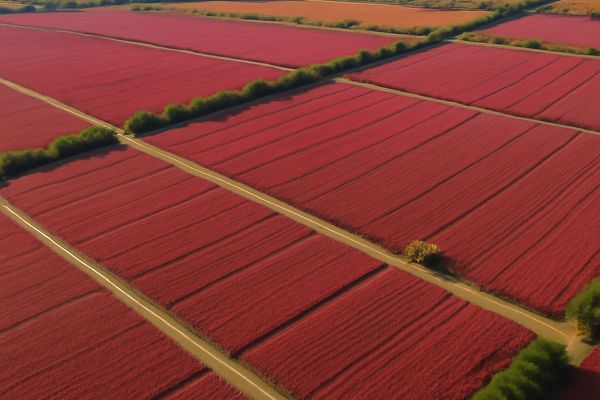
Hibiscus prices and trade flows are underpinned by robust structural demand from food, nutraceutical and beauty applications, with current indicators pointing to firm, gradually rising price levels rather than sharp volatility.
The market is shifting from a fragmented herbal niche toward a coordinated, value-added ingredient space. Strong double‑digit market growth, organic premiums and tech‑driven supply chains are meeting increasingly diversified demand from beverages, functional foods, supplements and cosmetics. With Nigeria and India anchoring supply and Egypt consolidating its export role in dried flowers, buyers face a market that is tight but orderly, where quality differentiation and certification increasingly drive pricing power.
Exclusive Offers on CMBroker

Hibiscus flower dried
tbc
FOB 2.30 €/kg
(from EG)

Hibiscus flower dried
slices
FOB 2.35 €/kg
(from EG)
📈 Prices & Market Size
The global hibiscus market is projected to reach around EUR 195–200 million by the end of 2026 (≈USD 212.5 million), implying a strong CAGR of about 10.7%. This expansion is driven primarily by substitution of synthetic ingredients and broader adoption in health-oriented consumer products. Even though absolute volumes remain modest compared with major herbs, the value density per kilogram is rising as demand shifts to higher‑grade and processed forms.
In India, wholesale hibiscus prices currently range roughly from EUR 1.85 to 4.40 per kg, depending on quality and processing, with premium and festival‑driven demand occasionally pushing niche lots above these levels. Export indications from Egypt for dried hibiscus flowers (FOB Cairo) are clustered just above EUR 2.30 per kg, showing a slight but consistent firming over recent weeks. Overall, the tone is stable‑to‑firm across origins, with clear premiums for specialty and certified lots.
| Product | Origin | Term | Latest Price (EUR/kg) | 1–3 Week Trend |
|---|---|---|---|---|
| Hibiscus flower dried (tbc) | Egypt (FOB Cairo) | FOB | 2.30 | Gently firmer vs. late Feb |
| Hibiscus flower dried (slices) | Egypt (FOB Cairo) | FOB | 2.35 | Gently firmer vs. late Feb |
🌍 Supply, Trade Hubs & Demand Drivers
Nigeria remains the backbone of global hibiscus supply, with export growth of more than 17% and shipments around 1,000 tonnes. Its role is particularly strong in supplying the beverage and nutraceutical sectors, where bulk dried flowers and coarse cuts dominate. India is consolidating its position as a key complementary origin, not only in dried flowers but also in processed and value‑added products aimed at higher‑margin channels.
On the demand side, the United States, Russia, Singapore and Kazakhstan feature among the leading importers, while China, Germany and several South American destinations are emerging as fast‑growing outlets. This diversified demand base reduces single‑market risk and supports continued trade growth, particularly for standardized industrial grades suitable for tea blends, RTD beverages and extract production. Spain, Italy and Vietnam additionally serve as important export and processing hubs, linking origin producers with European and Asian end‑markets.
The fundamental driver behind this expansion is hibiscus’ positioning at the crossroads of health and natural‑ingredient trends. The product benefits from high vitamin C content and strong antioxidant properties, making it attractive for herbal teas, functional beverages and dietary supplements. At the same time, food manufacturers are increasingly substituting synthetic colors with natural hibiscus extracts, pushing up industrial demand and shifting the market emphasis from commodity flower to standardized, traceable ingredients.
📊 Segments, Premiums & Organic Opportunity
Hibiscus demand is increasingly segmented. Traditional bulk uses, such as Zobo and other herbal teas, still account for a major share of volume, but incremental growth is now led by nutraceuticals, functional beverages and beauty applications. The cosmetic sector, particularly anti‑aging and skin‑brightening formulations, has become a meaningful new outlet, often specifying tighter quality parameters and supporting higher price points.
Organic hibiscus stands out as a clear premium niche, especially in Europe and North America. Certified organic volumes are growing faster than the overall market, with an estimated CAGR close to 8%. This segment commands notable price premiums and offers better margin potential for integrated supply chains that can guarantee certification, residue compliance and consistent color profile. As clean‑label and sustainability expectations rise, organic and ethically sourced hibiscus is likely to capture a growing share of B2B contracting.
🚀 Recent Developments & Technology
At recent international food and ingredient trade shows, hibiscus has moved into the spotlight among medicinal and functional plants. Deal activity in 2026 has been particularly visible at major Middle East events, where hibiscus featured prominently in beverage, nutraceutical and beauty‑care sourcing discussions. Reported spot deals in the mid‑teen million‑euro equivalent underscore hibiscus’ transition from a peripheral herb to a recognized strategic ingredient for brand owners.
Supply chains are also modernizing. Exporters and ingredient companies are increasingly deploying AI‑based formulation tools to optimize blends and color stability, as well as IoT‑enabled tracking systems to improve traceability from farm to shipment. These investments strengthen quality control, certification credibility and on‑time delivery – all prerequisites for long‑term supply contracts with multinational food, pharma and cosmetic companies. Over time, this should reduce quality‑related rejections but may also lift entry barriers for smaller, less capitalized suppliers.
🌦️ Weather & Crop Outlook (Key Regions)
Weather conditions in West Africa, particularly Nigeria and neighboring producing zones, remain crucial for medium‑term supply. While hibiscus is relatively resilient, irregular rainfall patterns and localized dry spells can affect flower yield and color intensity. Early indications for the upcoming season suggest generally near‑normal conditions, but buyers should monitor any emerging anomalies that could tighten availability of higher‑grade lots.
In India and Egypt, the main risks relate less to extreme weather and more to localized heat waves and water constraints, which could impact both yields and the cost structure (irrigation, logistics). Combined with higher scrutiny on pesticide residues and contaminants in key import markets, any weather‑related stress that pushes producers toward more intensive crop protection could translate into tighter supplies of residue‑compliant material. This lends additional support to price premiums for integrated and certified supply chains.
📆 Market Sentiment & Outlook
Market sentiment is decisively positive, with short‑term demand described as strong and prices stable to firm. In the medium term, hibiscus is set to expand further across food, pharmaceutical and cosmetic applications, underpinned by its role as a natural colorant and health‑linked ingredient. Long term, the crop is transitioning into a mainstream global input for wellness‑oriented brands, suggesting that structural demand growth will outpace purely agronomic yield gains.
For the next few weeks, the combination of steady import demand, limited downside from current farm‑gate levels in key origins, and ongoing contract activity with industrial users suggests a mildly bullish bias. Upside appears more probable in premium and organic segments than in basic bulk grades, where competitive pressure among origins remains stronger. Nevertheless, any supply disruption in Nigeria or India, or a sharp acceleration in cosmetic‑sector demand, could quickly tighten the overall balance.
💡 Trading Outlook
- Buyers: Consider securing medium‑term coverage for Q2–Q3, especially for standardized color grades and organic lots, as premiums may widen if demand from beverages and cosmetics accelerates.
- Producers/Exporters: Investing in traceability, residue management and basic processing (sorting, cutting, cleaning) can unlock access to higher‑margin nutraceutical and cosmetic channels.
- Traders: Focus on origin and quality spreads; Nigeria–India–Egypt arbitrage and organic vs. conventional differentials are likely to remain the key profit centers rather than outright flat price moves.
📉 Short-Term Price Indication (Next 3 Days)
- Egypt FOB dried flowers (conventional): Stable to slightly firmer around EUR 2.30–2.40/kg as export interest remains solid.
- India wholesale (mixed quality): Mostly steady in the equivalent range of roughly EUR 1.90–4.40/kg, with premiums holding for top‑grade and festival‑related demand.
- Organic & specialty grades (EU delivered): Firm tone, small upward bias as buyers compete for limited certified volumes.