
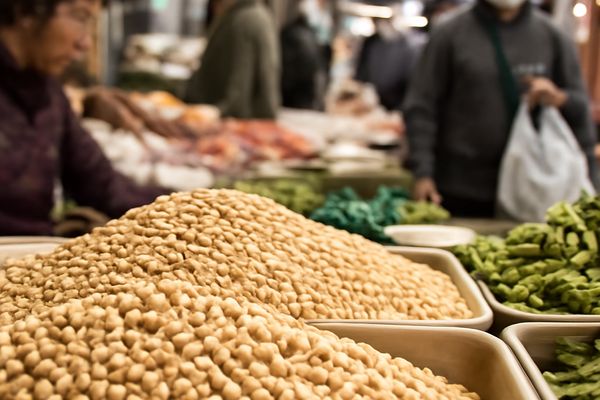
South Korea’s latest non-GMO soybean tender for 125,000 tonnes from the U.S. underpins steady import demand and supports a broadly stable to mildly firm tone in the physical soybean market. While global futures remain range-bound, differentiated non-GMO and containerized flows to Asia are likely to command a modest premium and tighten high-quality U.S. supplies over 2026.
South Korea’s state-run aT has secured 125,000 tonnes of U.S.-origin non-GMO soybeans at USD 236–258/tonne C&F for April 2026–April 2027 delivery. This long-dated, staggered purchasing strategy locks in supply security and logistics flexibility at a time when global soybean prices have eased from earlier highs but remain sensitive to weather and South American export performance. The mix of container and optional bulk shipments suggests end-users are optimizing for just‑in‑time arrivals, storage constraints and segregation of non-GMO flows, which could keep quality soybeans and specialty segments relatively well supported compared to standard feed-grade origins.
Exclusive Offers on CMBroker

Soybeans
yellow, organic
99.8%
FOB 0.78 €/kg
(from CN)

Soybeans
yellow
99.5%
FOB 0.68 €/kg
(from CN)

Soybeans
FOB 0.35 €/kg
(from UA)
📈 Prices & Tender Signals
The Korean aT tender covers 125,000 tonnes of U.S. non-GMO soybeans, priced at roughly EUR 217–237/tonne C&F (assuming ~0.92 EUR/USD), which is competitive versus current global benchmarks for identity-preserved beans. The deal spans 100,000 tonnes in containers and 25,000 tonnes as an optional bulk lot, providing flexibility for buyers to adjust to domestic demand and storage conditions over 12 months.
Spot physical indications from key exporters show a mixed but broadly steady picture. Converted to EUR per kg FOB, recent offers include: Chinese yellow soybeans around 0.68 EUR/kg (conventional) and 0.78 EUR/kg (organic) from Beijing, Indian sortex-clean soybeans near 0.97 EUR/kg FOB New Delhi, Ukrainian beans near 0.34 EUR/kg FOB Odesa, and U.S. No. 2 soybeans around 0.57 EUR/kg FOB, with a slight uptick from earlier in March. This confirms a firm premium structure for higher-quality and specialty origins versus Black Sea supplies.
| Origin | Type | Latest FOB Price (EUR/kg) | 1–month Trend |
|---|---|---|---|
| China (Beijing) | Yellow | 0.68 | Sideways to slightly higher |
| China (Beijing) | Organic yellow | 0.78 | Firm, modest gains |
| India (New Delhi) | Sortex clean | 0.97 | Gradually higher |
| Ukraine (Odesa) | Standard | 0.34 | Stable |
| United States | No. 2 | 0.57 | Slightly higher |
🌍 Supply & Demand Dynamics
The Korean non-GMO soybean purchase reinforces the U.S. position as a core supplier for high-spec food and processing demand in North Asia. The long shipment window (April 2026–April 2027) indicates importers aim to smooth arrivals and avoid spot-market volatility, especially during key global weather and harvest windows in the U.S. and South America. This strategy should underpin baseline demand for U.S. non-GMO beans even if global feed-grade supplies remain ample.
Structurally, the deal highlights three themes: ongoing demand growth for non-GMO and segregated supply chains; continued reliance on the U.S. for consistent quality and certification; and the importance of container logistics into Asian ports with constrained bulk handling or strong demand for just‑in‑time deliveries. Optional bulk volumes give buyers the ability to scale up intake if local crush or food-use demand exceeds expectations over 2026.
📊 Regional Fundamentals & Weather
In Asia, India remains a price reference point for regional buyers, with sortex-clean soybeans near 0.97 EUR/kg FOB New Delhi, reflecting internal support from domestic crush and feed demand. These levels stand well above Black Sea offers, underlining the quality and logistics premium within the region. For importers in South Korea and other Asian destinations, U.S. non-GMO C&F values in the low-to-mid EUR 200s per tonne appear broadly aligned with this quality spectrum when freight and certification are considered.
Weather in key producing regions is seasonally important but not yet disruptive. South American harvest progress and conditions in Brazil and Argentina, as well as upcoming U.S. planting weather, will drive global balance sheets and futures sentiment through Q2 2026. For Asian importers, any emerging weather threat that tightens U.S. or South American export programs would further validate the current Korean strategy of early, staggered procurement for non-GMO needs.
📆 Outlook & Trading Recommendations
The Korean tender suggests steady, policy-backed import demand and a preference for price certainty over the next marketing year. Non-GMO and containerized U.S. soybeans should maintain a structural premium to standard bulk origins, particularly if macro volatility or weather concerns flare later in 2026. Overall price direction in the near term is likely to remain sideways with a modestly firm bias for high-quality and specialty segments rather than for generic feed beans.
- Importers (Asia, esp. Korea/Japan): Consider layering in additional forward coverage for non-GMO and food-grade beans on price dips, mirroring aT’s staggered buying pattern to balance cost risk and supply security.
- Producers & Sellers (U.S., India): Use current tenders and firm regional premiums to lock in margins on a portion of 2026–27 output, particularly for identity-preserved and container-suitable lots.
- Industrial Users (crushers, food processors): Differentiate between generic and non-GMO procurement; hedge basis and futures separately, as premium segments are likely to decouple from flat-price softness in standard origins.
📉 Short-Term Price Indication (3 Days)
- FOB New Delhi (IN, sortex clean, EUR/kg): Around 0.95–0.99, bias stable to slightly firm amid solid regional demand.
- FOB U.S. Gulf / Pacific Northwest (No. 2, EUR/kg): Around 0.56–0.59 equivalent, tracking mostly sideways with mild support from confirmed Asian demand.
- FOB Odesa (UA, standard, EUR/kg): Near 0.33–0.35, expected to remain range-bound given ample Black Sea supply.
Related posts:
 China Signals More US Farm Imports; Soybean Prices Drop on Trade Uncertainty
 Soybean prices steady but fragile in India & Ukraine
 Indian Sesame Prices Steady, but Heat and Export Signals Matter
 Crude Oil Jumps: Futures Rally Signals Shift—What’s Driving the Upturn?
 Edible Oil Prices Surge Across South Asia Amid Global Market Uncertainty
 Crop Prices Fall as Trump Signals Possible End to Iran War
 South Korea’s Soybean Imports Decline as Government Promotes Domestic Production