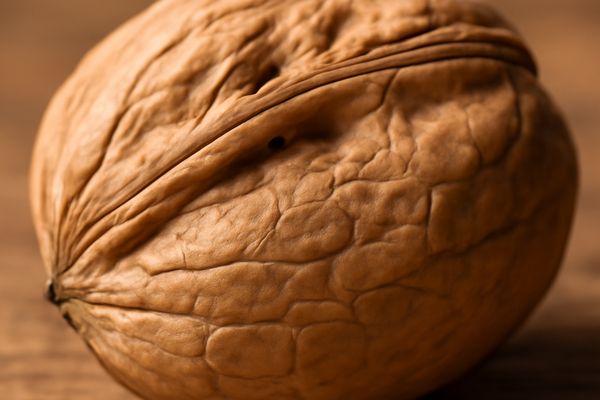
Chinese and Indian walnut kernel FOB prices are flat week-on-week, with China maintaining a clear cost advantage over India and the US. Stable grower selling and comfortable inventories in California limit upside, while no major weather shocks are visible in key origins.
Global walnut trade is in a consolidation phase after several seasons of oversupply and weak farm-gate prices. China remains highly competitive in kernel pieces and broken grades, while premium organic halves from India and the US continue to price at a strong differential. With no immediate production threat from weather and steady but unspectacular demand, near-term price action is expected to stay rangebound, with only modest firmness possible on selective grades and nearby positions.
Exclusive Offers on CMBroker

Walnut kernels
light quarter
FOB 3.30 €/kg
(from CN)

Walnut kernels
light pieces, 8-12 mm
FOB 2.80 €/kg
(from CN)

Walnut kernels
light amber pieces, 8-12 mm
FOB 2.25 €/kg
(from CN)
📈 Prices & Differentials
All prices converted to EUR using ~1.00 EUR = 1.10 USD (approx.).
| Origin | Location / Term | Product | Price (EUR/kg, FOB) | 1-week trend |
|---|---|---|---|---|
| CN | Dalian, FOB | Walnut kernels, light quarter | ≈ 3.00 | Stable |
| CN | Dalian, FOB | Light pieces 8–12 mm | ≈ 2.55 | Stable |
| CN | Dalian, FOB | Light amber pieces 8–12 mm | ≈ 2.05 | Stable |
| CN | Dalian, FOB | Light broken 4–8 mm | ≈ 2.65 | Stable |
| IN | New Delhi, FOB | Organic light halves | ≈ 4.80 | Stable |
| US | London, FOB | Organic light halves (80%) | ≈ 4.10 | Stable |
- China maintains a discount of roughly 30–40% versus organic halves from India and the US on a kernel basis, keeping CN origin very attractive for industrial users.
- Week-on-week, quoted levels across CN, IN and US kernels are unchanged, reflecting balanced spot demand and lack of fresh bullish news.
🌍 Supply & Demand Snapshot
USDA’s latest global tree nut outlook indicates walnut production in 2025/26 remains high, led by China (around 1.55 MMT in-shell) and a recovering US crop after the weak 2023/24 season. California inventory data from the California Walnut Board show still-elevated stocks into late 2025, pointing to ample export availability in early 2026.
Trade flow analysis for 2025/26 suggests strong buying interest from India and Pakistan, with growing imports from the Middle East and North Africa as prices remain well below mid-2010s peaks. Demand in the EU and UK is steady but price-sensitive, favoring competitive Chinese pieces and US halves in mixed nut and bakery applications.
⛅ Weather & Crop Conditions (CN · IN · US)
China (CN): Key walnut regions in Xinjiang, Shaanxi and Yunnan face generally seasonable late-winter to early-spring conditions over the next 7 days, with no widespread frost anomalies or heavy precipitation extremes flagged in regional forecasts. (Based on national and regional meteorological updates for northwest and southwest China.) No immediate weather-related risk premium is entering the market.
India (IN): Kashmir and Himachal Pradesh orchards are transitioning out of dormancy; near-term forecasts call for relatively normal temperatures and some light precipitation, which is supportive for bud development without triggering large-scale damage. (Derived from Indian Himalayan regional forecasts and recent local commentary on nut crops.)
United States (US – California): Central Valley conditions are largely benign for walnut orchards, with no major cold snaps or excessive rainfall events highlighted in recent ag and regional updates. USDA and industry outlooks point to an 18% rebound in 2025 California walnut production versus the prior year, reinforcing an overall comfortable supply picture going into the next marketing season.
📊 Fundamentals & Market Drivers
- Inventories: California ending stocks remain significant after several large crops, even as some walnut acreage has reportedly been removed or shifted due to previously depressed prices. This continues to cap rally potential.
- Costs & margins: Farm-gate prices in California improved from historical lows but remain only modestly profitable for many growers, encouraging disciplined selling rather than aggressive forward offers.
- Macroeconomics: Global economic uncertainty and geopolitical tensions support cautious consumer spending, but nuts retain a relatively defensive demand profile within healthy snacks and ingredients.
📆 Short-Term Outlook & Trading Hints
- CN origin (FOB Dalian): Rangebound bias for the next 3–5 days; light to moderate physical buying likely to keep light pieces and quarters near current levels, with only minor intra-day adjustments.
- IN origin (FOB New Delhi): Organic halves expected to remain firm but static; limited exportable volumes and strong domestic preference in India justify the premium over Chinese kernels.
- US origin (FOB London ex-California): Prices should stay broadly stable as buyers monitor new demand ahead of late-spring contract negotiations; ample supply and competition from China limit near-term upside.
3-Day Directional Price Indication (EUR, qualitative)
- CN – Dalian FOB kernels: 0 to +1% (stable to slightly firmer on nearby prompt demand).
- IN – New Delhi FOB organic halves: 0% (sideways, tight but not accelerating).
- US – FOB London organic halves: 0% (stable; buyers well covered short term).