
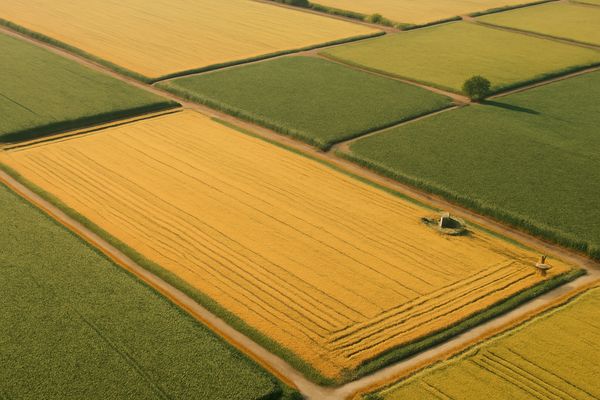
Sesame prices in India and Egypt are broadly stable to slightly softer, with only marginal week‑on‑week moves and no acute supply shock in sight. Current weather patterns in key Indian growing zones and in Egypt look non‑disruptive for the next few days, pointing to a broadly sideways short‑term price outlook.
The market is trading in a fundamentally calm environment. India is entering the summer sesame sowing window under predominantly dry, seasonally warm conditions that support timely field work, while Egypt is normalising after last week’s medicane‑related rains with no major new weather threats flagged. At the same time, Egypt’s import demand has been structurally weaker over the past year, tempering upside on export origins. In this setting, buyers can still negotiate slight discounts on higher‑grade material, but any aggressive price weakness appears limited as long as new‑crop risks remain contained.
Exclusive Offers on CMBroker

Sesame seeds
hulled
99.90%
FOB 1.70 €/kg
(from IN)

Sesame seeds
hulled, EU-Grade
99.97%
FOB 1.50 €/kg
(from IN)

Sesame seeds
hulled, EU-Grade
99.98%
FOB 1.52 €/kg
(from IN)
📈 Prices & Spreads (Indicative, in EUR)
The following levels are approximate conversions of current FOB indications into EUR using a working rate of 1 USD ≈ 0.92 EUR.
| Origin | Product | Spec | Term | Spot Price (EUR/t) | 1W Trend |
|---|---|---|---|---|---|
| India (New Delhi) | Hulled sesame | 99.90% purity | FOB | ≈ 1,560 EUR/t | Unchanged w/w |
| India (New Delhi) | Hulled sesame | EU‑grade 99.95–99.98% | FOB | ≈ 1,350–1,395 EUR/t | Unchanged w/w |
| India (New Delhi) | Natural sesame | 99–99.95% purity | FOB | ≈ 1,030–1,040 EUR/t | Flat w/w |
| India (New Delhi) | Black sesame | Regular to Super Z | FOB | ≈ 1,990–2,460 EUR/t | Marginally softer w/w |
| Egypt (Cairo) | Natural sesame | 99% purity | FOB | ≈ 1,420 EUR/t | Softer by ~2% w/w |
| Egypt (Cairo) | Natural golden | 99.5% purity | FOB | ≈ 1,875 EUR/t | Softer by ~2% w/w |
Overall, Indian quotes are broadly unchanged compared with last week, with minor easing seen mainly in premium black types. Egyptian FOB values have edged down by a few EUR/t, extending the slow grind lower observed in recent weeks.
🌍 Supply, Demand & Weather Drivers
India (IN)
In Gujarat, one of India’s key sesame states, agrometeorological advisories for late February indicate dry and clear conditions, with specific guidance to proceed with summer sesame sowing as temperatures reach around 19–30°C and no weather warnings are in place. Extended‑range outlooks for Gujarat through early March called for large rainfall deficits and essentially dry weather, which supports uninterrupted field preparation and sowing but raises the importance of timely irrigation where available.
No new nationwide crop stress alerts have been issued for Rajasthan or other major sesame belts over the last few days, and institutional sources in Saurashtra still describe sesame as a highly remunerative crop, underpinning farmers’ interest in maintaining or expanding area. With sowing just starting in parts of western India and no acute heatwave or flood risk flagged for the immediate horizon, near‑term supply perceptions remain neutral to slightly comfortable.
Egypt (EG)
Egypt experienced heavy rainfall and strong winds from Medicane “Samuel” around 18 March, which brought flash‑flood risk to Upper Egypt and the Sinai. These conditions have since eased, and current regional weather discussions point to a return to more typical late‑March patterns without additional organised storm systems directed at the Nile Valley in the next few days. While localised field damage cannot be fully excluded, there are no reports of large‑scale sesame losses attributable to the storm.
On the demand side, recent trade data show Egypt’s sesame imports in the latest 12‑month period (Oct 2024–Sep 2025) fell by about 10.6% in volume and 20% in value, with average import prices declining by roughly 10.5%. This structural contraction in buying and lower import price benchmarks help cap FOB upside for exporters supplying the Egyptian market, reinforcing the modest downward drift in local origin offers seen in recent weeks.
📊 Fundamentals & Market Tone
- Inventory & farmer selling: With India between main harvests and just beginning summer sowing in parts of Gujarat, spot availability is driven by existing stocks rather than fresh crop. Dry weather and good price memories over recent seasons encourage steady farmer holding, limiting aggressive destocking despite soft external demand signals.
- Demand in key destinations: Egypt’s reduced import appetite and lower achieved import prices over the last year indicate more cautious buying, likely linked to macro constraints and currency pressures. Other Asian demand centres show no fresh surge that would tighten the market in the very short term.
- Weather risk premium: In India, current agromet bulletins carry no sesame‑specific weather warnings; sowing advisories emphasise seed treatment and fertilisation rather than risk mitigation for excessive rain or heat. This keeps the weather premium limited for now, though later pre‑monsoon conditions will remain a watchpoint.
📆 Short‑Term Outlook & Trading Ideas
Weather Outlook (Next 3 Days)
- India (Gujarat/Rajasthan belts): Continuation of predominantly dry, seasonally warm weather is expected, in line with prior late‑February/early‑March guidance. This is favourable for ongoing sowing and logistics, with no immediate threat to supply.
- Egypt (Upper Egypt / Nile Valley): After the passage of Medicane Samuel and associated rains on 18–19 March, conditions are stabilising with no additional major storm systems forecast over the next few days. Any lingering moisture may briefly slow rural road movement but is unlikely to materially disrupt exports.
Trading Outlook (Next 1–2 Weeks)
- Buyers (importers, crushers, food manufacturers): Use the current stable to slightly soft tone to extend coverage modestly, especially for Indian EU‑grade hulled sesame and Egyptian natural where FOB levels have eased by a few percent from earlier in March. Stagger purchases rather than front‑loading, as no immediate upside catalyst is visible.
- Sellers (exporters, aggregators): Maintain offer discipline on premium specs (very high purity, black and organic lines), where supply is structurally tighter and recent price erosion has been limited. Consider small tactical discounts on larger parcels of conventional natural or mid‑range hulled sesame to keep shipment pipelines active in light of subdued Egyptian import demand.
- Risk management: Monitor any shift in early pre‑monsoon forecasts or new macro developments in key importing economies. In the absence of such shocks, baseline expectation is for a sideways price pattern with a mild downward bias in the near term.
📉 3‑Day Regional Price Indication (Directional)
- India – FOB New Delhi: Prices for hulled and natural sesame are expected to remain broadly sideways over the next three days, with a possible fluctuation band of ±5–10 EUR/t driven mainly by FX and freight offers.
- Egypt – FOB Cairo: Following recent small declines and still‑soft import demand, Egyptian natural and golden sesame are likely to trade steady to slightly softer in the next three days, with any further downside also limited to roughly 5–10 EUR/t absent new market news.
Related posts:
 Sesame prices edge higher on Chad origin; India, Egypt stable-to-soft
 Chinese Pumpkin Seed Kernels Edge Softer as Demand Stays Cautious
 India Oilmeal Exports to China Jump 20-Fold, But War Disruptions Pose Risk
 Crude Oil in Backwardation: Tight Near-Term, Softer Long-Term Outlook
 Chad Sesame FCA Berlin Gains Amid Softer Indian FOB Hulled Values
 India Port Suspension of West Asia-Bound Cargo Triggers Immediate Risk Repricing in Sesame and Agri Exports
 Sesame prices ease from recent highs as India and Egypt stay well supplied
 Indian Sesame Prices Steady, but Heat and Export Signals Matter