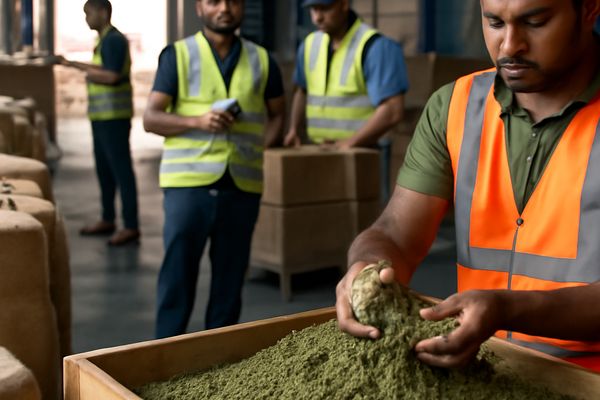
Indian organic dried oregano FOB New Delhi prices are holding steady in a narrow range, with no immediate sign of sharp upside or downside. However, unusually hot and early summer conditions across North India raise medium‑term risks for herb yields and quality, which could tighten supply later in the year.
Export offers for organic dried oregano from India remain stable, with indicative FOB New Delhi levels unchanged over recent weeks in euro terms. This reflects balanced near‑term supply and demand: exporters report sufficient raw material availability and ongoing interest from overseas buyers for organic Indian spices, but without aggressive spot buying. A cluster of small and mid‑size exporters is actively targeting global spice markets, keeping competition high and capping short‑term price momentum. Weather, logistics and evolving quality requirements will be the main watchpoints into April.
Exclusive Offers on CMBroker

Oregano
dried
FOB 2.90 €/kg
(from IN)
📈 Prices & Market Tone
Spot indications for organic dried oregano FOB New Delhi are effectively flat compared with the previous two weeks when converted to EUR. Recent international wholesale lists for organic oregano leaf in destination markets show significantly higher end‑user levels in EUR/kg, underlining that Indian FOB is still competitively priced in the global supply chain.
Domestic spice exporters in India continue to report healthy interest from importers in Europe and North America, but most inquiries are price‑sensitive and focused on standard volumes rather than large forward coverage. New players entering the Indian spice export space are widening sourcing options, which also helps prevent any near‑term squeeze in oregano offers.
| Product | Origin | Location / Term | Latest Price (EUR/kg, est.) | WoW Change |
|---|---|---|---|---|
| Oregano, dried, organic | India | New Delhi, FOB | ≈ EUR 2.70 | 0% |
🌍 Supply, Demand & Trade Flows
On the supply side, India remains a secondary but growing origin for oregano compared with traditional Mediterranean suppliers. Earlier industry reports still indicate India accounts for only a small share of global dried oregano exports, but with gradual expansion as part of the broader Indian dehydrated herbs and spices complex.
Demand is supported by steady use in food manufacturing and food‑service, with buyers increasingly seeking organic and traceable origin herbs. Recent exporter commentary from India highlights a push to position the country as a reliable source of higher‑value, certified products, including spices and herb derivatives. This should underpin baseline demand for Indian organic oregano, though price competition from established origins is likely to cap how far Indian offers can rise in the short run.
🌦 Weather & Crop Risk – Focus on North India (Region: IN)
Weather is currently the main medium‑term risk factor. March 2026 has been abnormally hot across North India, with Delhi experiencing its hottest March in around five decades, and maximum temperatures running roughly 7–10°C above normal in recent days.
Local reports from Delhi describe an early summer pattern with persistent heat and limited rainfall, despite a brief spell of cooler, unsettled weather around mid‑March. Such conditions, if extended into April over North Indian herb‑growing zones, can stress oregano stands, reduce leaf oil content and increase irrigation costs. While there are no crop‑specific damage reports yet for oregano, the temperature profile suggests a higher‑than‑normal weather risk premium should be monitored.
3‑day weather outlook for North India (incl. Delhi area): Based on recent India Meteorological Department bulletins and regional commentary, maximum temperatures are expected to stay in the low‑ to mid‑30s°C with mostly dry conditions over the next three days, maintaining above‑normal heat for late March but without extreme heat‑wave escalation in the immediate term.
📊 Fundamentals & Quality/Regulatory Context
Structurally, India’s spice sector is increasingly geared towards exports, with multiple small and mid‑scale companies marketing “all spices” portfolios. This diversified sourcing base supports availability of oregano alongside better‑known Indian spices. At the same time, heightened international scrutiny over pesticide residues in Indian spices over the past two years means organic and certified lots from reputable suppliers can command a premium and see more stable demand.
Recent discussions in India about pesticide maximum residue limits in spices underscore the importance of compliance for export‑oriented herbs like oregano. Past regulatory relaxations have already triggered concerns about export rejections and consumer safety, which in practice increase the relative attractiveness of organically certified oregano in importing markets.
📆 Price & Trading Outlook (Next 1–3 Weeks)
- Baseline price view: With stable near‑term supply and only moderate incremental demand, Indian organic oregano FOB Delhi is likely to trade sideways in the short term, with an expected range of roughly ±2–3% around current EUR levels.
- Upside risks: Prolonged above‑normal temperatures or early heat waves in North India that visibly impact herb yields; stronger‑than‑expected restocking from overseas buyers seeking organic and residue‑safe oregano.
- Downside risks: Increased competition from Mediterranean origins if their new‑crop offers come in lower, or if freight rates soften; any negative headlines on Indian spice quality that temporarily dampen demand.
🎯 Practical guidance for market participants
- Importers: Use the current flat market to secure short‑ to medium‑term organic oregano coverage from audited Indian suppliers, prioritizing clear documentation on pesticide residues and organic certification.
- Indian exporters: Consider locking in forward contracts for part of expected oregano output before potential late‑season weather stress feeds into farmer price expectations.
- Traders: Monitor March–April temperature developments in North India closely; any confirmed impact on herb yields could justify a modest long bias or at least tighter offer strategies.
📉 3‑Day Regional Price Indication (Region: IN)
For the Indian market (FOB New Delhi basis):
- Day 1 (22 March 2026): Prices expected broadly stable around ≈ EUR 2.70/kg for organic dried oregano.
- Day 2 (23 March 2026): No major change anticipated; market likely to remain in a tight range with mostly notional moves driven by FX.
- Day 3 (24 March 2026): Sideways bias continues; watch for any new weather or logistics headlines before month‑end contract discussions.