
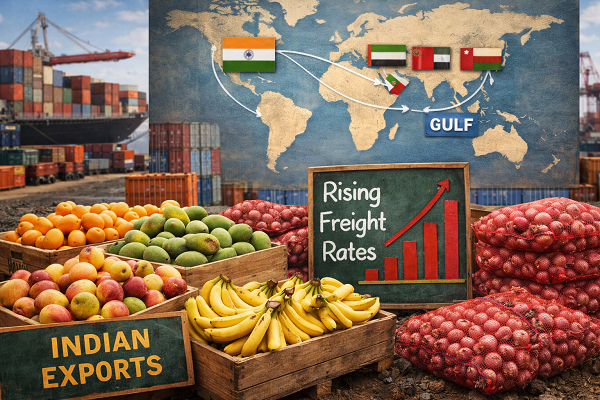
India has resumed agricultural exports to the Gulf region following a halt linked to the West Asia conflict, though shipments are moving at a slower pace. Higher freight rates and logistical constraints continue to affect trade flows, according to exporters.
Exports resume but movement remains slow
Exporters report that onward movement of perishable products such as fruits and vegetables through Dubai to Saudi Arabia and Qatar remains disrupted due to the ongoing security situation. Dubai serves as a key trans-shipment hub for India’s horticulture exports to the Gulf.
Ajit Shah, an onion exporter, said limited consignments of onions and vegetables have been shipped to Khorfakkan, Fujairah, Dubai, and Muscat. “The cargo movement is slow, and freight rates have increased sharply,” he said.
Dubai Customs has introduced temporary measures allowing cargo destined for Jebel Ali to be routed through Khorfakkan and Fujairah, with onward transport by road.
Key commodities affected
Shipments of onions, bananas, grapes, and other perishable products have been disrupted over recent weeks due to the conflict. Some volumes are being redirected through alternative ports, adding complexity to logistics operations.
Air freight is being used for select consignments of fruits and vegetables, though exporters say this option is not economically viable given the significantly higher costs involved.
Gulf remains a critical market for Indian agriculture
The Middle East is a major destination for India’s agricultural exports. In 2025, West Asia accounted for 21.8% of total food exports, valued at over US$50 billion. The region plays a significant role in trade flows for products including bananas and grapes.
According to the Global Trade Research Initiative, continued instability in the region — particularly around the Strait of Hormuz — may further disrupt shipments and push up insurance costs, affecting exporters and supply chains across multiple states.
Market outlook
While shipments have resumed, ongoing disruptions in freight rates, routing, and trans-shipment operations continue to weigh on the movement of perishable goods to Gulf markets. Exporters and traders will closely monitor developments in the region, as any escalation could further impact India’s agricultural trade flows.
Related posts:
 Freight Rates Surge Amid War Concerns; India Agri Exports Under Pressure
 India Oilmeal Exports to China Jump 20-Fold, But War Disruptions Pose Risk
 Iran Halts Fruit and Vegetable Exports, Disrupting Global Supply Chains
 Brazil Elevates Açaí to National Fruit Status as U.S. Tariffs Reshape Global Superfood Trade
 Banana Prices Tumble Amid Export Disruptions and Oversupply in India
 Six Ships Attacked in Gulf and Strait of Hormuz as Middle East War Threatens Global Shipping
 German Fruit Trade Body Sees No Fresh Produce Shortage Despite Iran Conflict