
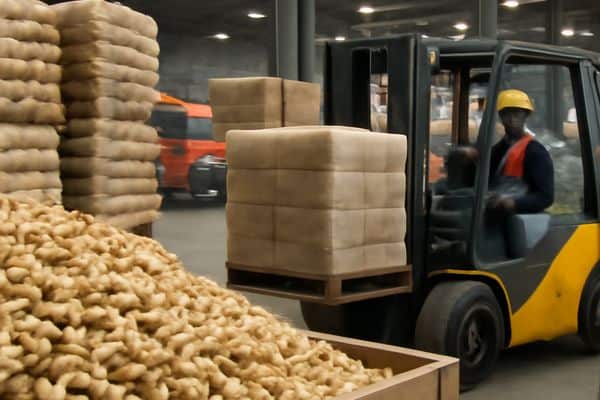
The global cashew market, and especially India’s pivotal cashew sector, has been thrust into renewed instability as escalating geopolitical tensions in West Asia grind Iranian trade to a halt. The aftershocks for Indian exporters are immediate and severe: supply chain bottlenecks, uncertain financial settlements, and major logistical obstacles converge at a time when premium grades such as W180 and W210 face growing demand, now abruptly stalled. Iran had resurged as a top buyer, particularly of higher-value Indian kernels, with trade meticulously routed via Dubai-based intermediaries. Suddenly, port closures and frozen financial channels mean Iranian buyers cannot open new contracts, halting shipments and leaving container loads of cashew stranded — creating both liquidity crunches and inventory pile-ups in India.
The collapse of UAE trade channels — for years, the financial and logistical heart of India-Iran cashew transactions — raises credit and payment risks. At the same time, rerouted shipping, war-risk insurance, and a weakening rupee threaten the cost structure and global competitiveness of Indian processors, even as they remain heavily dependent on raw nut imports from West Africa. Traders must now liquidate premium stocks domestically, softening prices amid heightened market volatility. Meanwhile, Vietnam stands poised to take advantage, strengthening its footprint in the US and China while Indian exporters scramble to diversify destinations. The current disruptions represent a complex, multi-dimensional déjà vu for the Indian sector, with its outlook now tied tightly to the resolution of West Asian hostilities and the restoration of stable trade channels.
Exclusive Offers on CMBroker

Cashew kernels
W450
FOB 6.25 €/kg
(from IN)

Cashew kernels
W320
FOB 8.63 €/kg
(from IN)

Cashew kernels
W320
FOB 6.95 €/kg
(from IN)
📈 Prices
| Origin | Type | Organic | Location | Delivery Terms | Price (EUR/kg) | Weekly Change | Sentiment |
|---|---|---|---|---|---|---|---|
| IN | W450 | No | New Delhi | FOB | 6.28 | +0.05 | Bearish |
| IN | W320 | Yes | New Delhi | FOB | 8.66 | +0.05 | Bearish/Volatile |
| IN | W320 | No | New Delhi | FOB | 6.98 | +0.05 | Bearish |
| VN | WW320 | No | Hanoi | FOB | 6.85 | 0.00 | Stable/Neutral |
| VN | WW240 | No | Hanoi | FOB | 7.75 | 0.00 | Stable |
| NL | WW320 | No | Dordrecht | FCA | 5.05 | +0.05 | Stable |
Indian prices for premium and standard kernels are showing slight increases week-on-week, yet sentiment remains bearish due to a domestic glut and volatile demand. Vietnamese and Dutch offers remain steady.
🌍 Supply & Demand
- Iranian Market Halt: Iran’s shutdown, especially closures at Bandar Abbas, has abruptly cut off a major outlet for Indian premium cashew. This leads to oversupply and downward price pressure in India.
- UAE Trade Channel Collapse: Payment and logistics disruptions further constrain export flows, increasing financial risks.
- Domestic Volatility: Premium kernels are being offloaded into the Indian market, softening prices and intensifying competition.
- Demand Shift: Indian exporters are seeking alternative markets, often at a discount, but face challenges due to inventory surpluses and weak global sentiment.
- Vietnamese Advantage: Vietnam is leveraging this turmoil to grow shares in US and Chinese markets.
📊 Fundamentals
- Exporters Liquidity Squeeze: Hundreds of crores worth of shipments are stranded, creating cashflow and stockpiling problems for Indian exporters.
- Freight and Insurance Costs: Increased geopolitical risk is driving up war-risk insurance and routing costs with diversions extending transit by up to 3 weeks and raising cost per container by $200–400.
- Raw Nut Input Costs: Indian processing relies on West African raw nut imports; higher crude oil is pushing up freight, compounding a margin squeeze from currency depreciation (weak rupee).
- Quality Concerns: Longer transits pose risk of deterioration for high-grade kernels, threatening value realization on exports.
🌦️ Weather & Logistics Outlook
- No extraordinary weather disruptions currently reported in major origin zones (India, Vietnam, West Africa); however, logistical bottlenecks due to war-risk diversions remain a primary operational threat.
- Seasonal procurement in India may be delayed or more expensive given shipping congestion and rising costs.
🌏 Global Production & Stocks Comparison
- India: World’s largest cashew exporter, now struggling with premium kernel oversupply, especially W180/W210 destined for Iran/UAE.
- Vietnam: Largest processor globally; exports remain robust and well-positioned to capture any shift in US/China orders.
- West Africa: Key raw nut supplier; rising freight and insurance costs could slow trade or inflate input costs for Asian processors.
📆 Outlook & Recommendations
- Market Direction: Short-term bearish for Indian premium grades; stable/neutral in Vietnam and the Netherlands.
- Key Risks: Prolonged West Asian instability, slow reopening of Iranian/UAE channels, continued rupee weakness, further freight hikes.
- Trader Advice:
- Exporters: Divert focus to alternative premium markets (e.g., Europe, Japan, SE Asia), expect price concessions.
- Buyers: Opportunity for value purchases, but monitor Indian market for bargain high-grade kernels.
- Importers: Hedge for further freight increases; consider stockpiling.
- Monitor for a potential rebound if/when West Asian banking/shipping normalizes.
🔮 3-Day Regional Price Forecast (Key Exchanges)
| Origin | Type | Location | Today | 3-Day Forecast | Trend |
|---|---|---|---|---|---|
| India | W320 | New Delhi | 6.98 EUR/kg | 6.85–6.90 EUR/kg | Bearish/Volatile |
| India | W450 | New Delhi | 6.28 EUR/kg | 6.15–6.20 EUR/kg | Bearish |
| Vietnam | WW320 | Hanoi | 6.85 EUR/kg | 6.80–6.85 EUR/kg | Stable |