
China has called for the protection of maritime traffic through the Strait of Hormuz as escalating hostilities in the Middle East threaten one of the world’s most critical energy transit routes.
Speaking at a regular press briefing in Beijing, Chinese Foreign Ministry spokesperson Mao Ning urged all parties involved in the Iran-related conflict to avoid further escalation and safeguard shipping through the strategic waterway.
“China urges all parties to immediately cease military operations, avoid escalating tensions, and ensure the safety of shipping in the Strait of Hormuz,” Mao said.
Strategic Energy Dependence
China’s appeal reflects its significant dependence on energy supplies transiting the Persian Gulf.
The country purchases the majority of Iran’s oil exports and also relies heavily on gas shipments from Qatar and other Gulf producers. Much of this energy supply passes through the Strait of Hormuz, making uninterrupted navigation essential for China’s energy security.
Industry executives have previously indicated that Chinese officials have quietly urged Iran to avoid actions that could disrupt regional energy flows, particularly shipments of Qatari liquefied natural gas (LNG).
Rising Energy Market Risks
Tensions escalated further after Qatar temporarily halted LNG production at the world’s largest export facility following an attack involving two Iranian drones on a QatarEnergy installation.
Qatar is the world’s second-largest LNG exporter after the United States, and its supply plays a crucial role in balancing gas demand in both Asian and European markets.
Asian buyers account for roughly 82% of QatarEnergy’s customer base, meaning disruptions could have significant implications for regional energy markets.
Strait of Hormuz Under Pressure
The Strait of Hormuz remains one of the most important global energy chokepoints, handling roughly 20% of global oil trade.
Recent developments have significantly increased shipping risk in the area:
-
Iran warned on February 28 that it could close the strait.
-
Iranian forces reportedly moved to block the corridor shortly afterward.
-
On March 1, Iran’s foreign minister said civilian ships would still be allowed to pass.
-
On March 2, IRGC commander Ebrahim Jabbari declared the strait “closed” and threatened military action against vessels attempting transit.
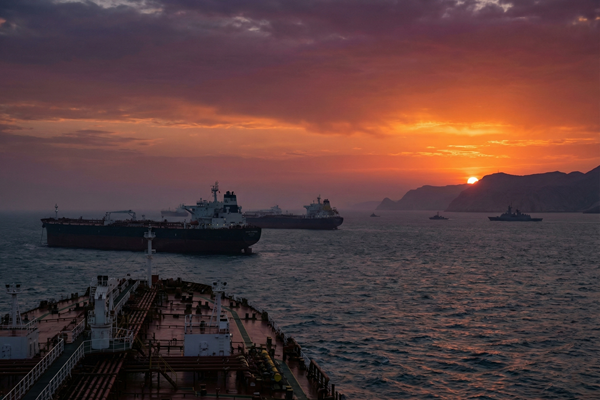
At least 150 oil tankers have reportedly anchored offshore amid the growing uncertainty.
Shipping Industry Response
Major global shipping companies are already adjusting operations due to rising security risks.
Carriers including:
-
Maersk
-
Hapag-Lloyd
-
CMA CGM
-
MSC
have begun rerouting vessels following U.S. and Israeli strikes on Iran and the deteriorating security situation in the region.
Traffic through the Strait of Hormuz has reportedly fallen by 86–90% compared with normal levels, reflecting widespread caution among shipping operators.
Global Trade Implications
Any sustained disruption in the Strait of Hormuz could trigger major consequences for global trade and energy markets, including:
-
Increased oil and LNG prices
-
Rising freight and insurance costs
-
Supply disruptions across Asia and Europe
-
Greater volatility in energy markets
For China, maintaining stability in the corridor is particularly critical given its heavy reliance on Gulf energy imports.
Conclusion
China’s diplomatic intervention underscores the global stakes surrounding the Strait of Hormuz crisis.
As tensions escalate between Iran and its adversaries, the safety of one of the world’s most vital maritime routes has become a central concern for energy-importing nations and global shipping operators alike.
The coming days will determine whether diplomatic pressure can stabilize the corridor or whether the conflict will further disrupt global trade and energy supply chains.