
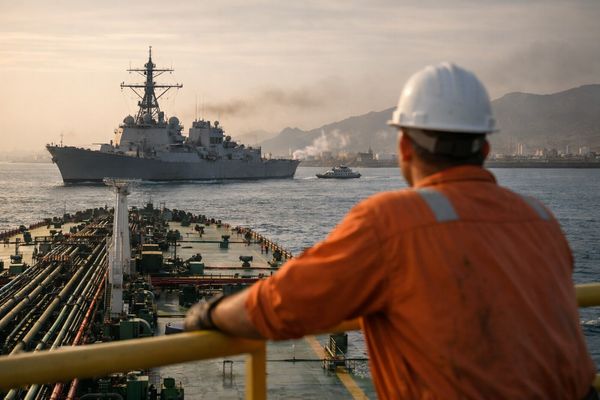
Crude oil prices have jumped more than 7%, with benchmark futures now well above €90 per barrel, after the United States announced a full maritime blockade of Iranian ports. Markets are rapidly repricing geopolitical risk in the Gulf, with heightened concerns over sustained supply disruption and a prolonged risk premium in crude benchmarks.
The blockade, announced immediately after failed U.S.–Iran talks in Islamabad, has reignited fears around flows through the Strait of Hormuz, which handles around a fifth of global energy supply. Tanker traffic has already slowed and rerouted, freight and insurance costs are rising sharply, and financial markets are signalling a renewed inflation shock. Even if diplomacy resumes, the combination of constrained Gulf exports, higher shipping costs and elevated risk perception points to a structurally tighter and more volatile crude market in the near term.
📈 Prices & Market Mood
Futures reacted instantly to the blockade announcement, with crude benchmarks surging over 7% and breaking back above $100 per barrel, equivalent to roughly €92–€96 depending on contract and FX. This move reverses much of last week’s post‑ceasefire pullback and restores a hefty geopolitical premium to the forward curve.
Intraday volatility has increased markedly, with wide price ranges and frequent headline‑driven spikes as traders reassess Gulf export risk and potential military escalation. The broader financial backdrop is risk‑off: U.S. stock futures are lower, while the dollar is stronger, tightening overall financial conditions and amplifying the impact of higher oil on importers.
| Benchmark | Approx. latest level (EUR/bbl) | Move vs. pre‑blockade |
|---|---|---|
| WTI | ≈ €97–€100 | +7–10% in 24–48h |
| Brent | ≈ €94–€98 | +7–8% in 24–48h |
🌍 Supply, Flows & Shipping Risk
The U.S. naval move targets all vessels entering or leaving Iranian ports in the Arabian Gulf and Gulf of Oman, with strict monitoring and interception of ships suspected of financial dealings with Iran. While transit through the Strait of Hormuz to non‑Iranian ports is not directly blocked, operational risks remain elevated, and tanker movements through the Strait have already slowed. This de facto curtailment of Iranian exports tightens an already risk‑sensitive crude balance.
Shipping lines are rerouting or delaying voyages, with some owners avoiding Hormuz entirely. Rising war‑risk insurance premiums, longer tonne‑mile routes and port delays are lifting effective landed crude costs well beyond the outright futures price. The disruption is spilling over into other bulk commodities, including agricultural products, fertilizers and chemicals, via higher freight costs and longer transit times, reinforcing the inflationary impulse from crude itself.
📊 Fundamentals & Macro Impact
The Strait of Hormuz handles around 20% of global energy supply, so even partial disruption has an outsized impact on perceived and effective availability of prompt barrels. With tankers moving more cautiously and some cargoes held back or rerouted, physical premiums for secure, non‑Gulf grades are likely to widen, and regional benchmarks may decouple further from paper prices.
On the macro side, higher oil is feeding directly into expectations of renewed energy‑driven inflation. Fuel and transportation costs are set to increase across economies, putting pressure on consumers and raising input costs for industry and agriculture. This comes at a time when central banks were seeking to consolidate disinflation gains, complicating monetary policy and raising the risk of renewed stagflation concerns in energy‑importing regions.
⚠️ Geopolitics & Scenario Risk
The blockade follows the collapse of high‑level talks that had aimed to turn a fragile two‑week ceasefire into a more durable framework, covering nuclear constraints, regional proxies and guaranteed access through Hormuz. Despite some progress, core issues remained unresolved, prompting Washington’s escalation. Iran has responded with a harsh warning, signalling that vessels approaching sensitive areas could be treated as violating the ceasefire, increasing the probability of incidents at sea.
Diplomatic channels remain formally open, with both sides expressing conditional willingness to keep talking, but trust is low and red lines on nuclear and regional policy are far apart. Markets are therefore pricing in an extended period of elevated geopolitical risk, where even rumours of attacks on energy infrastructure or shipping could trigger outsized price moves. The tail risk is a broader regional escalation that would threaten not just Iranian exports but wider Gulf supply and logistics.
🌦️ Short-Term Outlook & Weather Note
In the immediate term, the key driver for crude is geopolitical, not weather. Global demand remains seasonally firm, and there is no major weather‑related disruption currently offsetting Gulf supply risks. As long as tanker flows through Hormuz stay constrained and insurance premia remain elevated, the market is likely to maintain a significant risk premium above pre‑crisis levels.
Weather remains relevant indirectly: any hurricane threats to U.S. Gulf production or refining later in the season would layer additional supply risk onto an already tight logistics picture. For now, however, the central scenario is that energy flows will take time to normalize even if diplomacy resumes, implying several months of structurally higher crude and product prices.
📆 Trading & Risk Management Outlook
- Bias: Near‑term bullish with high volatility. Geopolitical risk and shipping disruption support crude above recent averages, with sharp two‑way moves on headlines.
- Producers: Consider layering in incremental hedges on rallies above the recent spike, using options structures to retain some upside in case of further escalation.
- Consumers/Refiners: Lock in part of Q2–Q3 requirements via a mix of fixed‑price and collar strategies; prioritize securing non‑Gulf supply and freight where possible.
- Financial players: Volatility strategies (e.g. long volatility or call spreads) may be preferable to outright directional bets given binary diplomatic risks.
📍 3‑Day Directional View (EUR terms)
- Brent (ICE): Elevated and volatile; bias sideways to higher in a broad €90–€100 range, with headline‑driven spikes possible.
- WTI (NYMEX): Trading slightly above Brent in USD terms; in EUR, expected to hold roughly in line with Brent, with intraday swings driven by Gulf newsflow.
- Risk skew: Upside tail‑risk dominates as long as the blockade remains in force and Iran signals a potential “harsh and decisive” response.