
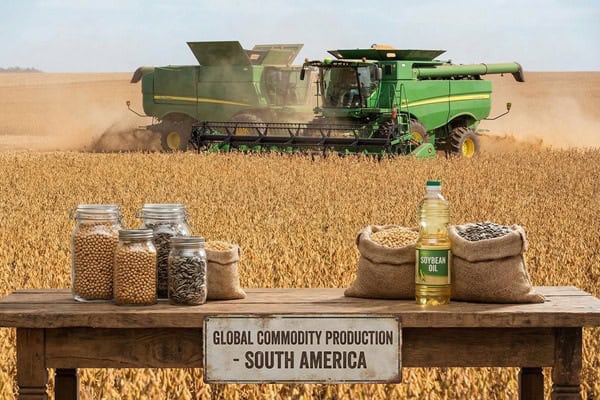
Global Oilseeds Production Approaches 696 Million MT
Global oilseeds production is projected to reach 695.8 million metric tons in the 2025/26 marketing year, reflecting higher soybean output in major producing countries.
The increase is primarily driven by improved soybean harvests in Brazil and Paraguay, which have boosted global supply expectations.
Soybeans remain the dominant oilseed crop worldwide, accounting for the largest share of total production.
Global Oilseed Trade Expands
International trade in oilseeds is also expected to grow during the current marketing year.
Higher Canadian rapeseed exports and stronger European Union sunflowerseed exports are supporting the expansion of global trade flows.
These increases more than offset lower rapeseed exports from Australia.
Crushing Activity Increasing Worldwide
Global oilseed crushing volumes are forecast to rise, supported by increased soybean processing in Brazil and Paraguay.
Higher crushing activity reflects continued demand for:
-
Protein meals used in livestock feed
-
Vegetable oils used in food processing and biofuel production.
Growing demand from the feed industry remains a key driver of oilseed processing.
Global Oilseed Stocks Increase
World oilseed stocks are expected to rise slightly during the 2025/26 marketing year.
Higher soybean carryover stocks in Brazil are the main factor contributing to the increase.
Despite higher stocks, strong demand for protein meal and vegetable oils continues to support global market activity.
EU Soybean Meal Imports Remain Strong
The European Union is expected to remain one of the largest importers of soybean meal.
USDA increased the EU soybean meal import forecast for 2025/26 to 19.5 million metric tons, approaching last year’s decade-high level.
Strong demand from livestock producers continues to drive imports as soybean meal remains competitively priced compared with alternative feed proteins.
Vegetable Oil Trade Continues to Grow
Global vegetable oil trade is forecast to expand further.
The growth is driven mainly by:
-
Higher Malaysian palm oil exports
-
Increased soybean oil shipments from major exporting countries.
Vegetable oil markets have also strengthened due to higher energy prices and rising demand linked to biofuel policies.
Soybean Prices Supported by Market Factors
Recent soybean purchases by China and a weakening U.S. dollar helped push U.S. soybean prices to a two-month high.
At the same time, favorable weather conditions in Brazil are supporting expectations for a record soybean harvest, increasing competition between U.S. and South American exporters.
Soybean meal prices have remained relatively stable despite higher crushing activity.
🔎 CMB Outlook
Global oilseed markets remain well supplied, supported by strong production growth in South America.
Key trends shaping the market include:
-
Rising soybean production in Brazil and Paraguay
-
Expanding global crushing capacity
-
Strong demand for protein meals in the livestock sector
-
Growing vegetable oil consumption linked to food and biofuel industries
In the near term, record soybean harvests in South America are likely to keep global oilseed supplies abundant.
However, demand from feed and biofuel markets will remain a critical driver of prices and trade flows in the coming months.
Sources: USDA