
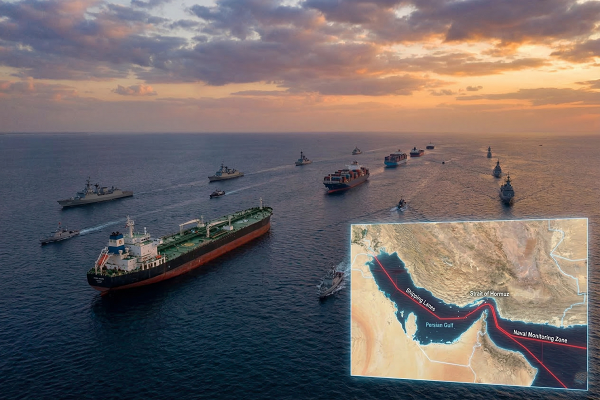
India has secured safe passage for its ships through the Strait of Hormuz after diplomatic discussions between External Affairs Minister S. Jaishankar and his Iranian counterpart, even as maritime tensions in the region escalate following the U.S.–Israel strikes on Iran.
Iran confirmed that Indian-flagged vessels will be allowed to pass safely through the critical shipping corridor despite ongoing disruptions and security concerns in the strategic waterway.
Maritime Traffic Slows Amid Regional Conflict
Shipping activity in the Strait of Hormuz has slowed significantly after the outbreak of hostilities involving Iran and the United States–Israel alliance.
The narrow waterway linking the Persian Gulf to the Gulf of Oman is one of the world’s most important maritime energy routes, carrying a substantial portion of global oil and liquefied natural gas shipments.
Recent attacks on tankers and rising military tensions have made shipping companies cautious about navigating the corridor.
Diplomatic Talks Secure Passage for Indian Ships
According to reports, the assurance for Indian vessels came after India’s foreign minister S. Jaishankar held talks with his Iranian counterpart to address concerns over the safety of Indian shipping.
Following the discussion, Iranian authorities agreed to allow Indian-flagged ships to move through the Strait of Hormuz safely.
The decision is seen as a significant diplomatic step aimed at protecting India’s energy imports and trade routes during the ongoing crisis.
Restrictions Remain for Western-Linked Vessels
While India has been granted safe passage, vessels linked to the United States, Europe and Israel continue to face restrictions amid the heightened geopolitical tensions.
These limitations have added to concerns about global energy supply chains, as many oil and gas shipments rely on uninterrupted access through the strait.
Key Energy Route Under Global Watch
The Strait of Hormuz remains a crucial chokepoint for global energy trade. Any disruption in this narrow passage can quickly affect oil markets, shipping routes and global energy prices.
With hundreds of ships navigating the waterway each week under normal conditions, even partial restrictions can create ripple effects across international energy markets.
Governments and shipping companies are closely monitoring developments as the regional conflict continues.