
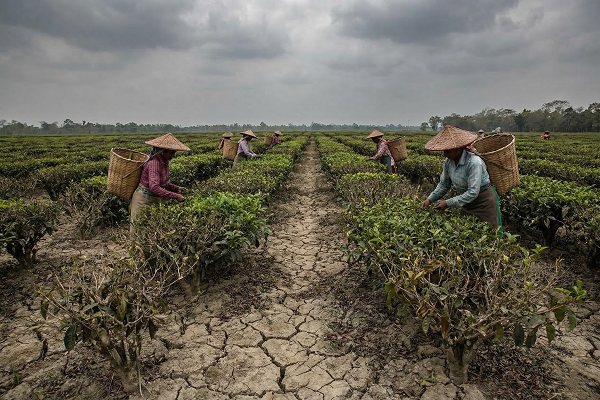
Tea production in India may decline this year due to significantly lower rainfall in major tea-growing regions, raising concerns about supply and price stability in the global tea market.
According to the Tea Board of India’s early 2026 reports, rainfall levels have been below normal in major producing states including Assam, West Bengal, Tamil Nadu, and Kerala, potentially delaying crop growth and reducing yields.
Experts say that if rainfall does not improve soon, the situation could affect tea output during the crucial early harvest season.
Weather Conditions Raise Production Concerns
Tea cultivation depends heavily on timely rainfall and stable weather conditions. The lack of adequate rainfall this year has affected soil moisture levels and slowed the growth of tea bushes.
In Assam, India’s largest tea-producing state, production levels have already shown signs of pressure. Industry estimates indicate that tea output in the region could decline if dry conditions persist during the early months of the harvesting season.
Tea traders say reduced rainfall over the past four months has increased uncertainty for the industry.
“If the dry conditions continue, the tea crop may arrive late and overall production could be lower,” said a tea trader in Assam.
Tea Prices Begin Rising
The weather-related concerns have already started affecting tea prices in wholesale markets.
At tea auctions in Delhi and Assam, prices have increased significantly. Reports indicate that tea prices in Delhi have risen to around $2.40 per kilogram, while in Assam prices have climbed to between $1.70 and $4.30 per kilogram depending on quality.
Industry participants say the price increase reflects expectations of reduced supply and stronger demand.
Climate Change and Weather Patterns
Experts believe that climate change and shifting weather patterns are increasingly influencing tea production across India.
In addition to lower rainfall, fluctuating temperatures and irregular weather cycles have made it more difficult for tea growers to predict harvest volumes.
The Tea Board has warned that climate variability could continue to affect production in coming years, particularly in northeastern India and southern tea-growing regions.
Labour Costs Add Additional Pressure
Apart from weather challenges, the industry is also facing rising labour costs.
In Assam, tea garden workers recently received a wage increase of around $3 per day, raising the daily wage to about $3.10 per worker. Labour expenses account for a major portion of tea production costs, and the increase is expected to add further financial pressure on producers.
Regional Production Outlook
While northern tea-producing regions such as Assam and West Bengal are facing weather-related challenges, southern tea estates in Tamil Nadu and Kerala may also experience production fluctuations due to climatic variability.
Industry analysts say that if weather conditions improve in the coming months, production losses could be limited. However, prolonged dry weather could lead to lower output and tighter supply in the global tea market.
India is the second-largest tea producer in the world, and any significant drop in its production can influence international tea prices and export flows.