
CMB Trade Disruption Alert
Category: India | Basmati Rice | Gulf Trade | Maritime Risk
🔵 Executive Summary
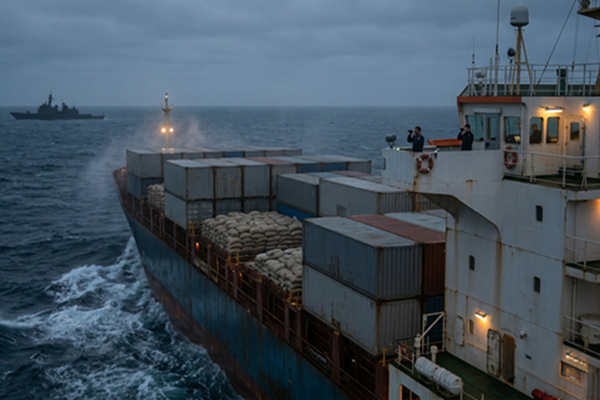
The escalating US–Iran conflict has severely disrupted Indian Basmati rice shipments to West Asia, with an estimated 60,000–70,000 tonnes currently stranded on the high seas, including consignments near Iran’s Bandar Abbas port.
India was on track to achieve a record 6.5 million tonnes (mt) of Basmati exports in FY 2025–26. That target now hinges entirely on how quickly the conflict de-escalates.
Industry stakeholders warn that prolonged disruption could derail record ambitions, delay payments, and significantly strain exporter liquidity.
📦 Shipment Status: Cargo at Risk
- 60,000–70,000 tonnes estimated to be stuck at sea.
- Some vessels positioned near Bandar Abbas.
- Shipping liners have invoked force majeure.
- Ships reportedly rerouting or making U-turns.
While freight rates have not yet spiked, exporters describe the situation as “extremely fluid.”
📊 Export Performance So Far
April–January FY 2025–26
| Indicator | Volume |
| Basmati exports | 5.38 mt |
| Year-on-year growth | +11% |
| Same period last year | 4.84 mt |
FY 2024–25 (Full Year Record)
| Indicator | Value |
| Exports | 6.07 mt |
| Export value | US$5.94 billion |
🌍 West Asia: A Critical Market
In 2024–25:
| Country | Volume (mt) |
| Saudi Arabia | 1.17 |
| Iran | 0.86 |
West Asia absorbs a dominant share of India’s Basmati exports, particularly during Ramadan when demand peaks.
🎯 Record Target at Risk
Industry projection before the conflict:
- 6.5 mt Basmati exports in FY 2025–26 (record high).
Current assessment:
- If the war ends within a week → Target still achievable.
- Prolonged conflict → Significant downside risk.
🏭 Tarn Taran and Punjab Hit Hard
Punjab’s Tarn Taran region, a key Basmati export hub:
- Exports roughly 70% of output to West Asia.
- Shipments halted during peak Ramadan season.
- Cargo stranded at Indian ports and in transit.
- High exposure to delayed payments.
Exporters fear missed Ramadan delivery windows could lead to contract complications.
💰 Payment & Liquidity Concerns
- Large outstanding dues from Iranian buyers.
- Delayed deliveries increase working capital stress.
- Exporters seeking government intervention.
The industry is meeting with APEDA and government officials to explore support measures.
📈 Pre-Conflict Buying Surge
Iran reportedly increased purchases in January–February in anticipation of geopolitical tension.
Impact:
- Basmati prices rose ₹10–15 per kg (approx. US$0.12–0.18/kg).
- Strong Gulf demand supported price firmness prior to disruption.
🚢 Broader Export Impact
The crisis extends beyond Basmati:
- Non-Basmati rice exports also expected to be affected.
- Perishable exports face risk due to airspace closures.
- Container detention penalties feared unless waived.
Exporters have urged the government to direct container companies to suspend delay charges.
🧭 CMB Market Interpretation
The US–Iran war introduces multi-layered risk:
Immediate Risks
- Shipment delays
- Force majeure complications
- Ramadan delivery disruptions
Short-Term Financial Risks
- Payment uncertainty (especially Iran)
- Working capital tightening
- Contract renegotiation pressure
Strategic Risk
India’s heavy dependence on West Asia exposes Basmati to chokepoint vulnerability.
📊 Risk Assessment
| Risk Factor | Impact Level |
| Shipment disruption | High |
| Payment default risk | Moderate–High |
| Freight escalation | Emerging |
| Price volatility | Elevated |
| Export target downgrade | Possible |
🔎 What Happens Next?
Critical variables to monitor:
- Duration of conflict
- Status of Strait of Hormuz
- Shipping liner rerouting patterns
- Government relief measures
- Iranian payment channels
🏁 Conclusion
The US–Iran conflict has left up to 70,000 tonnes of Indian Basmati rice stranded, threatening what was shaping up to be a record export year.
If hostilities ease quickly, India may still approach its 6.5 mt target. However, prolonged disruption could undermine export momentum, strain exporter liquidity, and reshape price dynamics in one of India’s most strategic agri-export sectors.
For now, the industry remains in wait-and-watch mode — but exposure is significant.