
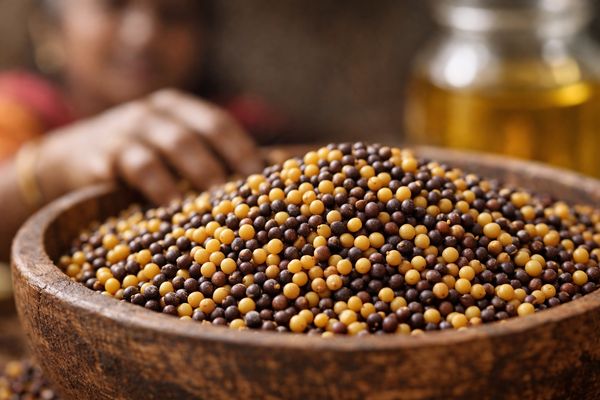
Indian mustard seed prices are in a short-term uptrend, with Jaipur spot values rising for three straight sessions and oil and oil cake following higher. The move is underpinned by steady mill buying, reduced stockist selling and a supportive global edible oil complex, pointing to further moderate gains in the coming weeks.
India’s key mustard centres report firm cash markets despite stable daily arrivals around one million bags, indicating that current price strength is demand-led rather than driven by supply tightness. Robust crush margins, a weaker rupee that favours domestic oils over imports, and expectations of tighter global vegetable oil availability are combining to keep bids active. Export-grade prices in New Delhi have also nudged higher in recent days, confirming the constructive tone along the value chain.
Exclusive Offers on CMBroker

Mustard seeds
yellow, micro, sortex
99.95%
FOB 0.89 €/kg
(from IN)

Mustard seeds
yellow, bold, sortex
99.95%
FOB 0.99 €/kg
(from IN)

Mustard seeds
brown, micro, sortex
FOB 0.79 €/kg
(from IN)
📈 Prices & Market Tone
Jaipur, India’s benchmark mustard seed market, added another INR 50 per quintal on Tuesday, taking conditioned seed to about EUR 71.5 per quintal (≈USD 78.4). Mustard crude oil (kachchi ghani) in Jaipur gained roughly EUR 145 per tonne on the day to around EUR 1450 per tonne, while refined-style kachchi ghani oil traded near EUR 1480 per 10×100 kg in Kolkata and about EUR 1410 in Tonk on a converted basis. Oil cake values also firmed by about INR 50 per quintal across Rajasthan and Haryana, signalling healthy demand from the livestock feed sector.
Export- and processing-focused quotes in New Delhi mirror this firm bias. Over the last week, FOB offers for Indian mustard seed have inched up by roughly EUR 0.01 per kg across key grades, with yellow bold sortex now indicated around EUR 0.99/kg and brown bold sortex near EUR 0.70/kg for May 2 updates. This confirms that the recent rally is broad-based, spanning domestic spot, by‑products and export channels.
| Product | Location/Term | Latest Price (EUR) | Prev. Price (EUR) | Trend |
|---|---|---|---|---|
| Mustard seed, yellow bold, sortex | New Delhi, FOB | 0.99/kg | 0.98/kg | ⬆️ mild |
| Mustard seed, brown bold, sortex | New Delhi, FOB | 0.70/kg | 0.69/kg | ⬆️ mild |
| Mustard crude oil (kachchi ghani) | Jaipur spot | ≈1450/t | – | ⬆️ strong |
| Mustard oil cake | Jaipur–Haryana spot | ≈275–295/t | – | ⬆️ firm |
🌍 Supply, Demand & Macro Drivers
Daily mustard arrivals at major Indian producing markets are steady around 10 lakh bags (≈1 million bags), matching the previous session. This stability suggests that harvest flows are normal and that the current price strength stems primarily from demand dynamics. Stockists are reportedly reluctant sellers at current levels, creating a tighter feel in spot markets and giving mills less bargaining power on procurement.
Oil mills, by contrast, are maintaining consistent purchases to keep refining schedules on track, supported by profitable crush margins into both oil and cake. The official Minimum Support Price is high enough to encourage farmer retention, preventing an oversupply situation even as arrivals continue at a healthy pace. In some producing districts, cumulative season arrivals are reportedly lagging earlier projections, which adds to the perception that there is no surplus overhang at this stage.
📊 Link to Global Edible Oils
The rally in Indian mustard is closely tied to a firmer global edible oil complex. Malaysian crude palm oil (CPO) futures for July have recently added about MYR 80–90 per tonne in a single session, trading around MYR 4,700/t on Bursa Malaysia, supported by stronger soybean oil and shifting biodiesel policies in Southeast Asia.
These moves, alongside modest gains in Chicago soybean oil futures, are lifting the entire vegetable oil price corridor and feeding directly into Indian mustard seed buying sentiment.
At the same time, a weaker Indian rupee near 95.35 to the US dollar is eroding the economics of imported soft oils, improving the competitiveness of domestic mustard oil for both refiners and retail blends. Indonesia and Malaysia’s ongoing expansion of biodiesel blending mandates is expected to absorb more palm oil into domestic fuel pools after June, narrowing export availability. Traders are pre‑positioning for this tightening, and Indian mustard is benefiting as a key non‑palm oil alternative in the regional basket.
🌦️ Weather & Crop Outlook
In India’s core mustard belts of Rajasthan, Haryana and Madhya Pradesh, the 2025/26 crop is already largely harvested and in the marketing phase, so near-term weather carries limited yield risk. Current forecasts for early May point to mostly dry to seasonally normal conditions in northwest India, which should facilitate the movement and storage of seed in mandis and warehouses.
Weather is more relevant for rival oils. In Southeast Asia, concerns over episodes of heavy rainfall and flooding in parts of Malaysia have added volatility to palm oil futures in recent weeks, reinforcing upside risk for the broader vegetable oil complex. Any renewed weather disruptions to palm or soybean crops later in the year would further underpin mustard seed prices by tightening substitute oil supplies.
📆 2–4 Week Market Outlook
The short-term outlook for mustard seed is positive. With mill demand steady, stockist selling restrained, and global edible oil benchmarks trending firmer, additional gains of roughly INR 100–150 per quintal (about EUR 0.9–1.3 per 100 kg) from current Jaipur levels appear plausible over the next two to four weeks, provided Malaysian palm oil and Chicago soyoil maintain their momentum. Domestic crush margins should remain supportive as long as oil and cake retain their current price premiums.
Key downside risks include a sharp correction in international edible oil prices, a sudden improvement in import economics if the rupee strengthens or overseas offers soften, or a coordinated wave of stockist selling should local participants decide to lock in current profits. An unexpected spike in imported palm or soybean oil arrivals at Indian ports could also cap further upside by easing the overall oilseed balance.
🤝 Trading & Procurement Suggestions
- Oil mills & refiners (India): Consider maintaining or slightly advancing nearby coverage for seed and oil cake, given supportive crush margins and the risk of further INR 100–150/quintal upside in spot prices.
- Exporters & international buyers: Use current FOB New Delhi price levels as a reference to secure short‑term shipments, but incorporate a risk premium for possible further firming in June if palm and soyoil stay strong.
- Stockists & traders: Those already long can trail stop-loss levels just below recent support zones, while fresh long entries should be approached selectively on intraday dips rather than at session highs.
- Feed manufacturers: Given firm oil cake prices but still-attractive protein value, securing staggered tonnage for the next 4–6 weeks may hedge against incremental upside linked to continued strong crush.
📉 3‑Day Directional View (Key Hubs)
- Jaipur mustard seed (spot, EUR/100 kg): Bias moderately bullish; expected to trade with an upward tilt within a narrow range as mills continue steady buying and stockist selling stays light.
- New Delhi export grades (FOB, EUR/kg): Likely to hold firm to slightly higher around 0.70–0.99/kg across brown and yellow grades, tracking domestic spot and global oil benchmarks.
- Mustard oil & cake (Rajasthan–Haryana, EUR/t): Prices expected to remain firm with a mild upward bias, supported by robust retail and feed demand and ongoing strength in competing vegetable oils.
Related posts:
 India’s Mustard Seed Rally: Biofuel Policy, Crude Shock and Q3 Risks
 Mustard Seed Prices Firm as Indian Mills Accelerate Procurement
 Indian Mustard Seed Prices Edge Higher on Record Crop and Strong Demand
 Indian Mustard Seed Prices Ease Further as Big Crop and Summer Heat Cap Upside
 Indian Mustard Seed Finds a Floor as Global Edible Oils Rebound
 Mustard Seeds Hold Firm as Palm Oil Rally Supports Indian Market
 Indian Mustard Seed Under Harvest Pressure but Supported by Strong Edible Oils
 Indian Mustard Seed Prices Hold Steady as Heatwave Looms Over Key Belt