
Iran has clarified that it has no plans to close the Strait of Hormuz, one of the world’s most critical oil shipping routes, but emphasized that it reserves the right to protect security in the strategic waterway.
The statement was made by Iran’s United Nations Ambassador Amir Saeid Iravani amid growing tensions in the Middle East and concerns that the conflict could disrupt global energy supplies.
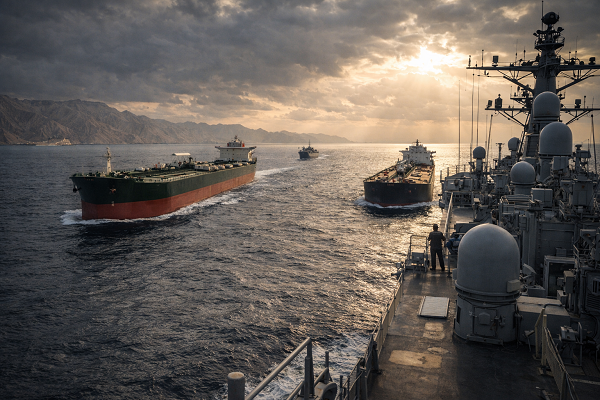
The Strait of Hormuz is a crucial maritime chokepoint through which about 20% of the world’s oil shipments pass, making any potential disruption a major concern for global markets.
Iran Responds to Remarks by Supreme Leader
Iravani’s comments came after remarks by Iran’s new Supreme Leader Mojtaba Khamenei, who suggested that blocking the Strait of Hormuz could be used as leverage amid the escalating conflict in the region.
Addressing reporters at the United Nations, Iravani clarified that Iran is not planning to shut down the waterway.
“We are not going to close the Strait of Hormuz,” Iravani said. “But it is our inherent right to preserve the peace and security in this waterway.”
Iran Reaffirms Freedom of Navigation
In a prepared statement, the Iranian ambassador emphasized that Iran supports the principle of freedom of navigation under international maritime law.
“Iran fully respects and remains committed to the principle of freedom of navigation under the law of the sea,” Iravani said.
However, he added that the current tensions in the region are not the result of Iran’s actions but are instead linked to recent developments involving the United States.
According to Iravani, the situation is the direct consequence of what Iran describes as destabilizing actions by the United States, including military strikes against Iranian targets.
U.S. Considers Naval Escort for Ships
The comments also come as the United States considers measures to ensure safe passage for commercial vessels in the Strait of Hormuz.
U.S. Treasury Secretary Scott Bessent told Sky News that the U.S. Navy could escort ships through the strait, possibly as part of an international coalition, once it becomes militarily feasible.
However, Iran’s ambassador said he had no immediate response to the U.S. proposal.
Global Shipping and Oil Markets on Edge
The escalating tensions have raised concerns among shipping companies and energy markets, as any disruption in the Strait of Hormuz could significantly affect global oil supplies.
The narrow waterway connects the Persian Gulf with the Gulf of Oman and the Arabian Sea, serving as a critical route for oil exports from major producers including Saudi Arabia, Iraq, Kuwait, the UAE and Iran.
Analysts warn that continued geopolitical tensions in the region could increase shipping risks, insurance costs and volatility in global oil prices.