
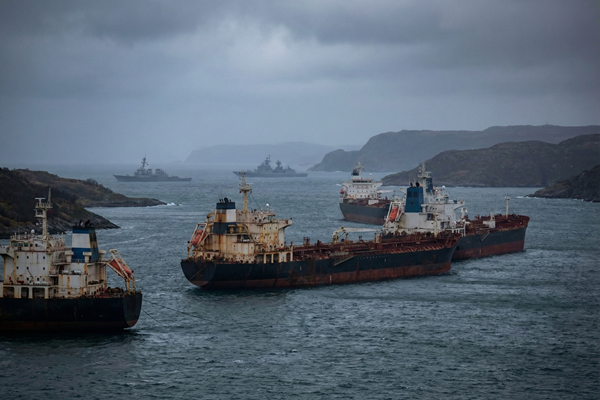
Iran has issued its strongest warning yet over maritime traffic in the Strait of Hormuz, with a senior Islamic Revolutionary Guard Corps (IRGC) commander declaring that any vessel attempting to pass through the corridor could face military action.
According to Reuters, citing Iranian state media, IRGC commander Ebrahim Jabbari stated that the strait is “closed” and warned that Iranian forces would open fire on ships attempting transit.
“We will burn any ship that tries to pass through the Strait of Hormuz. We will not allow a single drop of oil to leave this region,” Jabbari said.
The statement marks the most severe escalation since Tehran initially signaled its intention to close the critical shipping route.
Strategic Significance of the Strait
The Strait of Hormuz is one of the world’s most vital energy chokepoints.
-
Approximately 20% of global oil exports pass through the corridor.
-
It serves as the only maritime outlet for oil shipments from Persian Gulf producers.
-
Disruption could significantly impact global crude prices and energy markets.
Following the outbreak of war in the Middle East, vessels transiting the strait reportedly began receiving warning messages from the IRGC regarding its closure.
Conflicting Signals from Tehran
Iran had warned on February 28 that it may close the Strait of Hormuz. Reports initially suggested military movements in the area.
However, on March 1, Iranian Foreign Minister Abbas Araqchi stated that civilian ships would not be blocked, introducing ambiguity into Tehran’s official stance.
The IRGC’s latest warning contradicts that earlier diplomatic messaging, raising concerns over operational risk and command consistency.
Shipping Impact and Market Response
According to Reuters:
-
At least 150 oil tankers are currently anchored offshore.
-
Maritime insurers and shipping operators are reassessing risk exposure.
-
Energy markets are closely monitoring developments.
A sustained closure or active military enforcement could trigger:
-
Immediate oil price spikes
-
Insurance premium surges
-
Rerouting of vessels
-
Global supply chain disruptions
Business & Trade Implications
Beyond oil, the Strait of Hormuz is critical for:
-
LNG exports
-
Petrochemical shipments
-
Agricultural commodity flows
-
Bulk cargo movements
A prolonged shutdown would have cascading consequences for:
-
Freight costs
-
Inflationary pressures
-
Food security in import-dependent regions
-
Industrial supply chains
Strategic Outlook
Markets are currently pricing in heightened geopolitical risk, but the situation remains fluid.
Key variables to monitor:
-
Actual enforcement actions by Iran
-
US and allied naval response
-
Duration of tanker anchorage
-
Energy price volatility
The Strait of Hormuz remains a critical pressure point for global trade, and any escalation could rapidly translate into macroeconomic consequences.
Conclusion
Iran’s threat to attack vessels attempting to transit the Strait of Hormuz represents a significant escalation in the Middle East conflict.
Given the corridor’s role in facilitating one-fifth of global oil exports, even short-term disruption could destabilize energy markets and global trade flows.
The coming days will determine whether the warning translates into enforcement — or remains a strategic pressure tactic.