Traders have begun offering Iranian crude oil to Indian refiners at a premium to ICE Brent prices following a temporary United States sanctions waiver aimed at easing the severe global energy crisis triggered by the ongoing conflict in the Gulf region. The development marks a significant shift in the geopolitical and commercial landscape surrounding Indian energy procurement, coming at a time when India’s oil and gas supply chains have been severely disrupted by the US-Israeli war on Iran — now entering its fourth week — and the resulting interference with energy shipments transiting the Strait of Hormuz.
India, the world’s third-largest oil importer and consumer, has not received a single cargo of Iranian crude since May 2019, when it halted purchases under sustained US pressure. The temporary sanctions relief now opens a narrow 30-day window during which Indian refiners may legally purchase Iranian oil, but significant commercial and logistical challenges — most notably Iran’s exclusion from the SWIFT international payment system — are making refiners cautious about committing to deals.
US Issues 30-Day Sanctions Waiver as Energy Crisis Deepens
The Trump administration issued a 30-day sanctions waiver on Friday, specifically targeting Iranian oil cargoes already at sea. US Treasury Secretary Scott Bessent confirmed the waiver, which was formally administered through the Office of Foreign Assets Control. According to the terms set out by OFAC, the waiver applies to oil that was loaded onto any vessel — including tankers that are themselves under sanctions — on or before March 20, 2026, provided that the cargo is discharged by April 19, 2026.
The waiver is a direct policy response to what the International Energy Agency has described as the worst energy crisis in modern history. Fatih Birol, the IEA’s executive director, stated on Monday that the current energy crisis is worse than the two oil shocks of the 1970s combined — a stark assessment that reflects the extraordinary scale of disruption to global energy supply chains caused by the ongoing conflict and the near-paralysis of shipping through the Strait of Hormuz.
By temporarily easing sanctions on Iranian oil, Washington is attempting to inject additional supply into a market that has been dramatically tightened by the conflict. Iran holds significant proven crude oil reserves and has the production capacity to move meaningful volumes into global markets relatively quickly, particularly given its geographic proximity to major Asian importing nations including India.
Iranian Oil Offered at $6–$8 Premium Over ICE Brent
Three industry sources — who declined to be named as they were not authorised to speak to the media — confirmed that traders and the National Iranian Oil Company are actively offering Iranian crude to Indian refiners at a premium of $6 to $8 per barrel over ICE Brent. This pricing structure is notable because Iranian oil has historically traded at a significant discount to international benchmarks, reflecting the risk premium associated with sanctions exposure and the logistical complications involved in purchasing Iranian crude.
The fact that Iranian oil is now being offered at a premium rather than a discount is a direct reflection of the extraordinary tightness in global oil supply caused by the current conflict. With multiple alternative sources of crude either disrupted or under severe logistical strain, Iranian oil — despite the complications surrounding its purchase — is commanding premium pricing simply because buyers are willing to pay more for any available supply in a market gripped by scarcity.
Payment terms attached to the offers require settlement within seven days of cargo arrival, according to the sources. Traders and the National Iranian Oil Company are seeking payments in US dollars as the preferred currency. However, given the complexities of dollar-based transactions involving Iranian entities — and the broader sanctions environment — some parties involved in the negotiations have indicated a willingness to accept payments in Indian rupees as an alternative settlement mechanism, a structure that has precedent in India’s oil trade relationships with other sanctioned or alternative suppliers.
India Has Not Bought Iranian Oil Since May 2019
The potential resumption of Iranian oil imports by India would represent the first such purchase in nearly seven years. India was once one of Iran’s largest oil customers, regularly importing significant volumes of Iranian crude before Washington imposed a series of escalating sanctions on Tehran and applied sustained diplomatic pressure on major buyers — including India — to halt their purchases entirely.
India complied with US demands and stopped importing Iranian oil in May 2019, accepting the economic and supply-chain costs of losing access to a geographically convenient and historically competitively priced source of crude. Since then, India has diversified its import portfolio significantly, deepening its purchases from Russia, the Middle East, West Africa, and the Americas to compensate for the loss of Iranian supply.
The current crisis has now brought the question of Iranian oil firmly back onto the agenda for Indian policymakers and refinery operators. With the Strait of Hormuz disrupted and multiple alternative supply routes under strain, Iranian crude — despite its complications — represents one of the few sources of additional supply that could reach Indian shores within a commercially viable timeframe.
India’s Energy Supply Chain Under Severe Strain
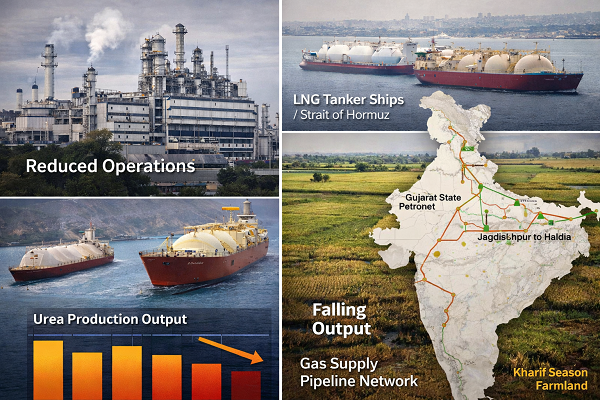
The broader context in which these Iranian oil negotiations are taking place is one of acute and worsening energy stress for India. The disruption of energy shipments through the Strait of Hormuz caused by the conflict — now in its fourth week — has struck at the heart of India’s import-dependent energy system. A substantial share of India’s crude oil imports, as well as its liquefied natural gas supplies, transit the Strait, making any prolonged disruption to navigation in this waterway a direct threat to India’s energy security.
The consequences of this disruption are already being felt across the Indian economy. As reported previously, India’s urea fertiliser plants are operating at roughly half their normal capacity following the curtailment of LNG supplies, raising concerns about fertiliser availability ahead of the upcoming kharif agricultural season. The current situation is placing enormous pressure on Indian refinery operators, gas distributors, and government policymakers to identify and secure alternative supplies wherever they can be found.
Beyond crude oil, India is also facing a severe shortage of liquefied petroleum gas — LPG — which is primarily used as a cooking fuel by hundreds of millions of Indian households. The LPG shortage adds a direct and tangible dimension of hardship to the energy crisis, extending its impact well beyond the industrial and commercial sectors and into the daily lives of ordinary citizens across the country. Indian refiners have already moved aggressively to secure Russian oil following the US lifting of sanctions on Russian crude in a parallel effort to curb the global oil price surge, purchasing millions of barrels of Russian crude to partially offset the loss of supply from disrupted Middle East sources.
SWIFT Exclusion Remains the Critical Barrier to Iranian Oil Deals
Despite the commercial attractiveness of Iranian crude in the current market environment — and despite the temporary legal cover provided by the US sanctions waiver — Indian refiners are approaching the opportunity with considerable caution. The central obstacle is Iran’s exclusion from the SWIFT international interbank payment system, which makes standard dollar-denominated international transactions between Indian buyers and Iranian sellers extremely difficult to execute through conventional banking channels.
SWIFT exclusion effectively means that there is no straightforward, widely accepted mechanism through which Indian companies can pay for Iranian oil using normal international banking infrastructure. Any transaction would require the use of alternative payment arrangements — whether through third-country intermediaries, bilateral currency swap mechanisms, or rupee-based settlement systems — each of which carries its own legal, compliance, and operational complexity.
Indian refiners are acutely aware of the reputational and legal risks associated with sanctions non-compliance, and even with the 30-day waiver in place, the absence of a clear and legally safe payment mechanism is a significant deterrent. Sources confirmed that refiners want to be entirely sure about the payment mechanism before entering into any formal deal with the National Iranian Oil Company. The seven-day payment window attached to current offers adds further pressure, as it leaves limited time for the complex legal and banking arrangements required to complete such transactions to be put in place.
Government Signals Commercial Decision for Oil Companies
The Indian government has signalled that decisions about whether to purchase Iranian crude will ultimately rest with individual oil companies rather than being directed by policy mandate. Sujata Sharma, a Joint Secretary in the federal oil ministry, told reporters at an energy conference that any decision to buy Iranian fuel would be “a techno-commercial decision” on the part of the oil companies themselves.
This framing is significant. By characterising potential Iranian oil purchases as commercial rather than political decisions, the government is giving state-owned and private refiners the space to evaluate the opportunity on its merits — weighing the supply benefits of Iranian crude against the payment complications and compliance risks — without committing New Delhi to a formal policy position on Iranian oil imports that could create diplomatic friction with Washington.
It also reflects the complexity of India’s position in the current geopolitical moment. India has strong interests in maintaining its relationship with the United States, while simultaneously facing an acute domestic energy crisis that is pushing it to explore every available source of supply. Framing Iranian oil purchases as techno-commercial decisions allows India to pursue supply security objectives without appearing to make a deliberate and politically charged choice to defy the spirit of the US sanctions regime — even during a period when a formal waiver is in place.
Market Outlook
The 30-day sanctions waiver represents an extremely narrow and time-limited opportunity for Indian refiners to access Iranian crude oil, and market participants are under no illusion about the compressed timeline involved. With the waiver covering only cargoes loaded on or before March 20 and discharged by April 19, the practical window for completing transactions — including negotiating terms, resolving payment mechanisms, arranging shipping logistics, and completing customs and regulatory clearances — is extremely tight.
Analysts expect that the volume of Iranian oil that ultimately reaches India under this waiver will be constrained not by commercial appetite but by the speed at which payment and logistics arrangements can be finalised. The SWIFT exclusion issue in particular may prevent some deals from being concluded within the available timeframe, even where both buyer and seller are willing in principle.
Looking beyond the immediate 30-day window, the trajectory of the conflict in the Gulf region and the future direction of US sanctions policy towards Iran will be the defining variables for India’s energy supply outlook. A negotiated resolution to the conflict could open the door to a more sustained and structured resumption of Iranian oil purchases, while a further escalation could tighten global supply even further and push prices to levels not seen since the early days of the post-pandemic energy crisis. India’s energy policymakers, refinery operators, and commodity traders will be watching both fronts with intense and urgent attention in the weeks ahead.