
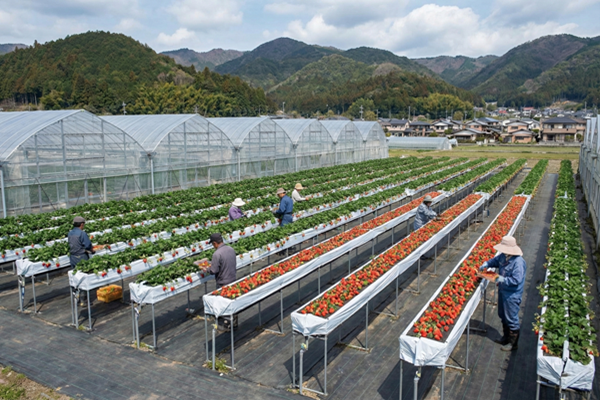
Japan’s major strawberry-producing regions are intensifying branding campaigns and promotional activities as domestic consumption continues to decline, falling to around 40% of levels recorded three decades ago.
The drop in consumption has been attributed largely to changing consumer preferences and greater diversity in fruit choices, prompting prefectures to invest in marketing strategies aimed at revitalizing demand.
Regional Collaboration to Promote Strawberry Consumption
Tochigi Prefecture, widely known as Japan’s “strawberry kingdom,” has joined forces with Ibaraki, Shizuoka, and other producing regions to promote strawberries through joint consumer events.
One of the key initiatives took place at the Yokohama Strawberry Festival, held from February 5 to March 1, where producing regions organized a collaborative promotional campaign between February 21 and 23.
The festival has become one of the largest strawberry-themed events in Japan, attracting approximately 580,000 visitors last year.
Ahead of the event, the director of Tochigi’s agricultural policy department encouraged cooperation among competing regions.
“We may usually be rivals, but let’s work together during these three days to sell strawberries and increase strawberry consumption in Japan,” he said.
Tochigi Promotes New Flagship Variety
Tochigi is currently promoting Tochiaika, a strawberry variety that has replaced the long-standing Tochiotome, which had served as the prefecture’s flagship strawberry for nearly 30 years.
Today, Tochiaika accounts for around 90% of strawberry cultivation in Tochigi.
However, consumer awareness remains limited. Many visitors still associate the region with its previous variety.
“Isn’t Tochigi Prefecture known for its Tochiotome strawberries?” some consumers asked during promotional events.
To increase recognition, Tochigi has launched an extensive marketing campaign between January and mid-March, including:
-
Strawberry tasting and sales events at train stations
-
Promotions in supermarkets and airports
-
Special menu items featuring Tochiaika in restaurants
-
Social media campaigns involving influencers and local producers
These activities are being rolled out across the Tokyo metropolitan area and the Kansai region.
Fukuoka Strengthens Amaou Premium Branding
Meanwhile, Fukuoka Prefecture is doubling down on the branding of its famous Amaou strawberries, which have dominated Japan’s premium strawberry segment for years.
During a promotional event in Tokyo’s Ginza district in late January, Governor Seitaro Hattori highlighted the intensifying competition among strawberry-producing regions.
“The competition to develop new varieties is intensifying. The Amaou variety has been called the ‘king’ for being the highest-priced strawberry for 21 consecutive years. Now, we want to make it an ‘emperor,’” Hattori said.
The event showcased Hakata Amaou Premium, a top-grade selection with a sugar content of at least 11 degrees.
Approximately 200 boxes of the premium strawberries are scheduled for sale in Tokyo department stores, with prices exceeding 10,000 yen (around $70) per box.
Premium Market and Culinary Promotion
The promotional event attracted around 100 participants, including chefs, restaurant owners, and social media influencers.
Renowned Japanese patissier Toshihiko Yoroizuka praised the fruit’s flavor profile.
“Amaou strawberries have a very good balance of sweetness and sourness. While popular strawberry varieties tend to change every 20 years or so, Amaou has maintained its throne for a long time,” he said.
Despite collaboration efforts, competition between producing regions remains intense.
Governor Hattori described the rivalry in simple terms:
“This is like a strawberry war. Our biggest rival should be Tochigi Prefecture.”
Japan’s Strawberry Industry at a Turning Point
With consumption declining and new varieties entering the market, Japan’s strawberry industry is entering a more competitive phase driven by branding, premium positioning, and consumer engagement.
Producers hope that stronger marketing campaigns, product innovation, and tourism events will help revitalize domestic demand and secure the future of one of Japan’s most iconic fruits.