
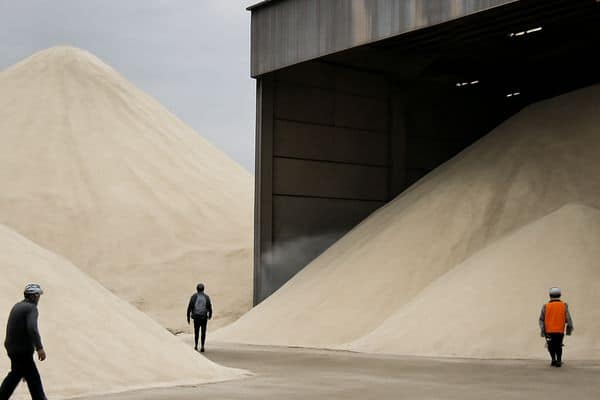
Jeera prices are consolidating in a relatively narrow band as the Indian cumin market transitions from a volatile phase into a more balanced, sideways trend. Despite increased new-crop arrivals in key mandis, demand from domestic trade and exporters is absorbing supply, preventing a sharp correction. Export FOB offers show a mild softening, but fundamentals still point to a firm base with limited downside unless arrivals spike unexpectedly or export demand softens materially.
In this environment, cumin has become one of the more predictable segments in the spice complex. Raw mandi data from Rajasthan and Gujarat indicate spot prices broadly aligned with a stable range, while exporter offers in EUR show gentle week‑on‑week declines rather than aggressive discounting. Market sentiment is best described as steady and controlled: no strong bullish trigger is evident, but there is also no immediate sign of structural weakness. For buyers, this offers a window to secure medium‑term coverage at relatively comfortable levels; for sellers, the focus shifts from timing big price moves to managing quality and logistics efficiently.
Exclusive Offers on CMBroker

Cumin seeds
whole, grade - A
FOB 4.35 €/kg
(from IN)

Cumin seeds
grade - A
99%
FOB 2.24 €/kg
(from IN)

Cumin powder
grade - A
FOB 3.50 €/kg
(from IN)
📈 Prices & Market Structure
Spot mandi dynamics in India
The core of today’s cumin market is a stable spot environment in India’s key producing states, especially Rajasthan and Gujarat. Raw Text data show jeera moving in a band of ₹20,000–₹23,300 per quintal (≈$240–$280 per 100 kg), with Rajasthan mandis averaging around ₹20,900–₹21,100 per quintal depending on quality and location. This confirms that, despite prior volatility, the market has established a firm price floor around the low‑₹21,000 level.
Recent independent mandi statistics broadly corroborate this stability, with reported all‑India average jeera prices near ₹22,000 per quintal in early March 2026 and Unjha APMC quotes in the low‑₹20,000s. Combined with NCDEX jeera futures trading slightly above these cash levels, the structure points to a modestly backward‑leaning but essentially flat curve, consistent with a market neither in deep stress nor exuberance.
Export and processing price indications (converted to EUR)
Exporter and processor offers in EUR add further color to the underlying stability. Across key origins, recent indicative prices (FOB/FCA) show:
| Product | Origin / Location | Spec | Terms | Latest Price (EUR/t) | WoW Change (EUR/t) | Sentiment |
|---|---|---|---|---|---|---|
| Cumin seeds | IN / New Delhi | whole, grade A, organic | FOB | 4,450 | -50 | Mildly bearish but stable |
| Cumin seeds | IN / New Delhi | grade A, 99% purity | FOB | 2,320 | -30 | Soft tone, good availability |
| Cumin seeds | IN / Unjha | 98% purity | FOB | 2,200 | -30 | Sideways, arrival pressure |
| Cumin powder | IN / New Delhi | grade A, organic | FOB | 3,600 | -50 | Stable demand, easing costs |
| Cumin seed | SY / via NL | conventional | FCA | 3,600 | 0 | Steady, supply risk priced in |
| Cumin powder | SY / via NL | conventional | FCA | 4,350 | 0 | Firm on processing margins |
| Cumin seeds | EG / Cairo | 99.9% purity | FOB | 4,350 | -50 | Slight softening |
| Cumin seeds | EG / Cairo | black, grade A | FOB | 2,000 | +20 | Firm niche demand |
The EUR offers confirm the Raw Text narrative: prices are not rallying aggressively, but they are also not collapsing. Indian conventional seed around 2,200–2,320 EUR/t and powder around 3,600 EUR/t point to comfortable export competitiveness, while higher‑priced Egyptian and Syrian material reflects quality positioning and geopolitical risk premia.
🌍 Supply & Demand Balance
India: Arrivals growing, but well absorbed
According to Raw Text, jeera arrivals are rising across major mandis as the new crop hits peak marketing season, yet demand from both traders and exporters is “absorbing supply at current levels, preventing a sharp fall.” This is the defining feature of today’s balance: higher physical inflows are matched by steady off‑take, rather than building burdensome stocks at the farm or trader level.
Limited selling pressure from stockists further supports this equilibrium. Holders are not rushing to liquidate inventories, suggesting confidence that current prices represent a fair value band. Historically, jeera prices tend to stabilise during peak arrival season unless there is a sudden surge in supply or a sharp drop in exports, and current behaviour is closely aligned with this pattern.
Global production landscape
Globally, India remains by far the dominant producer and exporter of cumin, accounting for the majority of world trade. Other important origins such as Syria, Turkey, Iran, and Egypt contribute smaller but commercially meaningful volumes, particularly for regional and premium segments.
However, several of these secondary origins face chronic structural constraints, including water stress and political risk in Syria, and variable yields in Turkey and Iran. This backdrop reinforces India’s position as the swing supplier: when Indian crops and logistics are smooth, global cumin balances are comfortable; when India underperforms, the world market tightens rapidly. Current Raw Text evidence of balanced Indian supply and demand therefore has disproportionate significance for global availability.
Demand: Domestic consumption and exports
On the demand side, Raw Text emphasises that trade and export demand are sufficiently strong to keep the market “steady with controlled movement.” While there is no strong bullish trigger from extraordinary export spikes, the absence of demand shock is itself supportive given the larger arrival volumes.
Recent international analysis points to a still‑growing global cumin seed and ingredient market, with Europe’s share of imports slowly expanding and sustained interest from the Middle East and North Africa. This global backdrop, combined with India’s stable mandi prices and competitive FOB offers in EUR, suggests that export flows are likely continuing at a healthy pace, even if growth is less explosive than in past bumper years.
📊 Fundamentals & Market Drivers
Key fundamental pillars from the Raw Text
- Balanced supply and demand: Rising arrivals are being effectively matched by trader and exporter demand, keeping stocks from accumulating in mandis.
- Limited selling pressure: Stockists are not offloading aggressively, which supports a firm price base and prevents panic selling.
- Seasonal stabilisation: Historically, jeera stabilises during peak arrivals; current behaviour is consistent with this, reinforcing the sideways profile.
- Sentiment: The market is described as “steady with controlled movement,” capturing the absence of strong bullish or bearish drivers.
These elements collectively underpin a sideways but firm market. Absent a shock, they argue against deep downside: to push prices decisively below the established range would likely require either a sudden, sharp jump in arrivals beyond current expectations or an external demand shock (e.g., trade restrictions, macro‑driven demand slowdown).
External drivers and risk factors
- Weather in India: Forecasts for March–May 2026 suggest hotter‑than‑normal conditions and early-season heatwaves in Gujarat and North India. For the 2025/26 cumin crop now being marketed, major yield impacts are already baked in, but persistent heat could tighten moisture profiles and pose risks to the next sowing season.
- Weather and conflict in Syria: Multi‑year drought trends and current water stress in Syria, plus localised damage from herbicide spraying in agricultural areas, continue to cap Syrian export potential and support a structural risk premium on alternative origins.
- Macro and freight: While not highlighted explicitly in the Raw Text, global freight uncertainty and regional security tensions in West Asia can intermittently influence delivered cumin costs, especially into Europe and North America.
Speculative and futures positioning
NCDEX jeera contracts show prices modestly below recent peaks, with a roughly mid‑single‑digit percentage gain over the last 12 months and recent daily declines of around 1–1.5%. This pattern is consistent with speculative longs being trimmed after prior rallies, but not with a wholesale liquidation.
Given the Raw Text’s emphasis on stability and lack of strong directional conviction, speculative flows are likely playing a secondary role compared to physical fundamentals. The futures curve hovering close to spot confirms that the market does not currently price large forward tightening or loosening.
🌦️ Weather Outlook & Yield Implications
India (Gujarat & Rajasthan cumin belt)
For March 2026, India’s meteorological outlook signals above‑normal temperatures across large parts of the country, including Gujarat and Rajasthan, during the late rabi and early summer season. This coincides with the tail end of cumin harvesting and the main marketing window, rather than the critical vegetative stage.
As a result, yield risks for the current crop are limited; the crop is largely determined. However, sustained heat and moisture stress could influence farmer sentiment and planting decisions for the upcoming season, particularly if input costs remain high. For now, though, weather is a watch‑list item rather than an active bearish or bullish driver for jeera.
Other origins: Syria, Turkey, Iran, Egypt
In Syria, prolonged drought trends and ongoing water crises are undermining agricultural output more broadly, including in traditional cumin‑producing regions like Aleppo and Homs. These conditions restrict Syria’s ability to ramp up cumin exports in response to price incentives, reinforcing India’s central role.
Turkey and Iran are experiencing more typical variability, but do not show signs of a major supply shock that could decisively alter global balances in the very near term. Egypt, as a smaller yet quality‑oriented cumin origin, continues to operate with relatively steady production, leaving pricing more influenced by currency moves and local cost structures than by dramatic weather events at present.
🌍 Global Trade, Production & Stocks
Production and export shares
| Country / Region | Role in cumin market | Indicative share / notes* |
|---|---|---|
| India | Largest producer & exporter | Over 60% of global exports; dominant in EU & MENA sourcing |
| Syria | Important regional supplier | Historically around 10–13% of global production, but constrained by drought and conflict |
| Turkey | Secondary exporter | Low‑mid single‑digit share; key into Europe and Middle East |
| Iran | Regional producer | Smaller but growing contribution to global trade |
| Egypt | Niche quality origin | Focus on high‑purity seeds and black cumin segment |
*Shares based on recent analytical estimates rather than official USDA data.
Stock situation
While precise global cumin stock data are limited, the Raw Text strongly implies that Indian pipeline stocks are manageable. Stockists’ reluctance to sell aggressively suggests inventories are neither excessively tight nor uncomfortably heavy at current prices.
In secondary origins, chronic supply constraints (notably in Syria) reduce the likelihood of large overhangs. On balance, the global stock picture seems consistent with a market in equilibrium: enough cumin to satisfy demand at current prices, but not so much surplus that a deep, prolonged bear market is likely without a demand shock.
📆 Short‑Term Outlook & Trading Strategy
Price outlook: Sideways with firm undertone
The Raw Text outlook is clear: in the short term, jeera prices are “likely to remain stable,” with limited downside risk unless arrivals spike sharply. Upside remains conditional on stronger‑than‑expected export demand or weather‑related concerns for the next crop.
Given current mandi prices, NCDEX futures levels, and EUR‑based FOB/FCA offers, this translates into a sideways price corridor with small daily fluctuations but no strong trend. The market has moved from a volatility phase into an equilibrium phase, often characterised by range trading and basis management rather than directional bets.
Trading recommendations
- Importers / industrial users (EU, MENA, North America):
- Use the current stable window to secure 3–6 months of coverage for conventional Indian cumin seeds around 2,200–2,320 EUR/t FOB equivalent and powder around 3,600 EUR/t where quality fits specs.
- Stagger purchases to average in within the current range rather than waiting for deep dips that are not indicated by fundamentals.
- Retail brands & spice blenders:
- Lock in prices for premium segments (organic Indian, high‑purity Egyptian, Syrian via Europe) as these show less downside and are vulnerable to supply disruptions.
- Review formulations and pack sizes to preserve margins if freight or currency volatility emerges later in 2026.
- Exporters and stockists in India:
- Maintain moderate inventory rather than aggressively building stocks; the market is firm but lacks a clear bullish trigger.
- Focus on quality segregation and timely shipments to capture small premiums in quality‑sensitive destinations like the EU.
- Speculators (futures):
- Adopt range‑trading strategies around established mandi and futures bands; avoid heavy directional exposure until a clear catalyst (weather, export surge) emerges.
- Monitor arrival data and export figures closely for any sign that the current balance is tipping.
Risk watchlist
- Unexpected spike in arrivals or a sudden shift in stockist behaviour leading to heavier selling.
- Macro‑driven demand slowdown in key import markets or trade policy shocks.
- Escalation of regional conflicts affecting logistics through West Asia.
- Persistent heat and water stress affecting planting decisions for the next Indian cumin crop.
📉 3‑Day Regional Price Forecast (Indicative, in EUR)
Based primarily on the Raw Text’s sideways outlook, current mandi and futures levels, and recent EUR‑denominated offers, the following indicative 3‑day price view is proposed (all values approximate):
| Market / Product | 16 Mar 2026 | 17 Mar 2026 | 18 Mar 2026 | Bias |
|---|---|---|---|---|
| India FOB New Delhi – cumin seeds, grade A (99%) | ≈2,320 EUR/t | ≈2,310–2,330 EUR/t | ≈2,310–2,335 EUR/t | Sideways |
| India FOB Unjha – cumin seeds (98%) | ≈2,200 EUR/t | ≈2,190–2,210 EUR/t | ≈2,190–2,215 EUR/t | Sideways / mildly soft |
| India FOB New Delhi – cumin powder, organic | ≈3,600 EUR/t | ≈3,580–3,610 EUR/t | ≈3,580–3,620 EUR/t | Sideways |
| Egypt FOB Cairo – cumin seeds 99.9% | ≈4,350 EUR/t | ≈4,340–4,360 EUR/t | ≈4,340–4,370 EUR/t | Sideways / slightly soft |
| Syria FCA NL – cumin seed | ≈3,600 EUR/t | ≈3,590–3,610 EUR/t | ≈3,590–3,620 EUR/t | Sideways, risk premium intact |
Given the Raw Text’s clear characterisation of the jeera market as stable, with range‑bound movement and a firm undertone, meaningful price breaks in either direction over the next three days appear unlikely barring sudden, unexpected news on arrivals or exports.