
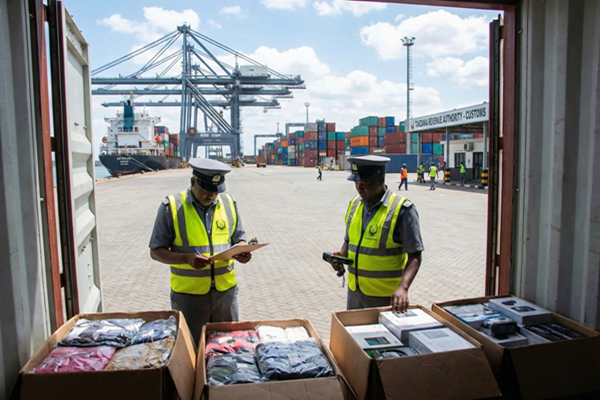
Kenya Shifts to Destination Inspection for U.S. Imports
Kenya has introduced a mandatory destination inspection regime for U.S.-origin goods, requiring conformity checks at ports of entry rather than before shipment.
The policy change took effect February 9, 2026, after the expiration of the Pre-Export Verification of Conformity (PVoC) inspection contract between the Kenyan Bureau of Standards (KEBS) and inspection provider Société Générale de Surveillance (SGS).
With the contract ending, KEBS inspectors have assumed responsibility for conformity verification upon arrival of U.S. shipments.
New Inspection Fee Set at 0.6% of Customs Value
Under the new system, KEBS applies an inspection fee of 0.6% of the approved customs value for U.S. goods entering Kenya.
The charges include:
-
Minimum fee: USD 300
-
Maximum fee: USD 3,500
This replaces the previous system where exporters obtained a Certificate of Conformity (CoC) before shipping products to Kenya.
Previous System Relied on Pre-Shipment Certification
Under the earlier PVoC program, U.S. exporters secured compliance verification before shipping goods.
Inspection services were carried out by SGS in the United States, which issued the CoC required for Kenyan import clearance.
Shipments lacking certification faced destination inspection at a significantly higher rate of 5% of the customs value, with potential penalties including re-export or destruction of non-compliant goods.
The SGS inspection contract officially expired February 8, 2026, ending the previous verification process.
New Documentation Requirements for Exporters
To facilitate clearance, U.S. exporters must now provide a comprehensive set of documents before shipments arrive in Kenya.
Required documentation includes:
-
Commercial invoice
-
Import Declaration Form
-
Packing list
-
Bill of Lading or Airway Bill
-
Free Sale Certificate
These documents must be submitted through the KENTRADE single-window system to enable pre-arrival processing.
KEBS inspectors may also collect product samples for laboratory testing before final conformity approval.
Risk of Port Delays and Higher Transaction Costs
The shift to destination inspection introduces several operational risks for exporters.
Potential impacts include:
1️⃣ Longer port clearance times
2️⃣ Additional documentation verification
3️⃣ Sampling and laboratory testing requirements
4️⃣ Higher port-related costs
For perishable goods and time-sensitive shipments, these changes could significantly affect logistics planning and delivery timelines.
WTO Transparency Concerns Raised
The report notes that Kenya did not notify the policy change to the World Trade Organization (WTO) prior to implementation.
Under the WTO Agreement on Technical Barriers to Trade, governments are encouraged to provide advance notification and transition periods when introducing new technical regulations affecting international trade.
The abrupt implementation therefore raises compliance concerns among exporters.
🔎 CMB Outlook
Kenya remains an important gateway market for U.S. agricultural and consumer goods exports to East Africa.
However, the move to destination inspection introduces greater administrative complexity and uncertainty.
Key implications:
-
Exporters must strengthen compliance documentation before shipping
-
Logistics timelines will likely lengthen
-
Port inspection costs could rise, particularly for high-value cargo
In the near term, exporters should expect slower clearance procedures while KEBS adjusts to its expanded inspection responsibilities.