
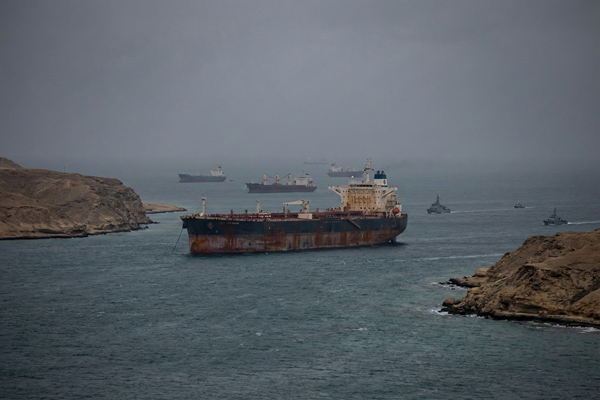
Tanker freight rates on Middle East routes have more than doubled as escalating conflict and a tightening vessel supply disrupt one of the world’s most critical energy corridors.
According to Bloomberg, charter rates for Suezmax tankers — vessels capable of carrying up to 1 million barrels of crude oil — on the Middle East–China route have surged to 525 Worldscale (WS) points.
For comparison:
-
February 27: 225 WS points
-
Beginning of 2026: 50 WS points
The sharp rise reflects heightened geopolitical risk and a growing shortage of available ships.
Understanding the Worldscale Benchmark
The tanker industry uses the Worldscale (WS) system to standardize freight calculations across global trade routes.
-
WS rates determine vessel revenue levels.
-
They help calculate freight costs per barrel of oil.
-
A move from 50 to 525 points represents a dramatic escalation in transport cost per cargo.
Such volatility directly impacts crude pricing, refinery margins, and downstream fuel markets.
Strait of Hormuz: The Pressure Point
The freight spike coincides with:
-
The expansion of hostilities in the Middle East.
-
Reports of the virtual closure of the Strait of Hormuz.
-
Increased security risks for commercial vessels.
More than 200 ships are reportedly anchored near the strait as operators assess safety conditions.
At least three tankers have sustained damage in the Persian Gulf since the outbreak of fighting involving the United States, Israel, and Iran.
The Strait of Hormuz handles roughly 20% of global oil exports, making it one of the world’s most sensitive maritime chokepoints.
Vessel Shortage Amplifies Volatility
Beyond conflict risk, freight volatility is being intensified by:
-
Concentration of tanker ownership.
-
Recent large-scale acquisitions of supertankers by South Korea’s Sinokor Merchant Marine.
The consolidation of tanker fleets reduces spot-market liquidity, increasing rate sensitivity during geopolitical crises.
Market Implications
The surge in tanker rates could have cascading effects:
Energy Markets
-
Higher crude transportation costs
-
Potential upward pressure on oil benchmarks
-
Refinery margin compression
Global Trade
-
Rising marine insurance premiums
-
Increased freight pass-through to end consumers
-
Inflationary spillover risks
Shipping Sector
-
Windfall earnings for available tanker owners
-
Heightened operational risk premiums
Strategic Outlook
Freight markets are now pricing in:
-
Sustained geopolitical tension
-
Elevated war-risk insurance costs
-
Continued congestion near Hormuz
Key variables to watch:
-
Duration of maritime disruption
-
Naval escort policies
-
Physical enforcement of transit restrictions
-
Availability of alternative export routes
If instability persists, freight markets may remain structurally elevated.
Conclusion
The war in the Middle East has triggered a dramatic spike in tanker freight rates, with Suezmax charter costs rising more than tenfold since the start of the year.
With over 200 vessels anchored near the Strait of Hormuz and growing security risks, the energy and shipping sectors face heightened uncertainty.
Should the conflict continue, elevated freight costs could feed directly into global oil prices and broader inflationary pressures.