
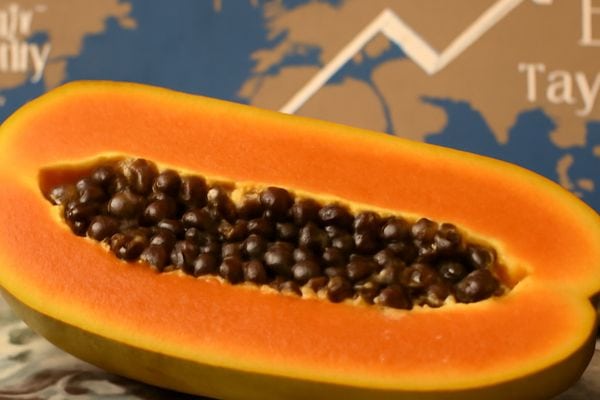
The Brazilian Northeast, a vital papaya-growing region, is experiencing pronounced climate volatility, forcing growers into a delicate balancing act between short-term crop disease threats and looming water scarcity. Recent heavy rainfall in Rio Grande do Norte and Ceará, particularly 141 mm in Ceará-Mirim by February 23, has dramatically exceeded historical averages, breaking a lengthy drought that had previously stressed irrigation systems and heightened pest and virus problems in papaya orchards.
While these rains offer temporary relief, helping to recharge wells, growers now face immediate risks from excess moisture, notably increased incidence of fungal diseases like anthracnose and chocolate spot expected to threaten crops through March. Weather forecasts warn that the respite may be short-lived; a shift back to high temperatures and below-normal precipitation is anticipated later this year, reigniting concerns about irrigation capacity, pest control costs, and overall fruit quality. Market players are closely monitoring these developments as weather-driven uncertainty is set to shape both production and pricing in the months ahead.
Exclusive Offers on CMBroker

Papaya dried
cubes or chunks 10 to 30 mm
FOB 5.00 €/kg
(from VN)

Papaya dried
8-10 mm, normal sugar
FCA 3.62 €/kg
(from NL)

Papaya dried
5-7 mm, normal sugar
FCA 3.52 €/kg
(from NL)
📈 Prices
| Product | Type | Origin | Delivery Location | Delivery Terms | Latest Price (EUR/kg) | Weekly Change | Market Sentiment |
|---|---|---|---|---|---|---|---|
| Papaya dried | Cubes 10-30 mm | Vietnam | Hanoi, VN | FOB | 5.00 | -0.05 | Softening |
| Papaya dried | 8-10 mm, normal sugar | Thailand | Dordrecht, NL | FCA | 3.60 | -0.10 | Softening |
| Papaya dried | 5-7 mm, normal sugar | Thailand | Dordrecht, NL | FCA | 3.50 | -0.10 | Softening |
🌍 Supply & Demand
- Brazil’s Northeast: Key producing states (Rio Grande do Norte and Ceará) transitioning swiftly from drought to excessive rainfall.
- Short-Term : Heavy rain replenishing irrigation wells, but creating high disease risk, especially fungal, through March.
- Mid-to-Long-Term: Forecasts signal dry, hot conditions returning, risking renewed water stress and pest outbreaks. Growers alert to potential impacts on both quantity and quality of papaya supply.
- Export flows, especially dried papaya from Southeast Asia, currently steady; price softness in European import markets visible.
📊 Fundamentals
- Production: Improved irrigation from recent rains may support recovery from drought losses, but disease-related yield losses are a near-term threat.
- Crop Condition: Risk of anthracnose and chocolate spot mounting as orchards grapple with excess humidity. Previous pest and virus stress may complicate recovery.
- Input Costs: Likely to rise in 2024, as growers face increased fungicide use and possibly higher irrigation costs if drought returns.
🌦️ Weather Outlook
- Immediate: Continuing above-average rainfall into March in key papaya districts, enhancing short-term disease threats.
- Outlook: Models indicate a return to heat and below-normal precipitation through Q2 and beyond. Watch for renewed water stress and escalated pest pressure, which could decrease fruit quality and drive further cost increases.
🌏 Global Production & Stock Comparison
- Brazil’s northeastern crop currently faces the highest production volatility globally due to climate swings.
- Dried papaya exports from Vietnam and Thailand, less affected by these weather extremes, underpin stable international supply; their prices, however, reflect softening demand in Europe.
- Other papaya-exporting nations (India, Philippines) not reporting major production disruptions at this stage.
💡 Trading Outlook & Recommendations
- 🟡 Monitor Brazil Weather: Track ongoing rains and disease outbreaks in Rio Grande do Norte and Ceará for supply risks.
- 🟡 Anticipate Costlier Inputs: Budget for higher crop protection and potential irrigation expenses through 2024.
- 🟡 Short-Term Traders: Expect continued softening in dried papaya prices in the EU, but remain alert for sharp changes if Brazilian production issues escalate quickly.
- 🟠 Importers: Consider diversifying sources; potential for spikes in fresh papaya prices if disease/drought hamper Brazilian volume.
- ⚪ Producers: Meet with agronomists to update disease management plans and prepare for tighter water controls mid-year.
📆 3-Day Regional Price Forecast
| Location | Product | Current Price (EUR/kg) | 3-Day Forecast | Sentiment |
|---|---|---|---|---|
| Hanoi (VN) | Papaya dried (cubes 10-30mm) | 5.00 | 4.95 – 5.05 | Soft/Stable |
| Dordrecht (NL) | Papaya dried (8-10mm) | 3.60 | 3.55 – 3.65 | Soft/Stable |
| Dordrecht (NL) | Papaya dried (5-7mm) | 3.50 | 3.45 – 3.55 | Soft/Stable |