
🔵 Executive Summary
Saudi Arabia has temporarily suspended imports of fruits and vegetables from the Indian states of Kerala and West Bengal following concerns related to the Nipah virus.
The directive, communicated on February 6 by the Royal Embassy of Saudi Arabia, calls for a halt in agricultural shipments from the two states until the epidemiological situation stabilizes. The move has triggered significant concern among exporters, particularly in Kerala, where industry representatives state that no recent Nipah cases have been reported.
The suspension introduces short-term disruption risks for exporters reliant on Gulf markets.
📜 Official Directive & Compliance Measures
According to the Saudi communication:
-
Exports of fruits and vegetables from Kerala and West Bengal must be halted.
-
Shipments from other Indian states must undergo stricter phytosanitary inspections.
-
All consignments must be visually examined for signs of animal contamination, including bite marks or droppings.
-
Only produce deemed “apparently sound” will be cleared.
The measure appears precautionary in nature, linked to public health risk perception rather than confirmed current outbreaks.
🌍 Trade & Export Impact
Saudi Arabia is a major destination for Indian fresh produce, particularly from southern India.
Key Impact Areas:
-
Exporters operating via Calicut International Airport
-
Air cargo shipments to West Asia
-
Small and medium-scale exporters
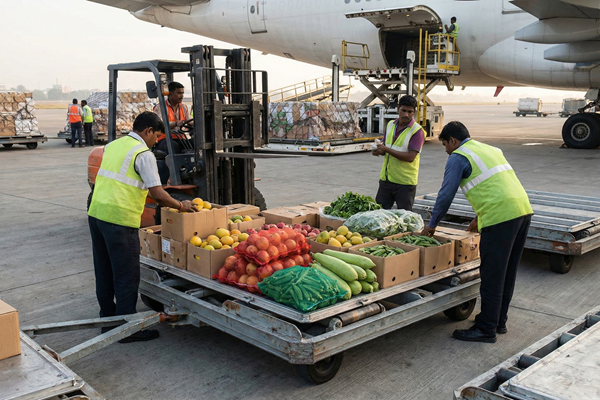
Approximately 3,500 tonnes of fruits and vegetables are airlifted from four airports in Kerala, much of it destined for Gulf markets.
Industry representatives warn that the suspension could:
-
Trigger order cancellations
-
Increase supply-chain disruptions
-
Create reputational spillover risk to other Gulf destinations
⚠️ Industry Reaction
Exporter associations in Kerala have expressed concern, noting:
-
No fresh Nipah cases reported recently in the state
-
Public health situation described as under control
The abrupt nature of the restrictions has reportedly:
-
Created panic among shippers
-
Disrupted pre-booked consignments
-
Caused financial strain, particularly for SMEs
Political representatives have reportedly raised the issue with central authorities, urging diplomatic engagement to resolve the matter.
🧭 CMB Market Interpretation
The suspension highlights how sanitary concerns can rapidly influence agricultural trade flows.
Key Observations:
-
Health-linked trade barriers can emerge swiftly, even without current outbreaks.
-
Air cargo-dependent exporters are particularly vulnerable to sudden restrictions.
-
Gulf markets remain critical for Kerala’s fresh produce trade.
-
Enhanced inspection requirements may raise compliance costs and shipment delays.
Short-Term Outlook:
Elevated uncertainty for exporters to Saudi Arabia.
Medium-Term Risk:
If restrictions extend or widen, diversion to alternative Gulf markets may occur.
Strategic Consideration:
Strengthened traceability and phytosanitary transparency could become increasingly important in Gulf trade corridors.
📊 Risk Assessment
| Factor | Risk Level |
|---|---|
| Export Disruption (Kerala) | High |
| Gulf Market Spillover Risk | Moderate |
| Compliance Cost Increase | Moderate |
| Prolonged Suspension Risk | Uncertain |
| Domestic Supply Glut Risk | Moderate |
📌 Why This Matters Now
-
Gulf markets are key outlets for South Indian perishables.
-
Air cargo logistics heighten exposure to sudden policy shifts.
-
Sanitary risk perception can influence trade even in absence of active outbreaks.
-
Export-dependent farming communities face short-term income pressure.
The coming weeks will determine whether the suspension remains temporary or evolves into a longer-term regulatory constraint.
🏁 Conclusion
Saudi Arabia’s suspension of fruit and vegetable imports from Kerala and West Bengal introduces immediate uncertainty for exporters reliant on Gulf trade.
While positioned as a precautionary health measure, the move underscores the fragility of perishable trade flows amid sanitary risk concerns.
Diplomatic engagement and epidemiological clarity will likely shape the timeline for normalization.