

Prolonged rainfall deficits across central Poland are putting severe stress on winter rapeseed stands, raising the risk of a significantly weaker 2026 harvest and tighter regional oilseed balance. With Poland among the EU’s top four rapeseed producers, any yield loss in the country’s central belt could curb exportable surplus and underpin prices on Euronext and in physical markets.
Emerging field reports from central voivodeships point to the weakest rapeseed condition in years, with plants entering flowering under severe water stress and in many cases already with irreversibly reduced yield potential. At the same time, hydrogeological authorities have issued warnings for May highlighting low groundwater levels and sustained water‑deficit risk in several central and eastern regions, underscoring how limited reserves are to buffer the current meteorological drought.
Introduction
The current situation is developing in a core production zone for Polish rapeseed, where weeks of very limited precipitation have led to deep soil‑moisture deficits and visible crop deterioration. Local agronomic advisers describe stands that are thin, stunted and prematurely senescing, with nutrient uptake and flowering severely impaired.
This matters for global oilseed markets because Poland, alongside France, Germany and Romania, accounts for over 70% of EU rapeseed output and is a key supplier to regional crushers and intra‑EU trade flows. Any meaningful production shortfall in Poland tightens the European balance sheet and can amplify price moves already visible on international exchanges.
🌍 Immediate Market Impact
On the pricing side, rapeseed futures on Euronext Paris have been trading close to EUR 530/t for the nearby contract in early May, supported by the firm oilseed complex and growing weather concerns in parts of Europe. International indicators also show rapeseed values edging higher this week, suggesting that buyers are beginning to price in potential yield risks.
For Polish and regional crushers, the drought raises the likelihood of stronger competition for available seed in the 2026/27 season. Recent industry analysis already pointed to robust domestic crushing demand and tight forward balance in Poland; additional field losses would further restrict supplies for both local processors and cross‑border flows to Germany and other EU buyers.
📦 Supply Chain Disruptions
The immediate logistical impact is not linked to infrastructure damage but to volume risk. Lower on‑farm production in central Poland would translate into fewer truck and rail movements from interior elevators towards domestic crushers and export channels on the Baltic Sea and to neighboring EU markets.
With groundwater deficits flagged across Mazowieckie, Łódzkie, Świętokrzyskie and parts of Lubelskie, among other regions, water availability for irrigation and processing could tighten locally, particularly for plants relying on shallow wells or smaller surface sources. While large industrial users typically have more secure supplies, smaller crushers and biodiesel producers could face higher water‑management costs and, in extreme cases, operational constraints.
At the farm level, some growers are reportedly considering re‑sowing failed rapeseed with spring crops such as maize, but extremely dry seedbeds make establishment risky and may limit the success of such switches. This reinforces the prospect of structurally lower oilseed volumes from the region this season.
📊 Commodities Potentially Affected
- Rapeseed / Canola: Directly exposed, as central Poland’s winter rapeseed stands show severe stress and likely yield losses, tightening the EU rapeseed balance and supporting futures and physical prices.
- Rapeseed oil: Any reduction in crush volumes in Poland and neighboring EU regions would limit regional rapeseed‑oil output, potentially widening spreads versus other vegetable oils and supporting import demand.
- Rapeseed meal: Feed compounders may face higher prices or tighter availability of high‑protein rapeseed meal if crush margins are pressured by elevated seed costs and lower throughput.
- Substitute oilseeds (soybean, sunflower): Feed and food users could partially substitute towards soy or sunflower oil and meals, which may see incremental demand in the EU if rapeseed supplies tighten.
- Cereals (wheat, barley) and maize: Some farmers may switch failed rapeseed area into spring cereals or maize where conditions allow, modestly altering local grain balances; however, pervasive dryness limits the potential of such compensation.
🌎 Regional Trade Implications
Poland’s role as a major rapeseed supplier within the EU means that any production shortfall is likely to reduce exportable volumes towards crushers in Germany, the Benelux countries and, to a lesser extent, Scandinavia. Traders may need to source additional seed from France and Romania or draw more heavily on imports from Ukraine and other Black Sea origins to fill the gap.
Higher European prices, already evident in the Euronext and physical indications, could also improve arbitrage for non‑EU origins if freight and quality parameters align. This may encourage additional shipments of rapeseed and canola into EU ports later in 2026, particularly if crushers look to maintain high utilization rates.
Within Poland, strong domestic crushing demand means crushers are likely to compete aggressively with exporters for available seed, potentially narrowing export windows and raising basis levels in interior regions. The net effect would be to keep more rapeseed inside the country and shift some of the supply‑adjustment burden onto other EU origins.
🧭 Market Outlook
In the short term, market participants are expected to maintain a risk premium in rapeseed prices as long as central Poland and parts of neighboring Central Europe remain under clear rainfall deficits and hydrogeological stress. While formal national drought statistics for 2026 will only be published after 20 May, traders are already using field intelligence and price behavior to reassess crop expectations.
Volatility is likely to stay elevated around key data points such as EU crop‑condition updates and any revisions to official production estimates for Poland and the broader EU‑27. Traders will closely monitor farmer selling, crusher margin behavior and import interest from non‑EU origins as indicators of how tight the 2026/27 balance might become.
CMB Market Insight
The emerging drought‑driven damage to rapeseed in central Poland is an early but important signal for the 2026/27 European oilseed balance. With Poland structurally important for EU rapeseed supply and domestic crushing demand already strong, reduced yields in the country’s core belt can swiftly translate into tighter intra‑EU trade flows and firm price levels.
For physical traders, importers and processors, the strategic focus in the coming weeks will be on validating yield assumptions, reassessing procurement coverage and evaluating alternative origins. In a context of constrained water availability and fragile crop conditions, proactive hedging and diversified sourcing strategies will be key to managing price and volume risk in the rapeseed complex.
Related posts:
 Record Spring Drought Tightens Water and Export Outlook for Polish and Central European Agriculture
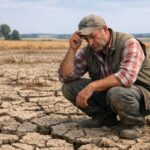 Severe Rainfall Deficit in Poland Threatens 2026 Crop Yields and Exportable Surplus
 Soil Moisture Deficits and Spring Frosts in Poland Tighten Oilseed and Sugar Supply Outlook
 Prolonged Rainfall Deficit in Poland Tightens Rapeseed and Sugar Beet Balance
 Russia Moves to Halt Kazakh Oil Transit to Germany via Druzhba, Raising Risks for Central European Fuel Supply