
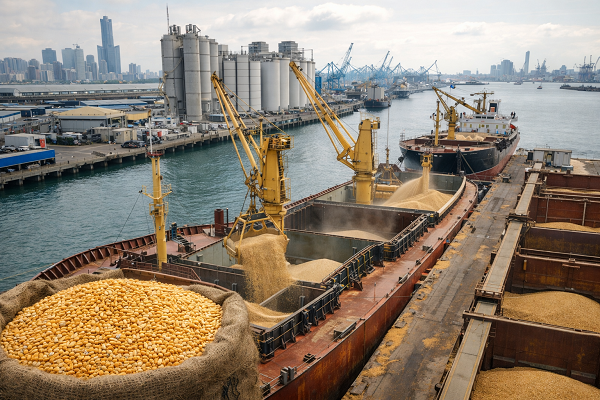
Taiwan Extends Tariff and Tax Cuts on Agricultural Imports
Taiwan has extended tariff and business tax reductions on several imported agricultural commodities until September 30, 2026, aiming to stabilize domestic food prices and control inflation.
The policy extension was announced on March 4, 2026, during a meeting of Taiwan’s Price Stabilization Task Force, led by Executive Yuan Vice Premier Cheng Li-chun.
These measures were originally scheduled to expire at the end of March 2026.
Key Agricultural Commodities Covered
The extended tax reductions apply to several major agricultural imports that Taiwan relies heavily on.
Business Tax Waived (5% → 0%)
-
Soybeans
-
Wheat
-
Corn
Import Tariff Reductions
-
Wheat: 6.5% → 0% (fully waived)
-
Butter: 5% → 2.5%
-
Anhydrous milk fat: 8% → 4%
-
Milk powder for baking: 10% → 5%
-
Beef: NT$10/kg → NT$5/kg
These reductions aim to lower food costs and ease operational expenses for Taiwan’s food processing and livestock industries.
Policy Part of Long-Running Price Stabilization Strategy
The extension represents the 17th round of tax reduction measures since Taiwan first introduced the policy in December 2021.
Taiwan’s government has repeatedly used tariff reductions as a policy tool to shield domestic consumers from global commodity price volatility.
The measures are designed to maintain annual consumer price index (CPI) growth below 2 percent.
Global Energy Prices Influencing Policy
The latest policy extension was partly influenced by rising global energy prices.
According to the report, Brent crude oil prices reached USD 83.8 per barrel on March 3, increasing more than 16 percent within a few days from USD 72.01 on February 27.
Higher energy prices increase transportation and production costs, which can quickly translate into higher food prices.
Taiwan’s Heavy Dependence on Imported Commodities
Taiwan relies heavily on imports to meet domestic demand for several agricultural commodities, particularly:
-
Corn
-
Soybeans
-
Wheat
-
Beef
Because of this dependence, global commodity market volatility can have a direct impact on domestic food prices.
The government believes the tax reductions will help mitigate these risks and support economic stability.
🔎 CMB Outlook
Taiwan’s decision to extend tariff and tax reductions highlights the growing sensitivity of food markets to global energy and commodity price shocks.
Key implications include:
-
Lower import costs for feed grains and oilseeds
-
Reduced inflation pressure on food prices
-
Support for Taiwan’s livestock and food processing sectors
If global commodity prices remain volatile, Taiwan may continue to rely on temporary tariff reductions as a price-stabilization tool.