
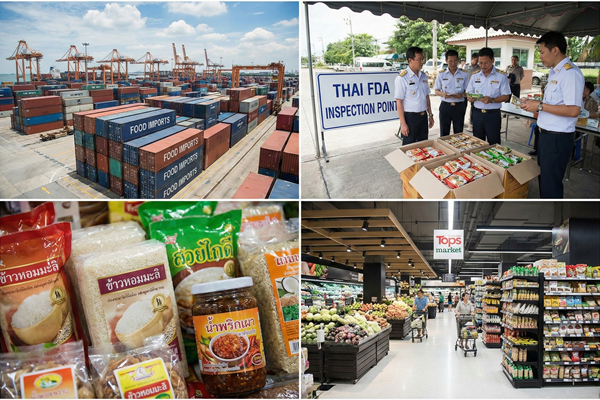
Thailand Expands Regulatory Oversight of Food Imports
Thailand continues to strengthen food import oversight in 2026, with expanded labeling requirements, tighter FDA registration processes, and increased scrutiny of e-commerce food sales
The FAIRS Country Report Annual outlines procedural updates affecting exporters of processed foods, beverages, meat products, dairy, fresh produce, and health-related food items.
For foreign suppliers, including U.S. exporters, regulatory compliance remains the key determinant of market access.
Import Licensing and Product Registration
All imported food products must be registered with the Thai Food and Drug Administration (Thai FDA) prior to shipment.
Key requirements include:
-
Product formulation disclosure
-
Ingredient approval compliance
-
Label pre-approval in Thai language
-
Manufacturing site documentation
-
Health certificate or sanitary certificate (when applicable)
High-risk foods — such as meat, dairy, infant formula, and dietary supplements — are subject to more intensive review procedures.
Certain product categories require import permits for each shipment.
Failure to comply can result in detention at port, product recall, or administrative penalties
Thai Language Labeling Mandatory
Thailand maintains strict labeling requirements.
All imported food must include:
-
Thai-language product name
-
Ingredient list (including allergens)
-
Nutritional information (where required)
-
Country of origin
-
Importer name and address
-
Production and expiration dates
Pre-approval of labels by Thai FDA is required before products can enter the market.
Mislabeling remains one of the most common causes of border rejections.
Increased Focus on E-Commerce and Online Sales
Thailand has expanded regulatory attention toward online food sales.
E-commerce operators must ensure:
-
Registered importers are responsible for compliance
-
Accurate digital labeling
-
Traceability of food products
Authorities have increased monitoring of cross-border direct-to-consumer shipments, particularly for supplements, specialty foods, and health-related products.
SPS and Health Certification Requirements
Sanitary and phytosanitary (SPS) requirements remain aligned with international standards but are strictly enforced.
Products subject to inspection include:
-
Meat and meat products
-
Dairy
-
Fresh fruits and vegetables
-
Seafood
-
Processed foods containing animal-origin ingredients
Thailand also maintains import conditions based on disease status and regional animal health certifications.
Processed Food Market Opportunities
Despite regulatory complexity, Thailand remains a high-potential consumer market.
Drivers include:
-
Growing middle class
-
Urbanization
-
Rising demand for premium and functional foods
-
Expanding modern retail sector
Imported consumer-oriented food products continue to gain market share, particularly in:
-
Dairy products
-
Snack foods
-
Meat products
-
Processed fruits and nuts
-
Beverages
E-commerce growth is further supporting demand for imported specialty foods.
Customs and Documentation
Importers must comply with:
-
Electronic customs declaration procedures
-
Product registration numbers
-
Import licensing documentation
-
Certificate of origin (if claiming preferential tariff treatment)
Delays most commonly occur due to incomplete documentation or labeling discrepancies.
Key Compliance Risks for Exporters
The FAIRS report highlights common challenges:
-
Incorrect Thai translation
-
Non-compliant ingredient claims
-
Unauthorized health or nutrition claims
-
Failure to update labeling after regulatory amendments
-
Delays in FDA registration renewals
Maintaining local representation through experienced importers remains essential.
🔎 CMB Outlook
Thailand’s 2026 regulatory framework reflects a continued shift toward tighter compliance enforcement rather than liberalization.
While no major tariff changes are highlighted, non-tariff measures — particularly labeling, registration, and e-commerce controls — are increasingly central to market access.
For exporters, success in Thailand will depend less on price competitiveness and more on regulatory precision.
As Southeast Asia’s food retail and online markets expand, Thailand remains attractive — but only for suppliers willing to navigate its detailed compliance regime.
Sources: USDA