
🇺🇸 US Supreme Court Voids Emergency Tariffs – Trade Policy Uncertainty Persists
CMB News | Trade & Corporate Response | February 2026
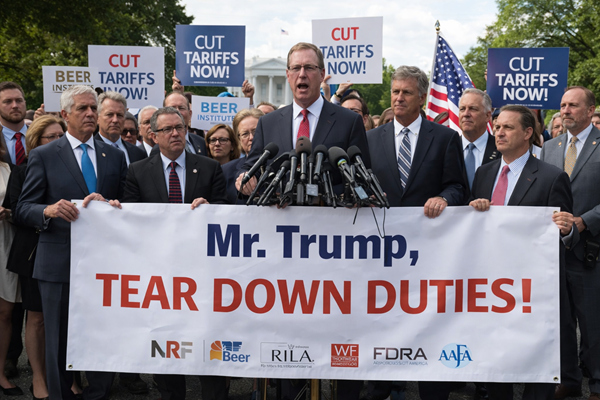
The U.S. Supreme Court’s decision to invalidate the emergency tariffs imposed by former President Donald Trump has been widely welcomed by business groups and industry leaders. However, many caution that uncertainty remains — particularly regarding refund procedures and the future direction of U.S. trade policy.
⚖️ Relief — But Not Final Resolution
The Court ruled that the emergency powers law used to justify the tariffs did not authorize their imposition. Importantly, the ruling does not declare tariffs themselves illegal — only that the specific legal pathway used was invalid.
Michael Wieder, co-founder of baby products company Lalo, emphasized this distinction:
“The Supreme Court decision didn’t say tariffs are illegal — it said this way of imposing them is illegal.”
This leaves open the possibility that tariffs could be reintroduced under alternative legal authorities.
👕 Apparel & Retail Call for Predictability
Steve Lamar, CEO of the American Apparel & Footwear Association, urged policymakers to restore rule-based trade policy:
“Now is the time to restore a predictable and dependable trade policy.”
The apparel and footwear sector has been heavily affected by tariff volatility and high import duties in recent years.
Similarly, Brian Dodge, President of the Retail Industry Leaders Association, stated that the ruling creates an opportunity for the administration to engage more closely with industry in order to provide the stability retailers and consumers need.
🍷 Wine & Spirits Sector Sees Stabilization
Francis Creighton, President & CEO of the Wine & Spirits Wholesalers of America, described the ruling as restoring clarity:
“Today’s decision restores clarity and helps stabilize an industry that depends on open markets.”
The wine and spirits industry has been particularly exposed to retaliatory tariffs in past trade disputes.
🌍 Legal & Refund Complexity Ahead
Despite the relief, trade lawyers and international business groups warn of operational challenges ahead.
Steve Orava, Chair of International Trade Practice at King & Spalding, noted:
“The major issue everybody will be dealing with in the short term is additional uncertainty.”
Andrew Wilson of the International Chamber of Commerce highlighted that intermediaries such as DHL or FedEx may be listed as the “importer of record,” potentially complicating refund claims and triggering legal disputes.
Dan Anthony, Executive Director of “We Pay the Tariffs,” representing more than 800 small businesses, stated that while refund processes are technically feasible, administrative clarity is essential.
🔎 CMB Assessment
The ruling provides immediate legal relief for affected industries. However, structural risks remain:
-
Policy Reconfiguration Risk – Alternative legal bases for tariffs may still be pursued.
-
Administrative & Litigation Risk – Refund processes may be complex and contested.
-
Investment Uncertainty – Businesses may delay capital decisions pending clarity.
Markets welcome the legal correction, but durable stability will depend on Congressional action and a clearer long-term trade framework.
Bottom line:
Industry relief is real — but lasting confidence will only return once Washington delivers predictable and legally sound trade policy.
Source: Reuters