
🔵 Executive Summary
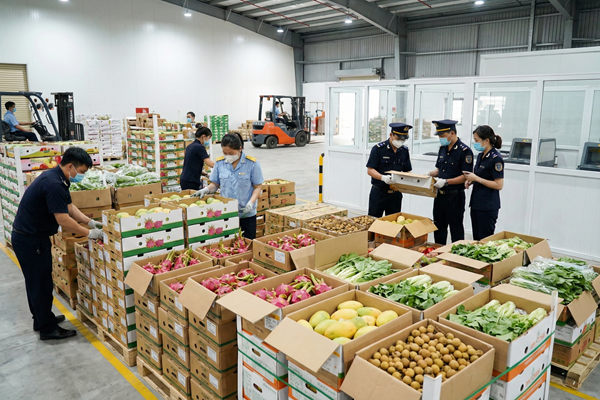
China has introduced expanded enterprise registration and declaration requirements covering 2,589 agricultural products across 20 product groups, affecting Vietnamese exporters shipping to the Chinese market.
Under the updated rules issued by China’s General Administration of Customs (GACC), affected products must be registered and supported by confirmation from a competent authority prior to export. Exporters are required to declare specific registration numbers for each enterprise and product line at the customs documentation stage.
The move reflects China’s tightening oversight on agricultural imports, with a stronger focus on traceability, quarantine risk management, and documentation compliance.
📜 Regulatory Framework Update
Vietnam’s Sanitary and Phytosanitary (SPS) Notification Authority confirmed the changes under new Chinese customs requirements.
Scope of Coverage
-
2,589 products
-
20 product groups
Key categories include:
-
Aquatic products
-
Fresh fruit
-
Fresh vegetables
-
Nuts
The list is reportedly based on quarantine risk assessments and aligns with international SPS practices.
📑 Declaration & Registration Requirements
Exporters must:
1️⃣ Register affected products with Chinese authorities.
2️⃣ Obtain confirmation from a competent domestic authority.
3️⃣ Declare either:
-
China registration number, or
-
Foreign enterprise registration number
Multi-Item Shipments
If a shipment contains multiple products from different enterprises:
-
Each product must be declared separately.
-
Corresponding enterprise registration numbers must match each item.
Non-compliance at the documentation stage may result in:
-
Customs clearance delays
-
Rejection of shipments
-
Increased inspection scrutiny
🎯 Policy Objective: Enhanced Traceability
The defined product list and enterprise registration framework reflect China’s broader policy priorities:
-
Strengthened traceability systems
-
Risk-based quarantine controls
-
Greater supply chain transparency
-
Standardized import supervision
China has progressively tightened SPS controls in recent years, particularly for fresh and high-risk agricultural categories.
🇻🇳 Vietnam’s Response
Vietnam’s SPS Office has:
-
Requested sector-specific management agencies to guide exporters.
-
Urged businesses to review eligibility and registration status.
-
Recommended standardization of export documentation.
-
Called for alignment of customs declarations with new Chinese procedures.
Exporters are advised to verify compliance before shipment dispatch.
📊 Trade Implications
China remains one of Vietnam’s largest agricultural export destinations, particularly for:
-
Fruits
-
Aquatic products
-
Vegetables
-
Nuts
Potential Impacts:
-
Increased administrative burden for exporters
-
Higher compliance costs
-
Possible short-term shipment delays during transition
-
Greater market consolidation favoring registered enterprises
Short-Term Outlook:
Operational adjustments and documentation reviews.
Medium-Term Outlook:
Improved supply chain transparency but tighter market access controls.
🧭 CMB Market Interpretation
The updated registration framework signals a continuation of China’s risk-managed import model.
Key Observations:
-
Traceability is becoming a non-negotiable entry condition.
-
Smaller exporters may face higher compliance barriers.
-
Administrative precision at the customs declaration stage is critical.
-
The measures are procedural rather than tariff-driven, but can disrupt trade flows if poorly managed.
While not a trade restriction in principle, execution risk is significant during the transition phase.
📊 Risk Assessment
| Factor | Risk Level |
|---|---|
| Customs Clearance Delays | Moderate |
| Compliance Burden | High |
| Market Access Restriction | Procedural |
| Export Disruption (Short-Term) | Moderate |
| Long-Term Market Stability | Stable with Compliance |
📌 Why This Matters Now
-
China continues to refine SPS enforcement mechanisms.
-
Agricultural exporters must align documentation before shipment.
-
Increasing formalization of cross-border trade procedures.
-
Regional exporters face growing compliance standardization.
The documentation stage is now as critical as production quality for access to the Chinese market.
🏁 Conclusion
China’s expanded enterprise registration and declaration requirements introduce stricter procedural controls for Vietnamese agricultural exporters.
While the measures are framed within international SPS norms, successful market access will depend on meticulous compliance, accurate documentation, and coordinated guidance between regulatory bodies and exporters.
The transition period will determine whether trade flows remain smooth or face temporary friction.