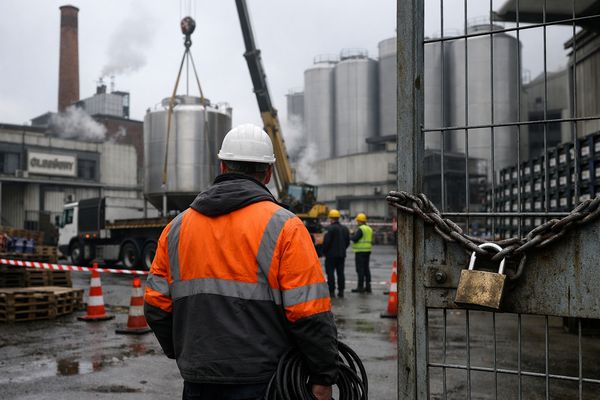
German brewer Haus Cramer Group, owner of Warsteiner, has announced a far‑reaching capacity cut, closing its Herford brewery from the second half of 2026 and seeking a buyer for its Paderborn brewery, with full closure possible by end‑2026 if a sale fails. Production of the Herforder and Paderborner brands will be consolidated at the Warstein flagship site, in response to structurally weaker beer demand in Germany.
The move removes almost a third of the group’s brewing capacity in North Rhine‑Westphalia and affects more than 200 employees, underscoring intensifying pressure on Europe’s mature beer markets. For maltsters, hop suppliers, packaging firms and on‑trade buyers, the decision underscores a shift toward fewer, larger production hubs and a more competitive environment for contract brewing and private‑label volumes.
Headline
Warsteiner Slashes Capacity, Shutting Herford and Exiting Paderborn Site as German Beer Demand Slides
Introduction
Haus Cramer Group, the family‑owned parent of Warsteiner, confirmed on 7 May 2026 that it will close its Herford brewery in the second half of 2026 and intends to sell the Paderborn brewery. If no buyer is found, Paderborn production will also be halted by the end of 2026.
The restructuring, described by the company as a “strategic consolidation” in response to structural market change, will concentrate North Rhine‑Westphalia brewing and contract production at Warstein, while leaving three Bavarian sites unchanged. This marks one of the most significant individual capacity adjustments in the German beer sector in recent years and signals ongoing margin pressure as domestic consumption declines.
🌍 Immediate Market Impact
From a commodity and logistics perspective, the announcement implies a medium‑term reduction and re‑routing of beer output in north‑west Germany rather than an outright loss of volume for the Warsteiner group. Core brands Herforder and Paderborner will remain in the market, but brewed and packaged at Warstein, centralising procurement and production.
In the short term, buyers of bulk beer, contract‑brewed SKUs and private‑label products linked to Herford or Paderborn face uncertainty over continuity, specifications and lead times as Warstein absorbs volumes. Regional distributors and on‑premise channels in Ostwestfalen will likely see some temporary disruption while new supply routes are put in place.
📦 Supply Chain Disruptions
The Herford closure and potential Paderborn shutdown will reconfigure inbound raw material flows for malted barley, specialty malts, hops, glass, cans and cardboard. Local maltsters and packaging suppliers with high exposure to these plants could face lower offtake or renegotiated contracts, as Warstein consolidates and optimises volumes with fewer partners.
Outbound, trucking patterns will shift from Herford and Paderborn toward Warstein. While Germany’s dense logistics network limits systemic disruption, regional warehousing and cross‑dock hubs serving north‑east North Rhine‑Westphalia may need to re‑align inventory and delivery schedules. Any transitional bottlenecks could translate into short‑term stockouts or higher spot freight rates on certain lanes.
For co‑packing and contract‑brewing customers using Herford or Paderborn, the group plans to move “fee brewing” to Warstein. However, capacity rationalisation of around one‑third suggests some lower‑margin or sub‑scale SKUs may eventually be discontinued or repriced, impacting buyers of value‑segment pilsner and discount private labels.
📊 Commodities Potentially Affected
- Malted barley: Consolidation at Warstein may lower regional malt demand around Herford and Paderborn while maintaining total group usage, pressuring local maltsters but supporting larger, more centralised suppliers.
- Hops: Structural decline in German beer output and ongoing capacity cuts can temper hop demand growth, particularly for traditional bittering varieties used in mainstream pilsner styles.
- Glass bottles and aluminium cans: As filling shifts to Warstein, packaging demand will concentrate at one hub, potentially enabling volume discounts with national suppliers while reducing orders for smaller regional producers.
- CO₂ and industrial gases: Relocation of production could slightly re‑balance regional demand for food‑grade CO₂ and process gases tied to brewing and packaging operations.
- Energy (natural gas and electricity for brewing): Consolidated operations may allow better energy optimisation at Warstein, but regional utilities serving Herford and Paderborn lose a large industrial off‑taker.
🌎 Regional Trade Implications
Warsteiner’s decision is primarily a domestic restructuring, with limited direct impact on international beer trade flows. However, traders in neighbouring EU markets sourcing German pilsner and private‑label beer from Herford or Paderborn will need to confirm future sourcing points, lead times and pricing from Warstein.
Competitor breweries in North Rhine‑Westphalia and adjacent regions may attempt to capture accounts unsettled by the closures, particularly in draft and regional brand segments. Overcapacity remains an issue in parts of the German market, so this capacity withdrawal could modestly support utilisation and pricing power for remaining mid‑sized brewers in the medium term.
🧭 Market Outlook
In the near term, the announcement is unlikely to move global grain or hop benchmarks, but it reinforces the narrative of a structurally challenged Central European beer market, with implications for long‑term demand assumptions by maltsters and hop growers. Traders should monitor whether other family‑owned German brewers follow with similar capacity cuts or asset sales.
For buyers, 2026–2027 will be a transition period as Warsteiner re‑tools Warstein for additional volumes and renegotiates supply contracts. Any execution risk—such as delays in shifting contract‑brewing lines or labour disputes at closing plants—could create short‑lived tightness in specific SKUs, but large‑scale supply shortages are not expected.
CMB Market Insight
Warsteiner’s withdrawal from Herford and possible exit from Paderborn exemplify how mature beer markets are being reshaped by declining per‑capita consumption and intense price competition. For agricultural commodity stakeholders, the impact is incremental but directionally important: fewer breweries, bigger hubs, and increasingly consolidated procurement.
Over time, this favours large, integrated suppliers of malt, hops and packaging materials able to serve centralised production sites, while smaller regional suppliers face rising volume risk. Commodity and logistics traders should treat this restructuring as another data point supporting a cautious demand outlook for beer‑linked inputs in Germany and, by extension, parts of Western Europe.