
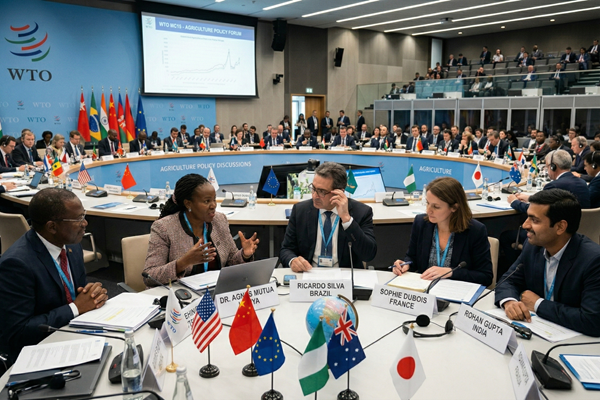
India’s agricultural subsidy policies came under scrutiny at the World Trade Organization (WTO) meeting, with several member countries raising concerns over support measures extended to farmers.
Countries including the US and Australia questioned India’s procurement system, particularly minimum support prices (MSP) and public stockholding programmes, arguing that such measures could distort global agricultural trade.
India defended its position, stating that its subsidy framework is essential to ensure food security and support millions of small and marginal farmers. Officials maintained that the policies are compliant with WTO norms and aimed at stabilising domestic food supply.
Market participants said the ongoing debate could have implications for global trade flows, especially in commodities such as rice and wheat, where India is a major exporter.
Any pressure to tighten subsidy norms may:
- Affect MSP-based procurement operations
- Influence export competitiveness of Indian grains
- Impact domestic price stability
India has reiterated that existing WTO rules on agricultural subsidies are outdated and has called for a permanent solution on public stockholding to safeguard food security interests of developing nations.
Traders said while no immediate policy change is expected, continued scrutiny at the WTO could shape future trade negotiations and influence long-term agri market dynamics.
Related posts:
 Fertiliser Supply Risks Rise Ahead of Kharif; Agri Output May Be Impacted
 China Signals More US Farm Imports; Soybean Prices Drop on Trade Uncertainty
 Mexico Tightens Tariff Policy on Rice While Extending Anti‑Inflation Food Decrees: Mixed Signals for Global Grain Trade
 War May Slow Economy Briefly, India to Support Exporters
 China May Boost Purchases of US Farm Products After Trade Talks
 30% Cut in Gas Supply to Fertilizer Plants May Impact Urea Production in India