
🔵 Executive Summary
Employees at Israeli container carrier ZIM Integrated Shipping Services have initiated strike action following the announcement of a USD 4.2 billion acquisition by Germany’s Hapag-Lloyd.
Approximately 800 of ZIM’s 1,000 employees have reportedly walked off the job, halting port operations in Ashdod and Haifa. The strike centers on restructuring plans that would spin off part of ZIM’s fleet into a separate entity, potentially placing around 900 jobs at risk.
While ZIM management has assured customers of operational continuity, the labor disruption introduces short-term uncertainty into regional shipping flows.
🚢 Strike Impact on Port Operations
According to union representatives:
-
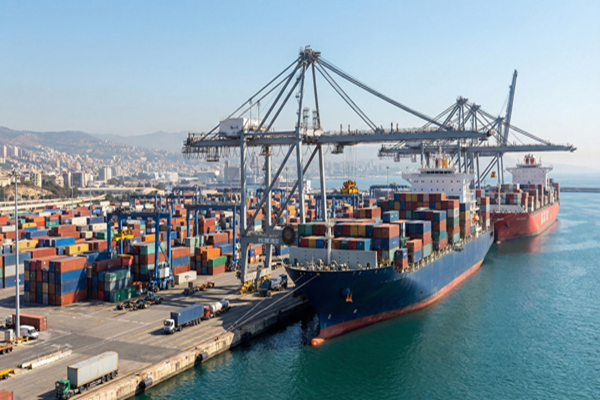
Port operations have been halted in Ashdod and Haifa
-
Docked vessels are not being unloaded
-
Strike action began immediately following the takeover announcement
Given Israel’s strategic maritime position, prolonged disruption could affect:
-
Regional cargo movement
-
Import-export timelines
-
Container repositioning schedules
However, the duration and escalation trajectory remain uncertain.
📜 Takeover & Restructuring Framework
Under the proposed USD 4.2 billion transaction:
-
ZIM will merge with Hapag-Lloyd
-
16 ships will be separated into a new entity (“New Zim”)
-
“New Zim” will be transferred to an Israeli investment fund
-
The spun-off entity will retain Israeli state special rights
According to union representatives:
-
“New Zim” would employ approximately 120 people
-
Roughly 900 positions could be at risk
-
Concerns exist regarding long-term viability of the smaller entity
🏢 Company Response
Hapag-Lloyd has stated:
-
Jobs at ZIM headquarters and management are secure
-
Israel will remain a strategic operational base
-
The spun-off entity is commercially viable
-
Discussions with employee representatives are welcome
ZIM CEO Eli Glickman addressed customers, emphasizing:
-
All contractual commitments will be honored
-
Service levels remain unchanged during transition
-
Operational cooperation remains limited to existing vessel-sharing and slot charter agreements
The merger remains subject to shareholder and regulatory approval.
🌍 Trade & Logistics Implications
Short-Term Risks:
-
Port congestion if strike extends
-
Delayed cargo handling in Israeli ports
-
Re-routing or slot adjustments by global carriers
Medium-Term Considerations:
-
Market consolidation in container shipping
-
Potential strengthening of Hapag-Lloyd’s Mediterranean presence
-
Structural realignment of Israeli maritime capacity
Israel plays a critical role in regional trade corridors linking Europe, Asia, and the Middle East. Labor disruptions in key ports can have cascading effects across supply chains.
🧭 CMB Market Interpretation
The strike reflects the broader tension between global shipping consolidation and domestic labor security.
Key Observations:
-
M&A activity in container shipping remains active.
-
Labor resistance often follows restructuring announcements.
-
Operational continuity assurances aim to protect customer confidence.
-
Prolonged labor unrest could impact regional freight flows.
Short-Term Outlook:
Elevated operational risk at Israeli ports.
Medium-Term Outlook:
If resolved quickly, limited structural impact on global container capacity.
Strategic Significance:
Moderate regionally, limited globally unless disruption extends.
📊 Risk Assessment
| Factor | Risk Level |
|---|---|
| Immediate Port Disruption | Moderate |
| Extended Labor Action | Moderate–High |
| Customer Confidence Risk | Moderate |
| Global Capacity Impact | Low |
| Regulatory Approval Uncertainty | Moderate |
📌 Why This Matters Now
-
Container shipping consolidation continues reshaping global trade lanes.
-
Labor security remains a sensitive element in cross-border M&A.
-
Israel’s ports are key Mediterranean logistics nodes.
-
Any disruption can affect high-value cargo flows in the region.
The duration of the strike will determine whether this remains a localized event or escalates into broader operational disruption.
🏁 Conclusion
The strike by ZIM employees following the Hapag-Lloyd acquisition announcement underscores the labor sensitivities surrounding maritime consolidation.
While management has committed to maintaining operational continuity, halted port activity in Ashdod and Haifa introduces short-term logistics risk.
The coming days will be critical in determining whether negotiations ease tensions or prolong disruptions within Israel’s container shipping sector.