
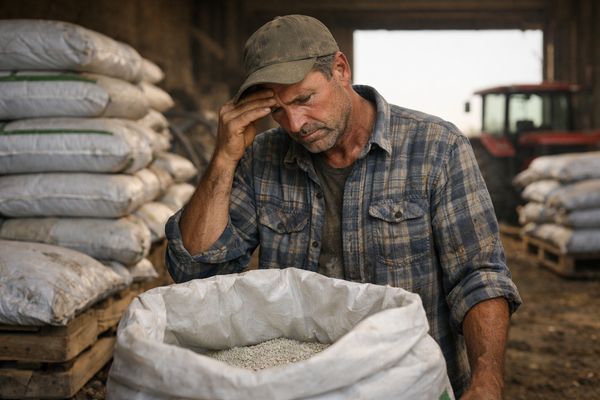
The temporary ceasefire between the United States and Iran and the partial reopening of the Strait of Hormuz ease immediate fears of a total supply halt, but fertilizer and energy flows remain heavily constrained. Gulf producers still face damaged infrastructure, elevated war‑risk costs, and shipping bottlenecks, leaving nitrogen and phosphate markets tight and prices elevated. Import‑dependent regions in Asia, Africa, and Europe remain exposed going into upcoming planting seasons.
For agricultural commodity markets, the core risk has shifted from outright physical shortage to a prolonged period of high and volatile input costs. While some cargoes are moving under the ceasefire window, industry analysts warn that normal fertilizer trade patterns through Hormuz are unlikely to be restored quickly, keeping urea, ammonia, phosphates and sulfur markets on edge and heightening concerns over 2027 crop input availability.
Headline
Hormuz Ceasefire Offers Brief Relief, But Fertilizer Trade Remains Tight as Iran Conflict Reshapes Global Input Flows
Introduction
The recent announcement of a two‑week ceasefire between the United States and Iran has allowed a limited reopening of the Strait of Hormuz, the key maritime chokepoint for Gulf energy and fertilizer exports. Prior to the conflict, roughly a third of global fertilizer trade and close to 20% of global liquefied natural gas (LNG) volumes transited this corridor, alongside about a fifth of seaborne oil flows.
The Iran war and earlier closure of Hormuz sharply disrupted shipments of urea, ammonia, sulfur and related products, triggering price spikes and forcing importers to scramble for alternative supply. Analysts now stress that even with a temporary easing, persistent security risks, damaged export infrastructure and constrained shipping capacity will keep global fertilizer markets tight, with knock‑on impacts for agricultural production and food inflation over the next 12–18 months.
🌍 Immediate Market Impact
The near‑total halt of tanker traffic through Hormuz in March stranded key fertilizer and feedstock exports from Iran, Qatar, Saudi Arabia and the UAE. The Fertilizer Institute estimates that nearly 50% of global urea and sulfur exports, as well as about 20% of global LNG used as a nitrogen fertilizer feedstock, normally move through the strait.
As a result, international benchmarks for nitrogen and phosphate fertilizers have risen sharply, adding to already elevated levels pre‑conflict. Recent analysis cited by Brownfield Ag News and other agricultural outlets indicates that the ceasefire and partial reopening are unlikely to quickly normalize availability or bring prices back down, as shippers and insurers remain cautious and logistical backlogs accumulate.
Energy markets are also feeling the strain. Reduced LNG flows from the Gulf are tightening global gas balances, raising production costs for ammonia and urea in Europe and other importing regions. This cost‑push effect compounds the direct loss of Gulf‑origin product, reinforcing the bullish tone in fertilizer pricing and volatility.
📦 Supply Chain Disruptions
Port operations and export facilities in Iran and Qatar have sustained damage from the conflict, while war‑risk surcharges and security protocols have slowed loading and transit even under the ceasefire. Industry and think‑tank assessments indicate that overall vessel movements through Hormuz remain far below pre‑war averages, with many shipowners still routing away from the Gulf or demanding higher freight rates.
The bottleneck is particularly acute for sulfur and nitrogen products. The Gulf region supplies around half of traded sulfur and a large share of global seaborne urea and ammonia. With part of this volume delayed or rerouted, importers in South Asia, East Asia and Africa are drawing down inventories and competing more aggressively for Atlantic‑Basin cargoes.
Downstream, European fertilizer producers face higher gas input costs and uncertainty over forward supply, while domestic producers in countries such as Spain, which rely more on North African feedstock, still feel indirect pressure through global price benchmarks. Manufacturers warn that prolonged stress could force further curtailments or closures of marginal plants, especially if gas prices remain high.
📊 Commodities Potentially Affected
- Urea and other nitrogen fertilizers – Gulf producers account for a significant share of global urea trade; constrained exports and higher gas prices are tightening supply and lifting prices worldwide.
- Ammonia – Disrupted LNG flows and shipping delays from key Gulf hubs are limiting availability of ammonia, a core input for multiple nitrogen products.
- Phosphate fertilizers (DAP/MAP/TSP) – Higher sulfur costs and disrupted sulfur exports from the Gulf are raising production costs for major phosphate exporters.
- Sulfur and sulfuric acid – With roughly half of global sulfur trade linked to Gulf exports, Hormuz disruptions are tightening sulfur supply, crucial for phosphate fertilizer manufacturing.
- Natural gas and LNG – Reduced LNG flows via Hormuz are increasing gas price volatility, particularly in Europe and Asia, with direct implications for nitrogen fertilizer production margins.
- Cereal and oilseed crops – Elevated fertilizer costs are squeezing farm margins for corn, wheat, soybeans and oilseeds, potentially leading to lower application rates and yield risks in coming seasons.
🌎 Regional Trade Implications
Asia is the most exposed region, as China and India are major fertilizer importers drawing heavily on Gulf supply. China has reportedly restricted fertilizer exports to safeguard domestic availability, further tightening global tradeable volumes. India faces higher import bills and may need to diversify sourcing toward North Africa, Russia and North America, increasing competition for those origins.
African importers, especially in sub‑Saharan markets with limited purchasing power, risk being outbid for available cargoes. This raises concerns over fertilizer affordability and use rates, particularly for staple crops. In Europe, countries less reliant on Gulf product, such as Spain, still experience indirect impacts as global prices and freight rates rise, though diversified sourcing from Egypt, Algeria and Morocco provides some buffer.
On the supply side, alternative exporters stand to benefit from firmer pricing and stronger demand. North African and Russian producers of nitrogen and phosphates, as well as select North American suppliers, may capture market share in Asia and Latin America as buyers rebalance away from the Gulf.
🧭 Market Outlook
In the short term, fertilizer markets are likely to remain tight and volatile. The limited reopening of Hormuz under the ceasefire should allow some backlog of cargoes to clear, but insurers’ caution, military risk and damaged infrastructure will restrain volumes. Traders expect premiums for Gulf‑origin cargoes and higher freight costs to persist at least through the next quarter.
For the 2026 crop already in the ground in the Northern Hemisphere, many farmers had secured inputs before the sharpest disruptions. Attention is increasingly shifting to procurement for the 2027 season, where the risk of structurally higher fertilizer prices and sporadic shortages is greater if the conflict resumes or a durable settlement fails to emerge.
Market participants will track the durability of the ceasefire, shipping and insurance conditions in Hormuz, policy responses such as export restrictions or subsidies, and operating rates at key fertilizer plants worldwide. Any escalation that re‑tightens the strait could trigger another leg higher in nitrogen and phosphate prices and accelerate demand destruction at farm level.
CMB Market Insight
The Iran conflict and Hormuz crisis have transformed the Strait from a traditional oil chokepoint into a central risk node for global fertilizer security. Even with a temporary ceasefire, the episode underscores how concentrated the world’s nitrogen and sulfur supply chains remain in the Gulf, and how quickly disruptions there can cascade into higher agricultural production costs.
For traders and agribusinesses, strategic priorities now include diversifying sourcing away from single corridors, reassessing inventory policies, and closely monitoring policy moves in large consuming countries such as China and India. Unless a durable political settlement restores confidence and full traffic through Hormuz, fertilizer will remain a key driver of farm margins and, with a lag, global grain and oilseed price formation.
Related posts:
 Iran War and Strait of Hormuz Crisis Raise Fertilizer and Food Cost Risks for Poland and Europe
 Strait of Hormuz Conflict Tightens Gulf Chokepoint as Saudi Rail Corridor Offers Overland Relief
 Strait of Hormuz War Fallout Lifts Energy, Freight and Fertilizer Costs, Tightening Margins in Global Potato Chain