Indian agri-tech firm Superplum has launched InstaTrace™, a QR-based digital intelligence and traceability system that exposes full farm-to-shelf data for fresh fruit sold under its brand. The move strengthens compliance positioning in India’s pesticide-sensitive fresh produce market and could reset buyer expectations on transparency, particularly for premium domestic and export channels. Traders should treat InstaTrace as an early signal of rising data and audit requirements in tropical fruit sourcing.
Headline
Superplum’s InstaTrace™ Sets New Traceability Benchmark for Indian Fruit, Repricing Risk and Premiums in Pesticide-Sensitive Markets
Introduction
On 11 April 2026, New Delhi–based Superplum unveiled InstaTrace™, a QR-driven traceability platform that discloses batch-level pesticide test reports, grower identity, GPS farm coordinates, cold-chain events and carbon footprint data to end consumers via a single scan. Every pack of Superplum fruit now carries a unique InstaTrace code, differentiating itself from generic QR links to marketing pages by publishing underlying safety and logistics records.
The launch comes amid heightened regulatory and commercial scrutiny of pesticide residues and origin documentation for fresh produce in India and in key export markets such as the European Union. By integrating NABL-accredited laboratory testing with consumer-facing data, InstaTrace positions Superplum to align with tightening farm-to-fork traceability standards and to compete more directly in high-specification retail and e-commerce channels.
🌍 Immediate Market Impact
In the near term, the direct volume impact on India’s overall fruit market is modest, as InstaTrace currently applies primarily to Superplum’s controlled supply network across select fruits and retail partners. However, for covered categories, the availability of batch-level pesticide and cold-chain data may support price differentials relative to non-traceable fruit, particularly in urban premium retail, online grocery and institutional buyers with strict food safety requirements.
The system can also alter perceived risk structures along the supply chain. Transparent disclosure of lab test outcomes and handling conditions reduces information asymmetry between growers, aggregators, retailers and end-users, potentially compressing risk premia demanded by downstream buyers and insurers. Over time, if similar systems proliferate, Indian tropical fruit exports could become more competitive in residue-sensitive markets, affecting regional trade dynamics and price benchmarks for compliant versus non-compliant supply.
📦 Supply Chain Disruptions
InstaTrace itself does not create physical disruptions; instead it introduces data-driven scrutiny that may expose previously hidden weak points in procurement, logistics and cold-chain integrity. Batches failing to meet pesticide or hygiene specifications can be identified and isolated earlier, leading to more targeted rejections but lower systemic recall risk. This selective culling could temporarily tighten available certified volumes while improving average quality in traceable channels.
For growers and logistics providers within Superplum’s network, the requirement to feed accurate timestamped and geo-tagged data into the system effectively raises operational compliance thresholds. Farms and transport operators unable to meet these standards may be phased out or forced into lower-value, non-traceable supply chains, reconfiguring sourcing footprints across Indian states where Superplum operates. Over time this could concentrate compliant production in better-capitalised orchards and packhouses with robust hygiene and cold-chain infrastructure.
📊 Commodities Potentially Affected
- Mangoes: A core Superplum line and a major Indian export fruit; enhanced traceability and residue reporting may support premiums and preferred access to EU and Gulf markets with stringent maximum residue limits (MRLs).
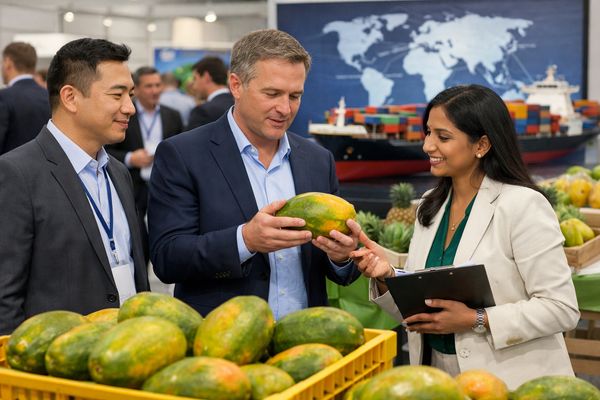
- Papayas and other tropical fruit: InstaTrace’s current coverage across papaya and similar categories raises the bar for pesticide documentation and cold-chain visibility, potentially shifting buyer preference toward traceable lots.
- Table grapes and pome fruit: As Superplum extends InstaTrace across additional fruits, suppliers in existing export-oriented categories may face pressure to match transparency levels or risk discounts versus traceable competitors.
- Organic and residue-controlled segments: InstaTrace’s lab reporting can underpin certification claims, reinforcing pricing structures for low-residue or zero-residue programs targeting health-conscious consumers.
🌎 Regional Trade Implications
If adopted at scale, InstaTrace-style systems could enhance India’s reputation as a reliable supplier of compliance-ready tropical fruit, particularly into Europe and East Asia, where traceability and pesticide documentation are increasingly codified in import and retail protocols. Improved visibility on farm practices and cold-chain performance can reduce transaction costs for buyers who currently rely on fragmented documentation and spot audits.
Countries competing with India in mangoes, grapes and other high-value fruit—such as Mexico, Peru and some ASEAN producers—may see heightened pressure to upgrade their own consumer-facing traceability. Conversely, Indian growers not integrated into digitised systems risk being relegated to lower-priced, less regulated markets or wholesale channels, potentially widening the price gap between traceable and non-traceable supply. Over time, export premiums may increasingly accrue to producers who can prove compliance via similar QR-based data architectures.
🧭 Market Outlook
In the short term, the launch is primarily a signalling event rather than a volume shock, but it is likely to catalyse competitive responses from other Indian aggregators and packers exploring QR-based traceability options. Parallel platforms are already emerging in wider Indian agriculture, suggesting an ecosystem shift toward data-centric compliance, which could feed into futures pricing and risk models as residue and rejection rates become more predictable.
Over the next 6–12 months, traders will watch three key indicators: the extent of InstaTrace’s rollout across additional fruit categories, any adoption by large-format retailers and e-commerce platforms as a procurement standard, and early feedback from export buyers on documentation quality and auditability. Should regulators or major retailers formally endorse such systems, traceability could move from a differentiator to a de facto requirement in premium segments, structurally altering how Indian fresh fruit is priced and contracted.
CMB Market Insight
Superplum’s InstaTrace launch is less about a single company’s technology and more about the direction of travel for fresh produce markets: transparent, data-rich and compliance-driven. For commodity buyers, the development points to a future in which pesticide risk, cold-chain integrity and even embedded carbon are no longer opaque variables but quantifiable attributes that can be priced into contracts.
Traders, importers and retailers sourcing Indian fruit should begin benchmarking offers not only on grade and variety but also on the granularity and reliability of traceability data provided. Early engagement with suppliers developing comparable systems may secure access to higher-compliance volumes and reduce future regulatory and reputational risk, as traceability moves closer to the core of fruit commodity valuation.