
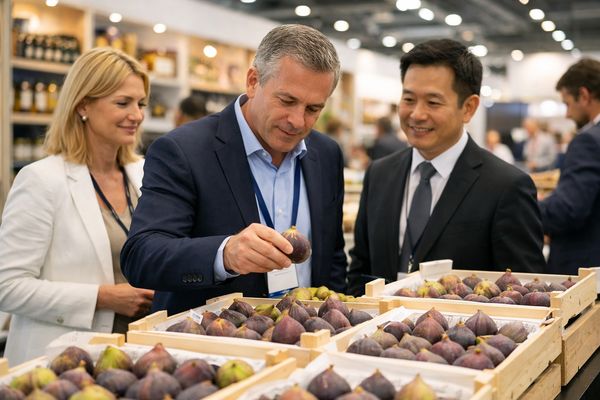
Spain’s new export protocol for dried figs to China marks a strategic turning point for the global fig market, adding a future European competitor to existing suppliers and supporting a slightly more bullish medium‑term price outlook.
The agreement, concluded in March 2026 and politically sealed during Prime Minister Pedro Sánchez’s April 2026 visit to Beijing, formally opens the door for Spanish dried figs to enter China once inspections and technical procedures are completed. This move expands the current Spanish agri‑food export portfolio to China beyond citrus, stone fruit, table grapes, persimmons and almonds, adding high‑value dried fruit to the mix. For now, Turkish figs remain the reference origin, with Malatya FOB prices broadly steady in recent weeks, but the prospect of Spanish volumes competing in the Chinese market is set to gradually reshape trade flows and marketing strategies.
[cmb_offer ids=73,72,71]
📈 Prices & Market Snapshot
Current indicative FOB prices for Turkish dried figs (Malatya, conventional) are broadly stable, with most natural and Lerida types trading between about EUR 7.4–10.0/kg, depending on calibre and presentation. Premium Lerida No. 1 is around EUR 10.0/kg, while smaller sizes and natural grades cluster in the EUR 7.4–9.6/kg range, showing limited week‑on‑week movement and a slight softening in some Lerida calibres.
This stability reflects a market that is reasonably well supplied in the short term, while demand remains solid but not explosive. The new Spain–China protocol has not yet translated into physical Spanish supply on the international market; instead, it is currently shaping expectations about future competition in Asia and potentially supporting a floor under medium‑term prices as buyers diversify origin risk.
| Origin / Type | Specification | Location & Terms | Latest Price (EUR/kg) | 1–2 Week Change |
|---|---|---|---|---|
| Turkey | Dried figs, natural No. 1–7 | Malatya, FOB | ≈7.8–9.6 | Stable |
| Turkey | Dried figs, Lerida No. 1–7 | Malatya, FOB | ≈7.4–10.0 | Mildly softer in higher calibres |
🌍 Supply & Demand: Spain Steps Onto the Global Stage
The newly signed Spain–China protocol for dried figs is the culmination of a multi‑year process. After a 2023 agreement enabling almond exports, both governments opened negotiations in September 2024 to broaden the list of Spanish plant products authorised for China, eventually including pistachios and, at the request of the Spanish export sector, dried figs. Technical and regulatory work through 2025 addressed phytosanitary, food safety and traceability requirements, leading to a joint dried fig protocol finalized in March 2026.
Spain’s move is strategically timed: China is one of the world’s most dynamic consumer markets for nuts and dried fruits, driven by a growing middle class and health‑oriented snacking trends. Until now, European dried fig exports to China have been limited compared with traditional origins such as Turkey. By gaining direct access, Spanish producers can target value‑sensitive urban consumers and premium retail channels that value food safety, quality certifications and geographic indications—areas where Spain is seeking to strengthen its image through broader agri‑food agreements with Beijing.
📊 Fundamentals & Trade Flows
The protocol does not immediately translate into volume: before commercial shipments start, Chinese authorities will carry out inspections of Spanish fig‑producing regions, assessing compliance with import rules on food safety, quality, and traceability. Only once these audits are completed and packers are listed will Spanish dried figs enter Chinese customs on a regular basis. In practical terms, this suggests a gradual ramp‑up of trade rather than a sudden market shock, allowing Turkish and other suppliers time to adjust marketing strategies.
From a global balance perspective, Spain is positioning itself primarily as a high‑value diversified origin rather than a high‑volume, low‑price competitor. The deal builds on a sequence of 22 food‑export agreements between Spain and China since 2018, and on earlier protocols for products such as cherries, pork and almonds. This continuity underpins Beijing’s perception of Spain as a “reliable partner” and gives Spanish dried figs a reputational advantage in terms of regulatory familiarity and institutional cooperation.
On the demand side, Chinese consumption of imported nuts and dried fruits has trended higher over recent years as household incomes rise and modern retail and e‑commerce channels expand. While no immediate displacement of Turkish figs is expected, a share of incremental Chinese demand—especially for premium, traceable product—could be met by Spanish origins over the next few seasons. This prospect tightens the medium‑term balance slightly and supports a modestly constructive price view, especially for higher grades.
📆 Outlook & Trading Implications
In the very short term (coming weeks), the dried fig market remains governed by existing supply from Turkey and other established origins, with prices in EUR/kg largely range‑bound. However, the political signaling from the Sánchez visit—and the bundle of 2026 agreements between Spain and China—suggests that both sides are committed to accelerating agri‑food trade, providing strong institutional backing to the new dried fig protocol.
Weather conditions in key Mediterranean fig regions are currently not driving acute supply risk headlines, and the main new factor for the next 12–24 months is regulatory rather than climatic: the pace at which Chinese inspections are completed, Spanish packers are approved, and first shipments test demand and logistics. Market participants should therefore focus on regulatory milestones and early trade data in China as leading indicators for shifts in origin competition.
📌 Trading Outlook (Next 1–3 Months)
- Importers in Asia: Prepare to trial Spanish dried figs once Chinese approvals are in place, but maintain core Turkish coverage; consider small test contracts to benchmark quality and logistics without overcommitting volumes.
- European buyers: Use current stable prices around EUR 8–10/kg FOB for main Turkish grades to secure forward cover for key periods, as the prospect of new Chinese demand could gradually tighten availability of top sizes.
- Producers & packers in Spain: Prioritize compliance, traceability and certification ahead of price competition; early shipments to China should focus on premium, branded segments that valorize Spanish origin.
- Speculative participants: The protocol adds a mild bullish skew to the medium‑term balance; consider building length on price dips, particularly in higher grades that are most likely to benefit from Chinese premium demand.
📉 3‑Day Price Directional View (EUR)
- Turkey – Malatya, FOB dried figs (natural & Lerida): Sideways; prices expected to remain in the roughly EUR 7.4–10.0/kg band with limited short‑term volatility.
- Europe – CIF main ports: Slightly firmer undertone possible where buyers anticipate future Spanish competition for Chinese demand, but no sharp moves expected within three days.
- Asia – Landed prices: Broadly stable, tracking Turkish FOB and freight; sentiment marginally more constructive following Spain–China agreements but still awaiting concrete Spanish flows.
[cmb_chart ids=73,72,71]
Related posts:
 Kyrgyzstan’s Dried Fruit Exports Halve in January 2026: Market Impact
 Turkish dried figs steady while Lerida grades correct lower
 Superplum’s InstaTrace™ Elevates India’s Fruit Traceability Standards, Recasting Compliance and Premium Market Access
 Carrefour Spain Emerges as Strategic Export Hub for EU Fresh Produce Supply
 Turkey’s Dried Fig Market: Quality Push in Aydın Meets Steady Export Prices
 Turkish Dried Fig FOB Prices Hold Firm as Export Pace Normalises