
Poland Pushes EU to Strengthen Safeguards on Ukrainian Agri-Imports, Reframing Corn Market Risks
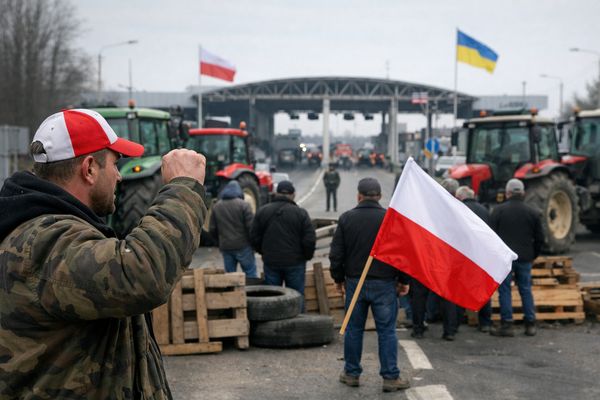
Poland’s latest push in Brussels to tighten safeguard mechanisms on imports of Ukrainian agri-food products is reshaping risk perceptions in Central European grain markets, especially for corn. While the move stops short of new national bans, it signals Warsaw’s determination to hard‑wire stronger protections for local farmers into the EU trade framework.
For traders focused on Poland and neighbouring markets, the debate around automatic tariff snap-backs on sensitive products such as corn, sugar and poultry is critical. It could alter cross-border flows from Ukraine, impact basis levels around Polish borders and introduce fresh volatility in regional price discovery.
Introduction
In recent days, Poland has reiterated its call for the European Commission to reinforce safeguard tools that limit pressure from Ukrainian agricultural imports on EU markets, with particular emphasis on grain, sugar and poultry meat. The discussion comes against the backdrop of the extended Autonomous Trade Measures (ATM) regime, which granted duty‑free access for Ukrainian exports but now incorporates tighter safeguards for sensitive products.
The current EU framework already allows tariffs to be automatically reimposed when import volumes for certain Ukrainian products exceed 2021–2023 averages, with maize explicitly listed among the products covered by the emergency mechanism. Poland is pressing for these protections to be strengthened and more regionally targeted, reflecting persistent farmer concerns after the 2023–2024 grain glut in border states and ongoing protests over low farm-gate prices.
🌍 Immediate Market Impact
The policy debate does not yet translate into immediate new trade barriers, but it changes expectations. The existence and potential tightening of automatic safeguards makes it more likely that corn and other sensitive flows from Ukraine into Poland and neighbouring EU states could face tariff reactivation if arrivals surge above the reference period.
For physical markets in Poland, this introduces a conditional ceiling on import pressure: once trigger volumes are approached, traders must factor in the risk of duties suddenly reinstating, widening import parity and potentially supporting local cash prices for corn and other covered commodities. At the same time, uncertainty over timing and calibration of any future measures can increase day‑to‑day price volatility and basis swings along the eastern EU border.
📦 Supply Chain Disruptions
If safeguard triggers are met and tariffs snap back, Ukrainian exporters may rapidly redirect cargoes away from Polish and other border-country destinations, intensifying use of alternative routes via Baltic and Adriatic ports or Western EU transit corridors. This would shift congestion risks from overland crossings into specific export terminals and hinterland rail networks.
Within Poland, tighter safeguards could ease pressure on domestic storage and local elevators by limiting inflows of Ukrainian corn and wheat, but they may also fragment logistics. More product may transit through Poland under controlled schemes rather than being discharged into local silos, complicating segregation and documentation for traders managing both EU and non‑EU origin grain.
Any move towards regionalised safeguards – a key demand of Poland in recent talks – would further differentiate logistics conditions across the EU, with border states operating under a stricter regime than Western import hubs.
📊 Commodities Potentially Affected
- Corn (maize) – Explicitly covered by the emergency safeguard mechanism; a key flow from Ukraine into Poland, where import surges have previously depressed local prices.
- Wheat – Not always listed in automatic triggers but repeatedly highlighted by border countries as a source of market pressure; any broader safeguard strengthening could capture wheat flows.
- Sunflower seed and oilseed complex – Historically part of special measures for border states; logistics and crush margins in the region are sensitive to any renewed constraints.
- Sugar – Named by Poland as a particularly pressured market; subject to reinforced safeguards under the newer ATM rules, implying tariff snap‑backs if import volumes spike.
- Poultry meat and eggs – Also classified as sensitive under EU rules, with mechanisms to reimpose duties when volumes exceed 2021–2023 benchmarks; important for feed demand and by‑product markets.
🌎 Regional Trade Implications
For Poland and neighbouring border states, stronger EU‑level safeguards would primarily act as a stabiliser for domestic producers, capping downside price risk from sudden import waves. This could support farmer planting decisions for corn and other cereals in 2026, after a period of weak profitability highlighted by Polish producer groups.
For Ukraine, however, any tighter or more frequently triggered safeguards will accelerate the shift of exports towards alternative EU destinations and non‑EU markets, increasing freight costs and lengthening supply chains. Traders may lean more on Baltic Sea and Western European ports, while also exploring additional Black Sea and Mediterranean outlets when security conditions permit.
Other EU grain exporters, particularly in Western Europe, could benefit from a firmer price floor in Central Europe if Ukrainian competition into Poland is periodically constrained. Conversely, feed and food processors in Poland and the region may face higher and more volatile input costs, especially if safeguard activation coincides with tighter domestic supply.
🧭 Market Outlook
In the near term, the policy developments are more about option value than immediate restriction: they create a credible threat of tariff reactivation that traders will price into forward contracts, especially for cross‑border corn flows into Poland. Basis contracts indexed to border delivery may start to incorporate explicit clauses on safeguard‑related cost pass‑through.
Volatility risk is skewed to the upside: any sudden activation of safeguards, particularly if triggered during peak export windows from Ukraine, could tighten regional supply and prompt rapid repricing on Polish cash markets. Market participants will monitor import statistics versus 2021–2023 reference levels, EU legislative signals on regionalisation of safeguards, and any fresh farmer protests that could push Warsaw to harden its stance further.
CMB Market Insight
The current round of EU–Poland discussions over safeguards on Ukrainian agricultural imports marks a quiet but significant recalibration of policy risk in Central European grain markets. For corn in particular, the combination of duty‑free access with low activation thresholds for safeguard measures embeds a toggle between oversupply and sudden protection.
Commercial hedging strategies around Poland should therefore treat policy as a key spread driver alongside fundamentals. Positioning that flexibly manages origin risk – balancing Ukrainian, Polish and wider EU supply – will be central to protecting margins as Brussels and Warsaw continue to refine the safeguard toolkit through 2026.
Related posts:
 Poland Ramps Up Support for Domestic Soybean and Protein Crops as EU Protein Strategy Accelerates
 India’s NAAS Pushes One-Time Licensing for Imported Horticulture Varieties, Targeting Lower Seed Costs and Stronger Export Competitiveness
 Container Freight Rates Edge Higher as Hormuz Crisis and New Bunker Surcharges Reshape Agri‑Food Trade Costs