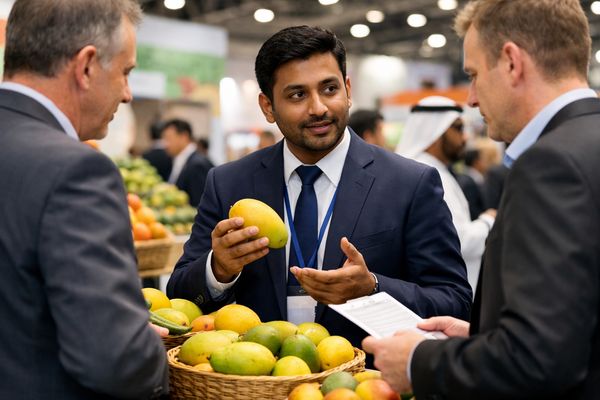
Premium Indian mango exporters are shifting from a two-variety focus (Alphonso, Kesar) towards a broader portfolio of specialty types for Europe and the Gulf. Demand for these niche varieties is stable to firm, but sharply higher air freight and domestic logistics constraints are capping volumes and pressuring margins.
India’s mango season is now being used more strategically, with exporters like Vaanya Fruit sequencing southern and northern varieties to extend availability and keep assortments fresh. At the same time, European and Gulf buyers are experimenting with new flavour profiles, supported by strong storytelling, traceability and targeted gourmet channels. However, elevated freight rates and infrastructure bottlenecks mean this remains a premium, small-volume play rather than a mainstream shift in the global mango market.
Exclusive Offers on CMBroker

Mango dried
chunks: : 2 – 3 cm. Thickness: 2 mm. – 15 mm MOISTURE 13 – 19 %
FOB 5.60 €/kg
(from VN)

Mango dried
slices: 5 – 9 cm. Chunks: : 2 – 3 cm. Thickness: 2 mm. – 15 mm
FOB 5.80 €/kg
(from VN)

Mango dried
normal sugar, 8-10 mm
FCA 4.55 €/kg
(from NL)
📈 Prices & Market Positioning
Premium Indian mangoes shipped to the UAE retail at roughly AED 60–80/kg, equivalent to about EUR 15–20/kg at current FX levels. These are positioned clearly above standard import mangoes, reflecting both air-freight costs and their niche, multi-variety concept. In contrast, industrial dried mango offers remain in the mid-single-digit EUR/kg range FOB/FCA, underlining how much of the current price strength in the fresh premium segment comes from logistics and branding rather than raw fruit value alone.
| Product | Origin | Location / Terms | Latest Price (EUR/kg) | Trend vs mid-April |
|---|---|---|---|---|
| Dried mango chunks | Vietnam | Hanoi, FOB | 5.60 | Flat to slightly lower |
| Dried mango slices/chunks | Vietnam | Hanoi, FOB | 5.80 | Flat to slightly lower |
| Dried mango, sugared | Thailand | NL, FCA | 4.55 | Slight uptick |
🌍 Supply, Demand & Consumer Trends
India’s mango supply is staggered geographically: early-season Banganapalle and Sindhura from Kerala are followed by Dashahri, Langda and Chausa from Uttar Pradesh as temperatures rise. Exporters can therefore rotate varieties through the season, supporting continuous presence on shelves while keeping assortments dynamic. This staged harvest pattern is a key structural advantage for India versus origins with more compressed seasons.
Demand for lesser-known Indian varieties is being actively cultivated in Europe and the Gulf. Vaanya Fruit’s research tours three years ago showed most buyers only recognised Alphonso and Kesar. Since then, curated introductions of Banganapalle, Cheruku Rasalu and others through gourmet retailers, Feinkost stores and direct-to-consumer channels have revealed strong consumer curiosity. Multi-variety gift packs in Dubai featuring up to 14 types last season – targeting around 25 this year – show that “discovery” and tasting experiences are becoming meaningful demand drivers.
Preferences vary significantly within Europe. German buyers lean toward larger fruit with balanced sweetness, supporting demand for visually impressive, well-graded mangoes. French buyers prioritise juiciness and soft texture, which favours varieties that excel on mouthfeel rather than size. In the UAE, affluent consumers are willing to pay high per-kilogram prices for assortment boxes and story-driven offerings, but this remains a specialised segment rather than mass retail.
📊 Logistics, Costs & Operational Constraints
Air freight is currently the single biggest constraint on the premium Indian mango export model. Freight rates to Europe are reported at about 2.5 times last season’s levels, sharply increasing landed costs and compressing exporter margins. For smaller shippers, this may restrict participation entirely or limit them to only the highest-value programmes, slowing any broad-based expansion in niche variety exports.
All exports move through APEDA-certified packhouses using vapour-heat or hot-water treatment to meet strict EU and UAE phytosanitary rules. While this secures market access, it adds fixed processing costs and requires substantial capital investment. Road infrastructure within India compounds the pressure: 500 km road journeys that should take six hours can stretch to twelve, even when refrigerated trucks are used, raising risks around shrink, quality claims and shortened shelf life at destination.
Traceability and digital engagement are being used to justify the cost base and premium positioning. On-pack QR codes detail variety, origin, farmer name, harvest date and residue data, while a second code inside offers ripening and usage guidance. This level of transparency, combined with rich storytelling around terroir and varietal heritage, is central to convincing buyers that these mangoes are more than a commodity and deserve their price premium.
📆 Outlook & Weather Relevance
Near-term demand in Europe and the UAE for premium Indian mangoes looks stable, with high-end buyers continuing to seek differentiation and gifting formats. However, the 2.5-times jump in freight costs is likely to cap volume growth and may force tough decisions on which markets and retailers to prioritise. Retailers already absorbing higher landed costs could resist further price hikes, slowing the pace at which new varieties win shelf space.
Over the next 6–12 months, scaling this segment will depend on three operational levers: further investment in packhouse and cold-chain infrastructure, expanded APEDA-certified capacity in tier-two producing regions, and improved airline cargo availability and pricing from regional airports. If freight conditions normalise, there is clear headroom for stronger growth in multi-variety and gifting concepts, especially in Germany and the Gulf, where consumers have already shown strong interest in discovery-style assortments.
Weather remains an important but background factor in the current outlook: the south-to-north progression of India’s season offers some natural diversification against localised weather shocks. Nonetheless, extreme heat or unseasonal rains in key states would quickly tighten the availability of specific varieties and could further lift prices for curated assortments.
📌 Trading & Sourcing Recommendations
- Importers & retailers (EU/Gulf): Focus on curated, story-rich assortments rather than chasing volume; reserve air-freight capacity early for peak weeks and negotiate cost-sharing structures with exporters.
- Exporters (India): Prioritise markets and channels where traceability and provenance are monetised (gourmet, Feinkost, D2C). Use QR-based storytelling to defend premiums and avoid competing on price per kilogram.
- Industrial buyers: For processed mango needs, consider blending premium Indian origin for flavour with more cost-efficient dried mango from Vietnam/Thailand to manage input costs.
- Risk management: Monitor air freight rates and domestic transport bottlenecks closely; consider staggered contracting rather than fully fixed-season pricing in this volatile cost environment.
🧭 3-Day Directional Outlook (EUR terms)
- Premium fresh Indian mangoes, UAE/EU retail: Sideways to slightly firm; elevated freight and strong niche demand keep prices high with limited discounting expected in the very short term.
- Dried mango FOB Vietnam / FCA NL: Largely stable within recent ranges around EUR 4.5–5.8/kg; no major supply or demand shocks visible over the next three trading days.