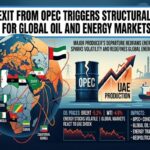
The United Arab Emirates’ decision to leave OPEC and OPEC+ from May 1, 2026 weakens the cartel’s supply discipline but brings limited near‑term relief to tight oil markets due to export bottlenecks in the Gulf. Over the medium term, however, the move opens space for higher UAE output, potentially redirecting crude and LPG flows toward key Asian buyers such as India and gradually easing price pressures.
For commodity traders and downstream fuel users, the main implications are a structurally looser OPEC, greater price volatility and, once logistics normalise, more competition for market share in Asia as the UAE executes an independent production strategy.
Headline
UAE’s OPEC Exit Delivers Structural Shock to Oil Cartel, But India’s Gains Will Be Gradual
Introduction
The UAE confirmed this week that it is quitting OPEC and the wider OPEC+ alliance, effective May 1, 2026, ending nearly six decades in the producers’ group. The decision comes amid severe disruptions to exports through the Strait of Hormuz linked to the regional conflict with Iran, which have already forced Gulf suppliers to curb shipments and re‑route flows where possible.
Abu Dhabi’s energy ministry framed the exit as part of a long‑term strategy to invest aggressively in domestic production and operate without cartel quotas. The UAE currently has capacity close to 4.8–5.0 million barrels per day (bpd), well above pre‑war output of around 3.0–3.3 million bpd, suggesting significant latent supply once export routes fully reopen.
🌍 Immediate Market Impact
Analysts and banks broadly agree that the UAE’s exit has limited short‑term impact on physical balances, as Hormuz restrictions and regional security risks cap actual exports from the Gulf. HSBC and others note that OPEC+ output is already constrained by logistics and sanctions, muting any near‑term uplift in seaborne supply.
In futures markets, the move has amplified expectations of a structurally weaker OPEC and higher price volatility over time, rather than an immediate collapse in prices. Research houses such as Goldman Sachs highlight that the UAE’s departure creates upside risk to medium‑term supply, as Abu Dhabi can raise production independently once infrastructure and shipping constraints ease.
📦 Supply Chain Disruptions
At present, the principal bottleneck is transit through the Strait of Hormuz, where conflict has throttled tanker movements and forced rerouting of Gulf exports. The UAE has partially mitigated this via the Habshan–Fujairah pipeline to the Arabian Sea, but that line is already running near capacity, limiting scope for further diversion in the short run.
This means physical flows to major importers, including India, Europe and Northeast Asia, are unlikely to rise sharply in the coming months solely due to the OPEC exit. Instead, traders face continued tight prompt supply, elevated freight costs and episodic shipping delays until Hormuz transits normalise or additional midstream capacity is built.
📊 Commodities Potentially Affected
- Crude oil (sour Middle Eastern grades) – UAE barrels such as Murban and Upper Zakum could increase in volume over the medium term, intensifying competition in Asia and potentially narrowing Dubai‑linked benchmarks versus Brent once export constraints ease.
- Refined products (diesel, jet, gasoline) – A looser crude balance from UAE output growth would, over time, support higher utilisation at Asian and Middle Eastern refineries, affecting crack spreads and export availability into Africa and Europe.
- LPG (propane, butane) – Deeper energy ties between the UAE and India point to incremental LPG supply for Indian residential and industrial demand, strengthening supply security but not immediately altering global balances.
- Petrochemical feedstocks (naphtha, condensate) – Additional UAE liquids output would increase availability of light crudes and condensates used in petrochemicals, impacting margins and feedstock choices in Asia’s steam cracker hubs.
- Biofuel and alternative fuels markets – A structurally less cohesive OPEC and the prospect of more flexible Gulf supply may cap long‑term oil prices, indirectly influencing the competitiveness and investment pace of biofuels and other low‑carbon liquid fuels.
🌎 Regional Trade Implications
For India, which is already expanding crude imports from the UAE, the medium‑term outlook is constructive rather than transformative in the near term. Indian refiners are expected to deepen term contracts, explore oil‑for‑rupee mechanisms and expand storage cooperation with Abu Dhabi as capacity rises and OPEC quota constraints fall away.
Other Asian buyers, notably South Korea and China, are also well positioned to capture incremental UAE flows given existing refining configurations for Middle Eastern sour grades. Conversely, OPEC’s remaining core members, led by Saudi Arabia, may face greater difficulty coordinating cuts and defending price levels as one of the cartel’s few high‑capacity, low‑cost producers exits the quota system.
🧭 Market Outlook
In the short term, oil markets will likely remain driven by geopolitics and Hormuz logistics rather than UAE policy freedom, keeping nearby price spreads tight and spot volatility elevated. Traders should watch any changes in UAE official selling prices, term contract volumes into Asia and forward guidance on capacity ramp‑up as early indicators of how aggressively Abu Dhabi intends to monetise its new independence.
Over the next 1–3 years, as security conditions stabilise and infrastructure constraints ease, the UAE’s ability to lift output toward its 4.5–5.0 million bpd target could materially loosen the medium‑term crude balance. This would weaken OPEC’s price‑setting power, support somewhat lower and more volatile oil prices and create opportunities for price‑sensitive importers like India to negotiate more favourable long‑term supply and storage deals.
CMB Market Insight
The UAE’s departure from OPEC is structurally significant for energy markets but will not deliver instant barrels into an already disrupted seaborne system. For now, the main impact is on expectations: a diminished cartel, a more competitive Middle East supply landscape and higher uncertainty around future price management.
For India and other Asian importers, the strategic opportunity lies in positioning early for deeper bilateral energy ties, including crude, LPG and storage cooperation. As UAE midstream constraints ease and production ramps up, these relationships could translate into more secure, diversified and potentially cheaper long‑term hydrocarbon supply, with knock‑on effects for fuel costs, inflation and downstream commodity pricing across the region.