
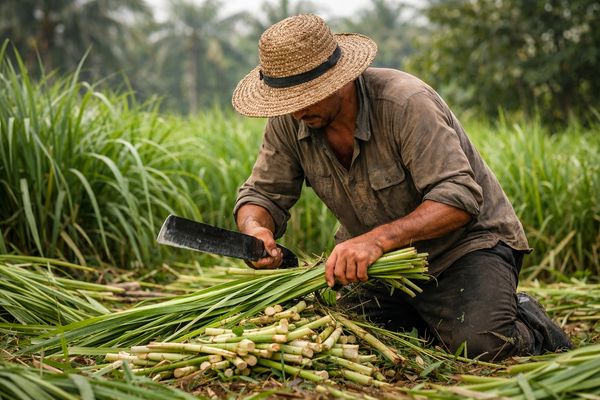
Egyptian lemongrass FOB Cairo prices are marginally softer, but the overall market tone remains firm due to elevated input and freight costs. Adequate supply and benign weather keep downside limited, while ongoing regional shipping and energy risks add an asymmetric upside to export quotations.
Egypt’s herb and citrus export complex remains active, supported by stable overseas demand and a policy push into higher‑value processing and essential oils. Near‑normal weather in key herb regions and strong irrigation coverage are preventing any major yield issues for lemongrass. However, farmers continue to face higher fertiliser and energy costs linked to conflict‑driven disruptions in regional energy markets, while Red Sea and Hormuz‑related freight risks are keeping logistics premiums elevated. In this environment, buyers see only modest spot price relief and should prepare for renewed firmness if freight or input costs spike again.
[cmb_offer ids=730,730,730]
📈 Prices & Short-Term Trend
FOB Cairo prices for conventional cut lemongrass from Egypt are trading around EUR 0.88/kg, down roughly 1% from last week in euro terms after a small easing from recent highs. The market has largely been range‑bound over the past month, with only minor week‑to‑week adjustments reflecting currency moves and freight discussions rather than any fundamental supply shock.
Compared with broader citrus and fresh lemon markets, where Egyptian wholesale lemon prices currently range roughly between EUR 1.30–2.60/kg at wholesale level, lemongrass remains a competitively priced niche export herb, helping to sustain demand from tea, seasoning and wellness product buyers in Europe and the Middle East.
| Date (2026) | Product | Origin | Term | Price (EUR/kg, FOB) | WoW Change |
|---|---|---|---|---|---|
| 18 April | Lemongrass, cut | Egypt | FOB Cairo | 0.88 | -0.01 |
🌍 Supply, Weather & Costs
Specialist herb exporters in Egypt report that lemongrass supply from the main growing areas in the Nile Delta and Middle Egypt remains adequate, with no major harvest disruptions or crop damage reported so far this season. Weather conditions for March–May 2026 are broadly seasonal: temperatures and rainfall are close to historical averages, and no significant hydrological anomalies are flagged that would restrict irrigation or field operations.
The more significant pressure point lies in production costs. Fertiliser and fuel prices in Egypt have moved higher amid regional energy and shipping disruptions related to the Strait of Hormuz, feeding through to farm input and logistics bills. While this has not yet forced a sharp rise in lemongrass FOB prices, it is limiting how far exporters can discount, effectively creating a floor under current quotations.
📊 Demand & Trade Flows
Exporters continue to leverage Egypt’s strong position in citrus and herb exports to market lemongrass into Europe, the Gulf and parts of Asia, often alongside lemon, basil and mint in mixed herb programs. Global demand for herbal teas, functional beverages and aromatherapy products remains supportive, with essential oils and plant extracts seeing sustained growth in food, beverage and wellness applications.
Recent analysis of Egyptian lemongrass noted that benign weather and steady export buying helped push prices higher through March, but that move has now largely plateaued as supply has normalised and buyers resist further increases. Current trading is characterised by hand‑to‑mouth spot and short‑term contracts rather than aggressive forward coverage, which also contributes to the narrowly range‑bound price action.
📆 3–6 Week Market Outlook
With field conditions stable and no major weather threats on the horizon for Egypt’s irrigated herb belt, physical availability of lemongrass is expected to remain comfortable into May. Near‑term price direction will therefore hinge more on freight and energy developments than on agronomic news.
Any further escalation in regional shipping risk or energy markets could quickly feed through into higher container and input costs, translating into firmer FOB offers. Conversely, a stabilisation or easing of freight premiums would open limited downside for prices, but elevated fertiliser and gas‑linked cost structures suggest only modest declines are feasible in the short term.
🧭 Trading Recommendations
- Importers / Blenders: Use the current slight easing to cover near‑term needs (1–2 months) but avoid over‑extending; keep some flexibility for freight‑driven volatility.
- Food & Beverage and Tea Packers: Consider gradual scale‑in buying on any dips toward the recent low band, as cost pressures in Egypt limit sustained downside.
- Egyptian Exporters: Maintain disciplined offers that reflect higher input and logistics costs; explore mixed‑herb and value‑added formats to pass through cost inflation and leverage strong demand for essential‑oil‑rich botanicals.
📍 3‑Day Regional Price Indication (EUR, Directional)
| Region / Market | Basis | Indicative Level (EUR/kg) | 3‑Day Bias |
|---|---|---|---|
| Cairo, Egypt (Export) | FOB, conventional cut lemongrass | ≈ 0.88 | Stable to slightly firm |
| EU Mediterranean ports | CIF from Egypt | ≈ 1.05–1.15 | Stable (freight‑driven) |
| Gulf states (GCC) | CIF from Egypt | ≈ 1.00–1.10 | Slight upside risk from freight |
Over the next three days, no significant weather or crop events are expected in Egypt’s key lemongrass zones, so prices are likely to move only incrementally in response to day‑to‑day freight and currency discussions rather than fundamental shocks.
[cmb_chart ids=730,730,730]
Related posts:
 Egyptian Hibiscus FOB Cairo Edges Softer but Stays Firm on Cost Pressures
 Egyptian Spearmint FOB Cairo Stable Despite Rising Freight Costs
 Egyptian Peppermint FOB Cairo Edges Lower Amid Firm Export Demand
 Egyptian Marjoram FOB Cairo: Flat Prices Amid Rising Cost Pressures
 Egyptian Lemongrass FOB Cairo Edges Higher on Firm Export Demand
 Egyptian Hibiscus FOB Cairo Edges Higher on Firm Demand and Rising Costs
 Egyptian Calendula FOB Cairo Edges Lower Amid Stable Supply