
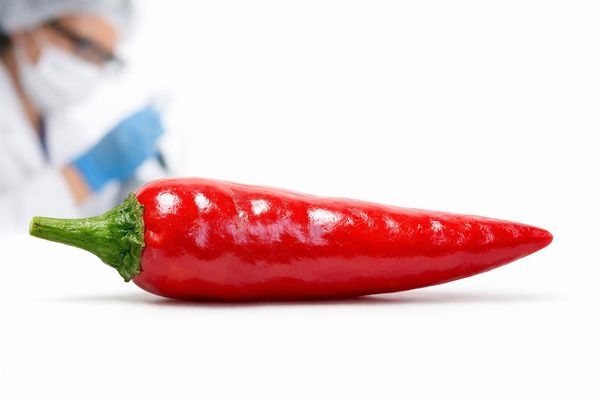
Indian chilli prices are holding firm to slightly higher as lower production and persistent export demand absorb seasonal arrivals. Sellers retain the upper hand for now, with limited farmer selling and concerns growing around a potentially drier 2026 monsoon.
Red chilli markets in Andhra Pradesh and Telangana are transitioning from peak arrival season into a tighter supply phase. Arrivals at key yards such as Guntur and Warangal have eased from seasonal highs, but exporter buying remains robust and is preventing any meaningful correction. With output estimated 25–30% below last year and India expected to face a below‑normal southwest monsoon in 2026, forward risks are skewed to the upside. Export flows, particularly to the Middle East and Asian buyers, are structurally strong, while domestic demand from processors remains steady.
Exclusive Offers on CMBroker

Chilli dried
powder, grade a
FOB 4.38 €/kg
(from IN)

Chilli dried whole
bird eye, grade a
FOB 4.63 €/kg
(from IN)

Chilli dried
with stem
FOB 2.14 €/kg
(from IN)
📈 Prices & Market Tone
Wholesale chilli prices across India’s key trading hubs are firm, with select benchmark varieties edging higher. In Delhi’s wholesale spice market, the 334 number variety has recently gained about EUR 5–6 per quintal, trading roughly between EUR 255 and EUR 277 per quintal after converting from US‑dollar quotations. The same 334 variety at Guntur is holding steady around EUR 245–255 per quintal, indicating a stable but elevated pricing band.
At Guntur, the 341 number variety is quoted near EUR 223–251 per quintal, while broken-grade chilli is valued in the vicinity of EUR 145–173 per quintal. On the export side, recent FOB offers for Indian-origin dried chilli from Andhra Pradesh and Delhi show little week‑on‑week movement, with conventional whole stemless Grade A material around EUR 1.98–2.00/kg and organic value‑added products such as flakes and powder mostly between EUR 4.02 and EUR 4.07/kg. This combination of firm domestic benchmarks and steady export offer levels confirms a broadly supported market.
| Product | Location | Price (EUR/kg, FOB) | 1W Trend |
|---|---|---|---|
| Dried chilli, whole stemless, Grade A | Andhra Pradesh | ≈ 2.00 | Stable |
| Dried chilli, with stem | Andhra Pradesh | ≈ 2.01 | Stable |
| Dried chilli flakes, organic Grade A | Andhra Pradesh | ≈ 4.07 | Stable |
| Dried chilli powder, organic Grade A | Andhra Pradesh | ≈ 4.11 | Stable |
| Dried whole bird’s eye, organic Grade A | New Delhi | ≈ 4.34 | Stable |
🌍 Supply & Demand Balance
Arrivals at India’s main chilli markets have begun to taper from seasonal peaks. At Guntur, inflows have slipped from around 150,000 bags at the height of the season to roughly 100,000–125,000 bags now, while Warangal has eased from about 40,000 bags to near 30,000 bags. Despite this moderation, the trade has digested what could have been a bearish supply wave with limited price damage, thanks primarily to persistent exporter activity.
Fundamentally, the market is underpinned by a sharp production drop. Current-season output in the major belts of Andhra Pradesh and Telangana is estimated to be 25–30% lower than last year, tightening spot availability and leaving little room for comfortable stock building. Exporters have remained consistently present in Guntur yards, purchasing actively even as arrivals soften, while stockists are cautious about selling at current elevated levels.
On the demand side, international buyers remain engaged. Chilli export volumes in the April–January period of the current financial year rose by about 18% year on year to nearly 5.73 million quintals, while export values increased around 3% to just under EUR 900 million equivalent after currency conversion. Middle Eastern destinations continue to absorb significant volumes despite ongoing regional geopolitical tension, highlighting the entrenched nature of chilli in local food systems. Domestic demand from spice processors and food manufacturers is steady, providing a solid floor under the market.
📊 Fundamentals & External Drivers
India’s firmness in chilli mirrors a generally tight global capsicum complex. Reports from competing origins indicate reduced output and constrained availability, which has redirected incremental demand toward Indian product, particularly for high‑heat varieties from Andhra Pradesh and Telangana. This has reinforced exporter competition in Guntur and Warangal, adding a structural layer of support to prices.
Weather and policy signals are starting to shape forward sentiment. Preliminary guidance for the 2026 southwest monsoon points to below‑normal rainfall around 92% of the long‑period average, increasing concern about soil‑moisture stress for the upcoming kharif chilli crop. At the same time, wider climate commentary for India highlights a higher probability of severe heat and El Niño‑linked volatility through the summer months, which could affect transplanting decisions and early crop establishment. So far there is no major government intervention on chilli prices, and the absence of aggressive selling from farmers suggests producers are prepared to carry stock into what they expect will be a tighter new‑crop year.
🌦 Weather Outlook for Key Growing Regions
As of late April, temperatures across central and southern India are trending above seasonal norms, with forecasters warning of a prolonged, hotter‑than‑usual summer in 2026. Heat stress during May–June could weigh on soil moisture and complicate early field preparation in Andhra Pradesh and Telangana if pre‑monsoon showers underperform.
Looking further ahead, independent and official outlooks increasingly converge on a below‑normal southwest monsoon for June–September 2026, centred around 92–94% of the long‑period average. Such an outcome would elevate production risk for the next chilli cycle, particularly if rainfall deficits materialise during July–August, the critical vegetative and flowering window. While uncertainty remains, this evolving weather narrative is already being priced into forward market expectations.
📆 Short-Term Price Outlook & Trading Ideas
Over the next 2–4 weeks, Indian chilli prices are expected to remain firm to slightly higher. Limited arrivals from late‑harvest regions, ongoing exporter interest and the growing risk premium around the 2026 monsoon collectively argue against a significant downside correction. The main near‑term bearish risk would be an unexpected, concentrated surge in arrivals from residual producing pockets or aggressive stock liquidation, neither of which is evident so far.
- Exporters / Importers: Consider covering at least 4–6 weeks of physical needs at current EUR levels, particularly for premium high‑heat grades, while avoiding excessive forward over‑coverage given monsoon uncertainty.
- Domestic buyers (processors, blenders): Use any brief dip driven by localized arrival spikes as an opportunity to build working stocks, focusing on quality lots from Guntur and Warangal.
- Producers / Stockists: With supply already 25–30% below last year and monsoon risk tilted drier, a staggered selling strategy into strength appears preferable to heavy near‑term liquidation.
📉 3-Day Directional View (Key Markets)
- Guntur (AP): Firm with mild upside bias; exporter demand expected to absorb current arrival volumes.
- Warangal (Telangana): Steady to marginally firmer, tracking Guntur and supported by selective exporter and processor buying.
- Delhi (wholesale spices): Slightly firmer undertone for benchmark 334 variety as tight origin supply feeds into northern consuming markets.
Related posts:
 Pepper Market Snapshot IN–LK–VN: FOB Prices Hold Firm Amid Tight Supply
 Indian Pepper Prices Hold Firm as Vietnam Export Benchmarks Edge Higher
 Indian Coriander Seeds Ease Slightly but Stay Firm on Tight Supply
 Indian Coriander Seeds Ease Slightly But Stay Firm on Tight 2025/26 Supply
 Indian Chilli Prices Ease Slightly but Remain Firm on Tight Crop and Hot Demand
 Aniseed Prices Hold Steady as Egypt Faces Higher Farm Costs and Firm Indian Export Demand
 Indian Chilli Prices Hold Firm as Tight Crop Offsets Record Arrivals