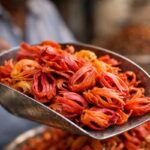
Indian mace prices softened over the past week as weak buyer interest met comfortable supplies, with red grade values slipping and sentiment turning cautious across the nutmeg–mace complex. Nearby downside risk persists, particularly if fresh nutmeg arrivals from Kerala increase co-product mace availability and European demand stays subdued.
India’s mace market currently reflects a broad retreat across the dry spice segment rather than a crop-specific shock. Buyers in Delhi and other key centres have stepped back simultaneously in cardamom, nutmeg and mace, pointing to end‑season destocking and risk aversion. For European food manufacturers and spice traders, the current phase offers a measured opportunity to cover near‑term needs at slightly easier levels, while keeping an eye on how Indian quotes evolve relative to Indonesian origin.
Exclusive Offers on CMBroker

Mace Brown
Grade-A
FOB 30.20 €/kg
(from IN)
📈 Prices & Market Tone
In Delhi wholesale markets, red quality mace eased by about ₹50 per quintal, now assessed around ₹21,000–₹23,500 per quintal. Converted to export‑equivalent values, this confirms a mild but notable softening at the top end of India’s most premium spice by unit value. Parallel weakness in nutmeg – down roughly ₹20 per kg to ₹760–₹770 – reinforces the softer tone across the nutmeg–mace complex and signals limited appetite for stockbuilding ahead of fresh crop arrivals.
Export‑oriented offers mirror this consolidation phase. Indicative Grade‑A organic Indian mace (brown) on an FOB New Delhi basis is currently around EUR 30.2/kg, broadly flat to fractionally softer versus recent weeks, underlining that the correction is orderly rather than disorderly. The absence of aggressive downside suggests sellers are still attempting to defend premium positioning while acknowledging weaker near‑term demand.
🌍 Supply & Demand Drivers
On the supply side, India remains structurally tight given mace’s thin production base concentrated in Kerala and the Konkan coast. However, expectations of fresh nutmeg crop arrivals in the near term are weighing on sentiment, as mace is a co‑product and any increase in nutmeg harvesting will automatically raise mace availability. This prospect is prompting buyers to delay larger commitments in anticipation of slightly better buying opportunities.
Demand is the more immediate weakness. Domestic industrial and wholesale buyers across the wider spice complex – cardamom, mace, nutmeg and others – are simultaneously reducing coverage, driven by end‑season inventory management rather than clear evidence of disappearing end‑user consumption. In export channels, European buyers in meat processing, bakery and flavour manufacturing remain key, but are currently cautious, favouring hand‑to‑mouth purchases while monitoring relative spreads between Indian and Indonesian origin.
📊 Fundamentals & Weather Context
Fundamentally, mace retains its status as a high‑value, thinly traded niche within global spices. This structural tightness limits the scope for a deep price correction unless accompanied by a sharp demand shock. Today’s softening is better characterised as a sentiment‑driven adjustment aligned with the broader spice complex rather than a surplus‑driven downturn. The concurrent easing in nutmeg prices confirms that the entire value chain is recalibrating after a period of firmer values.
Weather in Kerala and along the Konkan belt, while always relevant for flowering and fruit set in Myristica fragrans, has not generated acute concerns in the latest market chatter. As a result, forward supply risk is perceived as manageable in the short term. The more important factor for pricing over the next month is the pace and scale of new nutmeg arrivals and any subsequent build‑up of mace stocks at origin and at major trading hubs.
📆 Short-Term Outlook (2–4 Weeks)
Over the coming two to four weeks, mace prices in India are likely to remain soft to rangebound around current levels. Without a clear pickup in export inquiries – especially from Europe – rallies are expected to be capped by the impending increase in mace availability tied to nutmeg harvesting. Any acceleration in crop arrivals from Kerala would skew risk modestly to the downside.
That said, the thinness of the market and high unit value mean that sharp, sustained sell‑offs are less likely absent a large, unexpected demand shock. Instead, the market is more likely to trade in a narrow band, with intraday or intraweek volatility driven by individual tender results or short‑term restocking needs rather than structural shifts. Indonesian price behaviour will remain a key reference for European buyers assessing origin substitution options.
🎯 Trading & Procurement Recommendations
- European food manufacturers & blenders: Use current softness to cover short‑ to medium‑term requirements selectively, focusing on staggered purchases rather than large one‑off bookings. Prioritise quality and supplier reliability over marginal price concessions.
- Indian traders & exporters: Avoid over‑aggressive stock accumulation ahead of the bulk of nutmeg arrivals; maintain light to moderate inventory and be prepared for further mild downside if export demand underperforms.
- Importers comparing origins: Closely track the price spread between Indian and Indonesian mace. If Indian discounts widen modestly from current levels, they could justify incremental shifts back toward Indian origin for premium applications.
📍 3-Day Directional Price Indication (EUR)
| Market / Product | Quality | Indicative Level (EUR) | 3-Day Bias |
|---|---|---|---|
| New Delhi – Mace Brown FOB | Grade-A Organic | ≈ 30.2 €/kg | Slightly soft / rangebound |
Over the next three days, Indian mace prices are expected to trade sideways with a mild downward bias, reflecting ongoing cautious demand and the approaching nutmeg harvest. Any surprise uptick in export inquiries could briefly stabilise or firm values, but the base case remains a soft, buyer‑friendly market in the very near term.